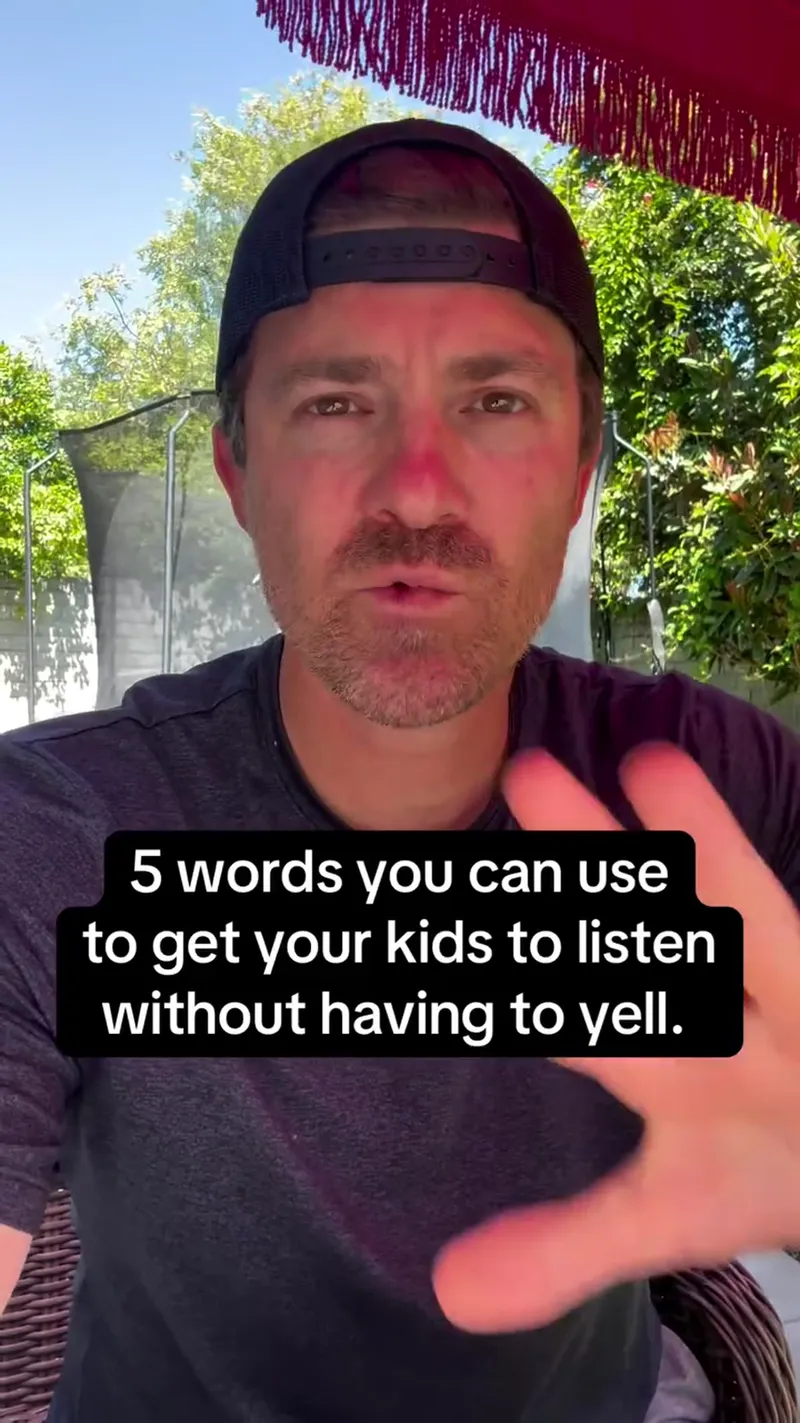
This video shares five specific phrases parents can use to encourage their children to listen the first time without yelling. The creator explains the psychological shift from giving commands to seeking cooperation and understanding the child's perspective.
5 Phrases to Get Your Kids to Listen Without Yelling
A parent coach shares phrases intended to help children listen without yelling, including asking for help, explaining feelings, and understanding a child's reasons. The transcript ends while introducing how to give children time to finish an activity.
- Views
- 815.2K
- Likes
- 38.6K
- Comments
- 16K
- Parent-child communicationGetting children to listenCalm parenting phrases
Analysis
A parent coach shares phrases intended to help children listen without yelling, including asking for help, explaining feelings, and understanding a child's reasons. The transcript ends while introducing how to give children time to finish an activity.
- Talking headTutorialListicle
- Spoken
- Original
“Alright, parents, here are five words that you can use that increase the chances your kids are going to listen the first time without you having to yell.”
- On-screen text
- Original
“5 words you can use to get your kids to listen without having to yell.”
- Visual
- Text-led compositionA centered speaker faces the camera in a medium close-up outdoors. A bold white headline on a black rounded rectangle spans the lower-middle area; the speaker gestures in one sampled frame.
- The man speaks directly to camera, while on-screen captions emphasize the spoken words. The opening text repeats the promise to help kids listen without yelling.
“Alright, parents, here are five words that you can use that increase the chances your kids are going to listen the first time without you having to yell. I'm going to give you six different phrases that are all right around five different words. Now make sure you hit follow if you want more advice like this. Okay? All right, here we go. Number one is I need your help. Now this one may seem a little like, not like a little obvious, but here's the reason why it works. What most parents do is they ask, hey, can you do this? You do this and what happens is there's a dynamic that forms inside your child's brain and between how you're asking and their response and their behavior. When you frame it as I need your help, it doesn't isn't perceived as they need to go do something. It's perceived as, oh my gosh, I get to help out my parent. It's also a pattern interrupt if your number one behavior is just to go ask them what to do. Okay, the second one, by the way, if you guys like these, any of these, we have free scripts that teach you how to talk and communicate with your kids without you having to yell that you can comment the word dad underneath this video. We'll send it to you or go to the link in our bio and grab it there. The next one is here's how I'm feeling. Now, this one might sound a little crazy, but let me explain what I do with my kids when I'm extremely stressed out. I know I'm about to yell. If they're not going to listen. I say, guys, here's how I'm feeling. And then I go in to explain, I'm really stressed out. I have to do this. I have to do this. I want you guys to be able to have this experience today. And I actually don't want to yell. Can you do this to help me out? So here's how I'm feeling is number two. Number three is what's the reason why you can't. If they're not listening or they say we can't do that, what's the reason why you can't. What this does is it actually gives you a better understanding of why your child came to it, what's going on in their brain and their reality. After teaching communication for as many years as I have, the reason why there's so much conflict in communication is because there's two different realities or experiences colliding and someone's trying to win. When you have a better understanding of what's going on with your child, you can actually have a deeper, better conversation and navigate it better when you understand their world and they understand yours. And the next one is, this is really important because a lot of the times your kids are in the middle of doing things right, and they're then asked to stop this thing that you're enjoying to go do this one thing. But if you can tell them why it's really important, they have a deeper understanding of why this needs to happen. So certain things like, guys, this needs to happen because someone's coming over and I don't want. Or I don't want this person to get hurt, or I stepped on this and it cut me. I don't want to get hurt anymore. Can you guys please do this? That increases the chances because they have a deeper understanding. The next one is, how much time do you need? What I do with my kids is if they're in the middle of doing something, they don't want to do it. I say, well, this is going to get done. It's gonna have to get done. How much time do you need before you can go get it done? And if it's within five minutes, I go, okay, I expect it.”
- 01Promise the list and preview its value
Establishes a concrete advice payoff and a numbered sequence; the follow request is tied to receiving more advice.
Address the audience, promise a set of phrases and their intended outcome, clarify the count, and invite a follow before introducing the first item.
“Alright, parents, here are five words that you can use that increase the chances your kids are going to listen the first time without you having to yell. I'm going to give you six different phrases that are all right around five different words. Now make sure you hit follow if you want more advice like this. Okay? All right, here we go.”
- 02First item: phrase, rationale, and mechanism
Delivers the first promised item and supports it with a behavioral explanation, showing why the wording may help; the next numbered item is still pending.
Give the first phrase, acknowledge it may sound obvious, then contrast a typical request with the suggested wording and explain how the alternative changes the listener's interpretation.
“Number one is I need your help. Now this one may seem a little like, not like a little obvious, but here's the reason why it works. What most parents do is they ask, hey, can you do this? You do this and what happens is there's a dynamic that forms inside your child's brain and between how you're asking and their response and their behavior. When you frame it as I need your help, it doesn't isn't perceived as they need to go do something. It's perceived as, oh my gosh, I get to help out my parent. It's also a pattern interrupt if your number one behavior is just to go ask them what to do.”
- 03Brief offer before continuing the list
Offers a related resource while preserving the promised progression by explicitly returning to the next item.
Insert a brief promotion for free related materials, with two ways to get them, then resume the numbered advice.
“Okay, the second one, by the way, if you guys like these, any of these, we have free scripts that teach you how to talk and communicate with your kids without you having to yell that you can comment the word dad underneath this video. We'll send it to you or go to the link in our bio and grab it there.”
- 04Second item: personal example and script
Makes the second item actionable through a first-person example and shows how the phrase can frame a difficult interaction; the list continues afterward.
Introduce a phrase that may sound unusual, describe when the speaker uses it, then provide a short example script explaining the situation, feelings, desired outcome, and request for help.
“The next one is here's how I'm feeling. Now, this one might sound a little crazy, but let me explain what I do with my kids when I'm extremely stressed out. I know I'm about to yell. If they're not going to listen. I say, guys, here's how I'm feeling. And then I go in to explain, I'm really stressed out. I have to do this. I have to do this. I want you guys to be able to have this experience today. And I actually don't want to yell. Can you do this to help me out? So here's how I'm feeling is number two.”
- 05Third item: diagnostic question and supporting principle
Develops the third item from a practical question into a communication principle, adding the reason it may improve a conversation before moving on.
Present a question for understanding why someone cannot comply, explain what it reveals, and support the principle with a broader account of conflicting perspectives and the value of understanding both sides.
“Number three is what's the reason why you can't. If they're not listening or they say we can't do that, what's the reason why you can't. What this does is it actually gives you a better understanding of why your child came to it, what's going on in their brain and their reality. After teaching communication for as many years as I have, the reason why there's so much conflict in communication is because there's two different realities or experiences colliding and someone's trying to win. When you have a better understanding of what's going on with your child, you can actually have a deeper, better conversation and navigate it better when you understand their world and they understand yours.”
- 06Fourth item: explain importance, give reasons, and ask
Shows how context and reasons can make a request more understandable, then transitions to another numbered phrase and a practical timing question.
Explain that people may be interrupted while doing something, then suggest stating why a task matters. Give examples of reasons, make a direct request, and connect the explanation to deeper understanding.
“And the next one is, this is really important because a lot of the times your kids are in the middle of doing things right, and they're then asked to stop this thing that you're enjoying to go do this one thing. But if you can tell them why it's really important, they have a deeper understanding of why this needs to happen. So certain things like, guys, this needs to happen because someone's coming over and I don't want. Or I don't want this person to get hurt, or I stepped on this and it cut me. I don't want to get hurt anymore. Can you guys please do this? That increases the chances because they have a deeper understanding.”
- 07Fifth item: negotiate a time window
Continues the numbered advice with a practical negotiation example. Its final phrase is cut off, so the answer or full payoff is not available in the transcript.
Introduce a question about how much time is needed, explain the situation in which it is useful, state the task must happen, ask for a time estimate, and begin granting a short window before the transcript ends mid-thought.
“The next one is, how much time do you need? What I do with my kids is if they're in the middle of doing something, they don't want to do it. I say, well, this is going to get done. It's gonna have to get done. How much time do you need before you can go get it done? And if it's within five minutes, I go, okay, I expect it.”