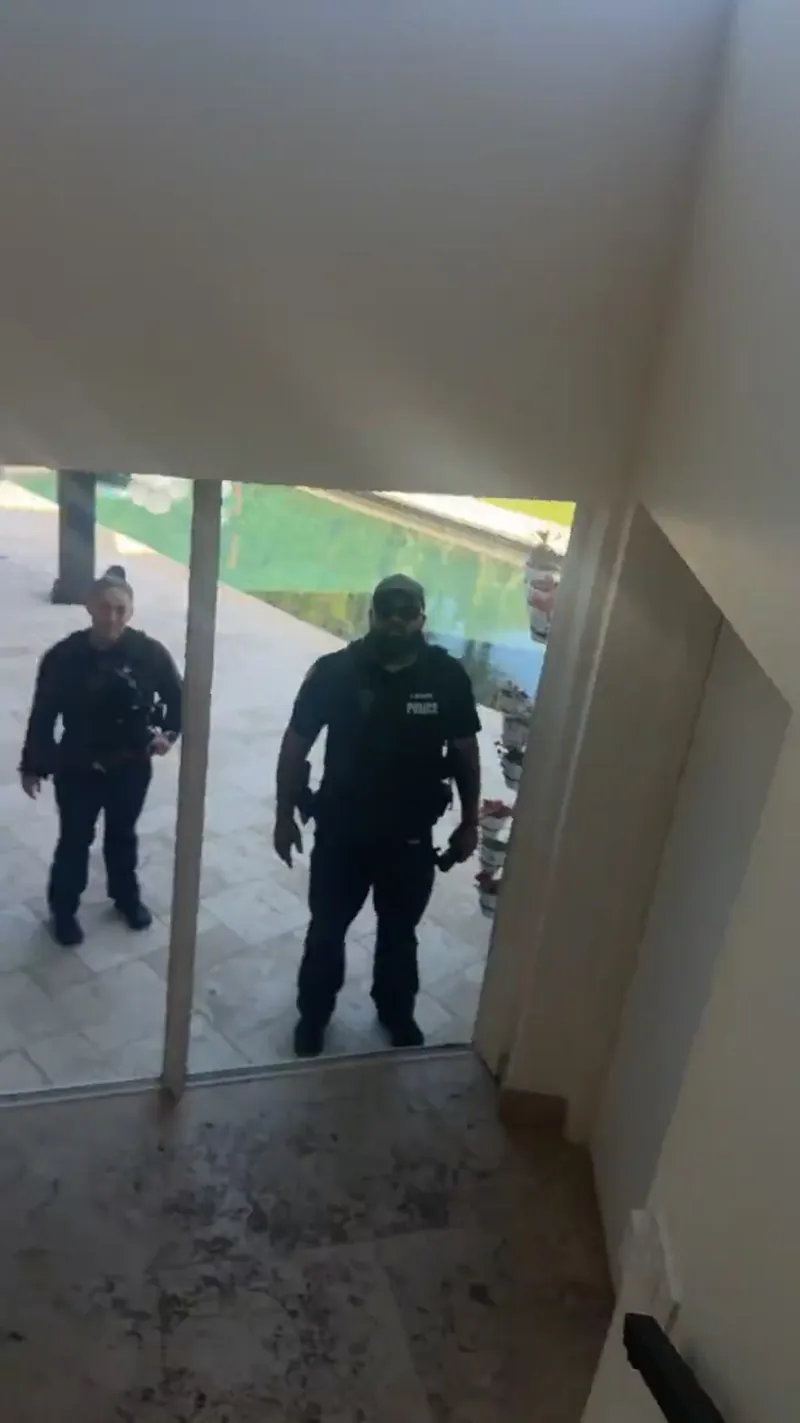
A man films himself aggressively confronting two police officers standing outside his sliding glass door. He repeatedly demands to see a warrant and insists they are trespassing while attempting to prevent a woman inside from speaking with them.
Tense Standoff: Man Demands Police Warrant Through Glass Door
A person records a tense exchange with uniformed officers at a home, repeatedly asking them to leave and whether they have a warrant. The speaker also calls to a woman inside and asks if she is okay.
- Views
- 787.8K
- Likes
- 25.6K
- Comments
- 1.4K
- Police at private homeWarrant disputePolice welfare check
Analysis
A person records a tense exchange with uniformed officers at a home, repeatedly asking them to leave and whether they have a warrant. The speaker also calls to a woman inside and asks if she is okay.
- Vlog
- Spoken
- Original
“Get out of here, man. I don't want to talk to you. What are you doing here?”
- Visual
- Text-led compositionA handheld view from inside looks through a glass door at two uniformed officers outside; the doorway separates the camera from them.
- The footage shows officers outside the home as the speaker challenges their presence; later, it briefly shows a woman inside while the speaker asks if she is okay.
“Get out of here, man. I don't want to talk to you. What are you doing here? You can't be here. What are you doing, huh? No, no, you don't have a warrant. There's no warrant. This. You're not allowed to be here. I was fucking. I was having sex. Yeah. Baby, you good? Come here. She want to see if you're good. Baby, hurry up. Baby, come. They want to see you. Baby, show them. Come tell them you okay. Tell them. Sally. Hey, what's wrong? You guys are not allowed to be here. Guys. Hey, do you have a warrant? Do you have a warrant? Please leave my property. Baby, you're good, right? Guys, look, they're trying to tell her baby, you're good. Guys, they're trying to tell her she's not good. No, no, Baby, go upstairs. Go upstairs. Go upstairs. No, no. I know you, bro. I know what's going on with you. Oh, yeah. No, guys, this is. He knows the AI guy. He's friends with the AI guy. AI guys, he's the cousins with the AI guy, okay? I'm telling you. Guys. Yo, no. Hey, don't come in. What? Guys, look at that. You see that? Huh? Jabril. For what? No, she said she doesn't want to come out. Hey, baby, you want to come out or no? She said no. She said she's good. Guys, you see what she's saying? False imprisonment. There's. Baby, you're good, right? Everything's okay.”
- 01Establish the confrontation
Sets up the conflict over access and establishes the repeated objection that later interruptions continue.
One person repeatedly demands that someone leave and challenges their presence; the response gives a blunt explanation for being there.
“Get out of here, man. I don't want to talk to you. What are you doing here? You can't be here. What are you doing, huh? No, no, you don't have a warrant. There's no warrant. This. You're not allowed to be here. I was fucking.”
- 02Contradict the confrontation with reassurance
Introduces conflicting signals about the person's condition, setting up the later disagreement over what she wants.
The speaker shifts to intimate reassurance and urges someone to appear and demonstrate that they are okay.
“I was having sex. Yeah. Baby, you good? Come here. She want to see if you're good. Baby, hurry up. Baby, come. They want to see you. Baby, show them. Come tell them you okay. Tell them.”
- 03A new objection interrupts
Reopens the access dispute and adds a concrete request for proof, while the reassurance continues alongside it.
A new call addresses Sally, then an objection repeats that the group is not allowed there and asks for a warrant before demanding they leave.
“Sally. Hey, what's wrong? You guys are not allowed to be here. Guys. Hey, do you have a warrant? Do you have a warrant? Please leave my property. Baby, you're good, right?”
- 04Conflicting interpretations and attempted retreat
Makes the uncertainty explicit: the same situation is framed as reassurance and rejection, leaving the person's actual wishes unsettled.
The speaker interprets the group's words in opposite ways, repeatedly directs the person upstairs, and claims to understand what is happening.
“Guys, look, they're trying to tell her baby, you're good. Guys, they're trying to tell her she's not good. No, no, Baby, go upstairs. Go upstairs. Go upstairs. No, no. I know you, bro. I know what's going on with you.”
- 05Assert an unlikely connection
Adds an unexpected side claim amid the confrontation; the assertion is left hanging rather than verified.
The speaker claims a person knows an AI-related figure, expands the claim into a cousin relationship, and insists on being believed.
“Oh, yeah. No, guys, this is. He knows the AI guy. He's friends with the AI guy. AI guys, he's the cousins with the AI guy, okay? I'm telling you. Guys.”
- 06Renew the interruption and ask directly
Returns to the unresolved question of her participation and provides a direct reported answer, prompting a check of what she is communicating.
The speaker warns someone not to enter, calls attention to something, and asks whether she wants to come out; the reply reports that she does not.
“Yo, no. Hey, don't come in. What? Guys, look at that. You see that? Huh? Jabril. For what? No, she said she doesn't want to come out. Hey, baby, you want to come out or no? She said no. She said she's good. Guys, you see what she's saying?”
- 07Label and close
Caps the dispute with a pointed label, then closes on reassurance rather than resolving the accusation.
A legal-sounding accusation is followed by a final check that everything is okay.
“False imprisonment. There's. Baby, you're good, right? Everything's okay.”