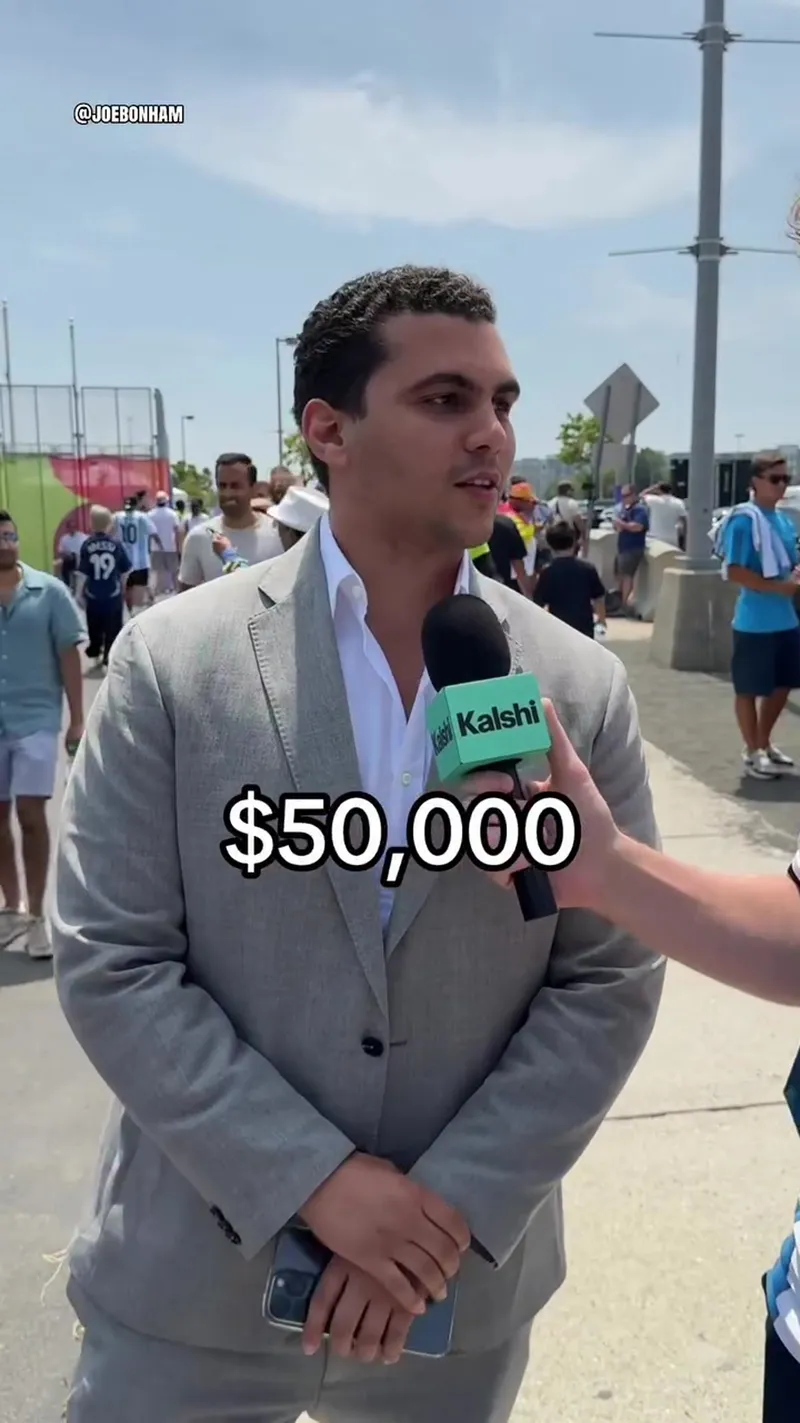
An interviewer asks attendees at a World Cup event how much they paid for their tickets and what they do for work. The responses reveal massive spending, with ticket prices ranging from $20,000 to $200,000 and jobs including CEOs, models, and tech workers.
How Much Do World Cup Tickets Actually Cost? 💰
An interviewer asks World Cup attendees how much they paid for tickets and what they do for a living. People give prices ranging from free or gifted tickets to very large amounts, and share varied jobs and sources of access.
- Views
- 20.3M
- Likes
- 358.2K
- Comments
- 6.4K
- World Cup ticket pricesAttendees' jobs and wealth
Analysis
An interviewer asks World Cup attendees how much they paid for tickets and what they do for a living. People give prices ranging from free or gifted tickets to very large amounts, and share varied jobs and sources of access.
- Street interviewInterview
- Spoken
- Original
“How much did you spend on your ticket?”
- On-screen text
- Original
“How much did you spend on your ticket? $50,000”
- Visual
- Text-led interview compositionA vertical street-interview shot frames a suited guest and interviewer with a branded microphone between them. Large, high-contrast captions appear across the lower center; the displayed amount then replaces the question text in a later sample.
- The sampled visuals show the interviewer asking fans questions outside the venue, matching the transcript's ticket-price and occupation exchange. Large captions highlight the spoken question and the opening $50,000 answer.
“How much did you spend on your ticket? $50,000. 20,000. What do you do for a living? I'm a model. 30,000. What do you do for a living? I retired, made a lot of money. 200,000. And what do you do for a living? A PE in Hong Kong. 30,000. 30,000. What do you do for a living? I'm a streamer. I've been doing this since I was 11. Not enough. There's no experience like the World Cup Final. And what do you do for a living? I'm chairman CEO of the Kansas City Chiefs. I don't know. Friend gave it to me. And what do you do for a living? I were philanthropists. What did you do? We used to own Auto Trader. We bought SAP software to the tune of millions of dollars. And they invited us to the game. What do you do for a living? We make Welch's fruit snacks, which they're selling all. No, wait. You're the owner of Welsh's? Yes. What is your net worth? You can Google me. Got hooked up with a good friend. Do you know how much they would have cost? 30,000. What do you do for a living? I got an organic tech control company. I'm a guest today. I didn't spend $1. What do you do for a living? I'm an actor. Spend anything. A friend invited me. What do you do for a living? I'm a consultant. A guest of videos. What do you do for a living? I'm an actress. We're really lucky. We're guests of Verizon. Hey. What do you do for a living? I work for Google. 96,000. What do you do for a living? I'm a painter of houses. 73,000. What do you do for a living? My dad paid for it.”
- 01Opening price question and first response
Establishes the repeated interview pattern by pairing the central spending question with a personal detail.
Ask someone what they spent on an event ticket and receive a high-price answer, then ask what they do for a living and get a brief occupational reply.
“How much did you spend on your ticket? $50,000. 20,000. What do you do for a living? I'm a model.”
- 02More prices and varied backgrounds
Builds a varied set of price and personal-background answers, with distinct details that keep the sequence from being only repeated figures.
Several people give ticket prices and answer the recurring question about their work; one adds that they retired after making substantial money, while another shares a brief experience-related comment.
“30,000. What do you do for a living? I retired, made a lot of money. 200,000. And what do you do for a living? A PE in Hong Kong. 30,000. 30,000. What do you do for a living? I'm a streamer. I've been doing this since I was 11. Not enough. There's no experience like the World Cup Final.”
- 03Unusual access explanations
Adds explanations for how some people obtained or afforded access, expanding the interview beyond price and occupation.
The interviewer repeats the occupation question; answers include a prominent business role, uncertainty about the ticket’s price, and a friend providing it. A further answer leads into a detailed account of past business ownership, a major purchase, and an invitation.
“And what do you do for a living? I'm chairman CEO of the Kansas City Chiefs. I don't know. Friend gave it to me. And what do you do for a living? I were philanthropists. What did you do? We used to own Auto Trader. We bought SAP software to the tune of millions of dollars. And they invited us to the game.”
- 04Ownership clarification and personal connections
Uses clarification and follow-up questions to surface unexpected details about a respondent’s identity and connections.
Another person describes a product business, prompting the interviewer to clarify whether they own it. A net-worth question receives a redirect, followed by a friend-related explanation and another price answer.
“What do you do for a living? We make Welch's fruit snacks, which they're selling all. No, wait. You're the owner of Welsh's? Yes. What is your net worth? You can Google me. Got hooked up with a good friend. Do you know how much they would have cost? 30,000.”
- 05Quick closing answers
Completes the collection with rapid, varied answers and a final explanation of who covered the cost.
The interviewer returns to the recurring occupation question. Respondents give brief work descriptions, mention guest status or an invitation, and share a range of prices, ending with one person saying their parent paid.
“What do you do for a living? I got an organic tech control company. I'm a guest today. I didn't spend $1. What do you do for a living? I'm an actor. Spend anything. A friend invited me. What do you do for a living? I'm a consultant. A guest of videos. What do you do for a living? I'm an actress. We're really lucky. We're guests of Verizon. Hey. What do you do for a living? I work for Google. 96,000. What do you do for a living? I'm a painter of houses. 73,000. What do you do for a living? My dad paid for it.”