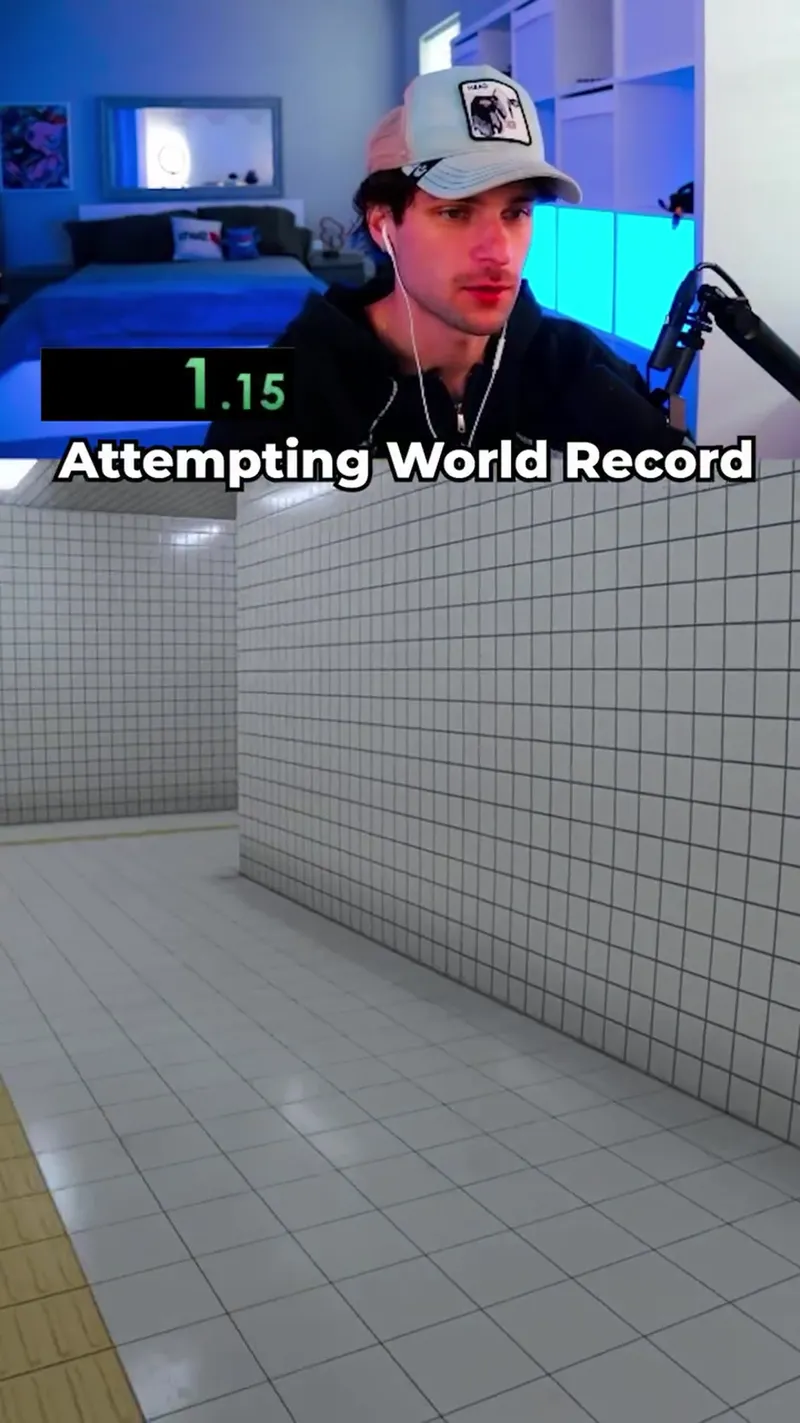
The creator attempts to break the world record for the indie horror game 'The Exit 8'. He identifies and ranks various anomalies in real-time while navigating a never-ending subway corridor to reach the final exit.
Attempting The Exit 8 World Record
A streamer attempts a fast run of Exit 8, scanning the tiled corridor for anomalies and describing which ones he spots. The video shows gameplay beside his face and a running timer, but does not establish whether he beats the record.
- Likes
- 20.7K
- Comments
- 53
- Exit 8 speedrunGame anomaly spottingWorld record attempt
Analysis
A streamer attempts a fast run of Exit 8, scanning the tiled corridor for anomalies and describing which ones he spots. The video shows gameplay beside his face and a running timer, but does not establish whether he beats the record.
- Split screenTalking headDemoChallengeCommentary
- Spoken
- Original
“Two, one. Timer started. Okay, we are going for the world record which is a minute and ten seconds.”
- On-screen text
- Original
“Attempting World Record”
- Visual
- Text-led split-screen with task-setting contextA vertical split-screen places a centered commentator in a bedroom studio above a tiled corridor; the opening view includes a prominent record-attempt headline, and a timer appears in a later sample.
- The gameplay shows the tiled corridor and anomaly details the streamer discusses, while the face cam and timer reinforce the speedrun attempt.
“Two, one. Timer started. Okay, we are going for the world record which is a minute and ten seconds. If we see an anomaly all we have to do is turn around. See the thing is though, you only can have like the rest have to be anomalies for the record. So the Speedrun, no matter how good you are, you still just can't get world record. Like that was the agents right? So that was a really good anomaly. But this one is nothing. So we're at three and we are going to continue until we get to exit 8. So like this one is, there's like 30 anomalies I'm scanning while I'm doing this run. So like this one is. He's really tall. That one's an okay anomaly, you know, not the best, not the worst. It's A, it's like, it's like like B tier. This one is the crooked lights. That one's S tier because it's easy to like see. And you know this one is the fast walking man. Another S tier 1. Not this, this isn't that bad of a time. This is the poster on the left side of the wall. The last one was like a blue face that's like normally not there. And then this one is. This one needs to be good for the game and it looks good. And we have a time in three, two and one.”
- 01Set the challenge and explain its rules
Establishes the timed objective and explains why identifying anomalies matters, while qualifying the apparent strategy with the rule that most anomalies must also be handled.
Starts the timer and states the ambitious target, the basic action required when an anomaly appears, and the constraint that limits the record attempt.
“Two, one. Timer started. Okay, we are going for the world record which is a minute and ten seconds. If we see an anomaly all we have to do is turn around. See the thing is though, you only can have like the rest have to be anomalies for the record. So the Speedrun, no matter how good you are, you still just can't get world record.”
- 02Judge early observations and continue the attempt
Shows how the stated rule applies to actual observations and updates progress, while the promise to continue toward the endpoint keeps the challenge unresolved.
Checks whether an observed event qualifies, rejects a lesser one, gives the current count, and commits to continuing toward the endpoint.
“Like that was the agents right? So that was a really good anomaly. But this one is nothing. So we're at three and we are going to continue until we get to exit 8.”
- 03Scan and rank successive cases
Turns the ongoing search into a sequence of concrete examples and comparative judgments, showing how the narrator applies the evaluation criteria during the challenge.
Describes scanning many possible anomalies during the run, then gives specific observations and evaluates them using a tier-like scale.
“So like this one is, there's like 30 anomalies I'm scanning while I'm doing this run. So like this one is. He's really tall. That one's an okay anomaly, you know, not the best, not the worst. It's A, it's like, it's like like B tier. This one is the crooked lights. That one's S tier because it's easy to like see. And you know this one is the fast walking man. Another S tier 1. Not this, this isn't that bad of a time.”
- 04Assess the last observations and finish on the timer
Continues the live evaluation through the final observations and closes with a timed beat; the transcript does not say whether the record was achieved.
Identifies further visual details, compares a current case with a prior unusual appearance, gives a final positive assessment, and counts down.
“This is the poster on the left side of the wall. The last one was like a blue face that's like normally not there. And then this one is. This one needs to be good for the game and it looks good. And we have a time in three, two and one.”