A veteran salesperson shares seven distinct closing techniques to help reps move beyond one-size-fits-all scripts. The video covers psychological strategies like the 'sharp angle close' and 'assumptive close' while demonstrating how to diagnose a buyer's needs.
7 Sales Closes Every Professional Needs to Master
A salesperson outlines seven closing approaches, including summary, sharp-angle, question, and takeaway closes, with sample phrases and guidance on when to use them. He stresses diagnosing the prospect’s situation and using real urgency rather than fake pressure.
- Views
- 277.2K
- Likes
- 20.3K
- Comments
- 174
- Sales closing techniquesSales prospect objectionsSales urgency and trust
Analysis
A salesperson outlines seven closing approaches, including summary, sharp-angle, question, and takeaway closes, with sample phrases and guidance on when to use them. He stresses diagnosing the prospect’s situation and using real urgency rather than fake pressure.
- Talking headListicleTutorialExplainer
- Spoken
- Original
“All right, get your notepads out because I'm about to cram years of sales experience.”
- On-screen text
- Original
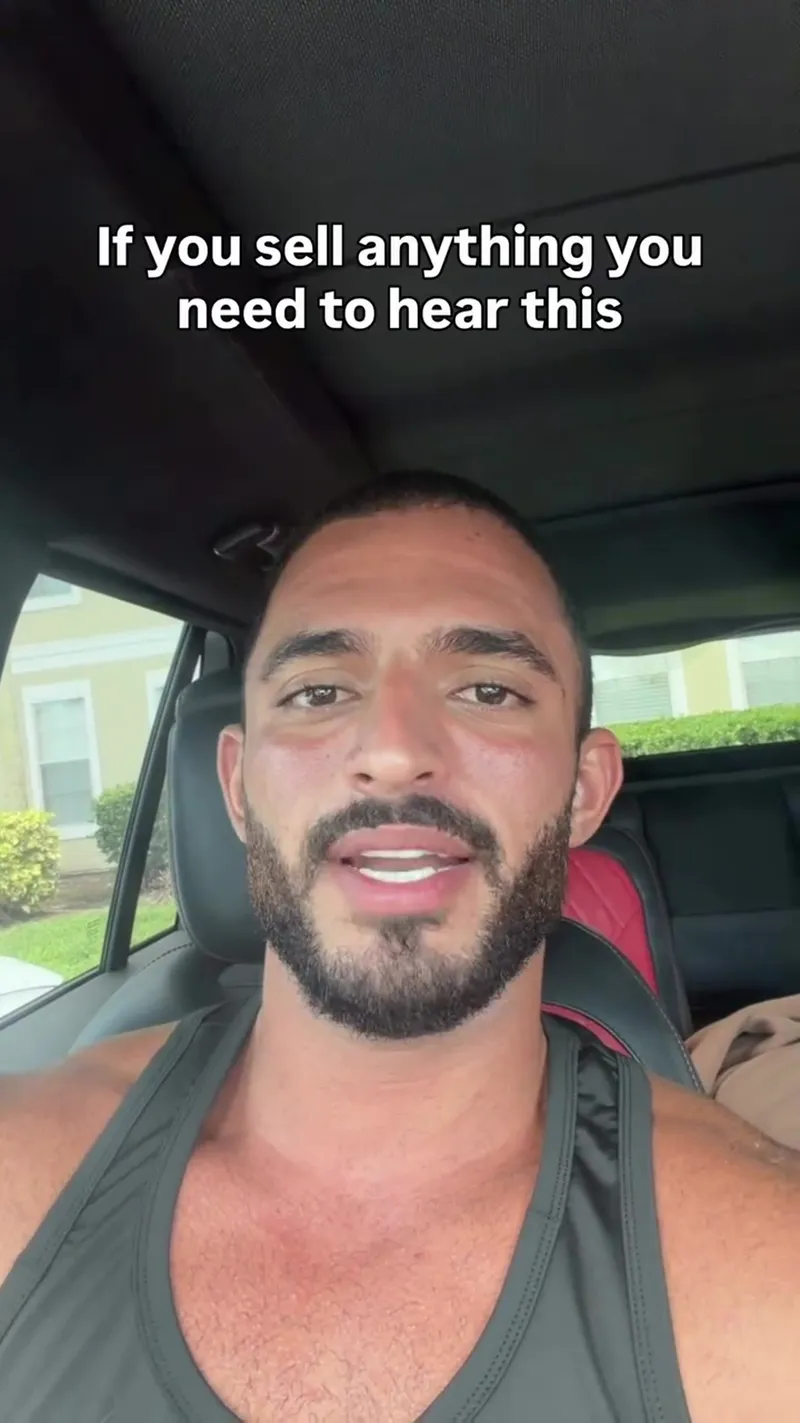
“If you sell anything you need to hear this”
- Visual
- Text-led compositionA centered, close direct-to-camera shot of the speaker seated in a car, with a large two-line headline placed above him.
- The man speaks directly to the camera, matching the transcript’s sales advice. The opening text addresses people who sell, aligning with the spoken hook.
“All right, get your notepads out because I'm about to cram years of sales experience. In the next two minutes, I've earned multiple seven figures in commission sales and was fortunate enough to become the number one rep in every company I've worked for. There's one thing I learned. The best closers do not have one close. They have an arsenal. One of the biggest mistakes I see sales reps make is trying to use the same clothes on every prospect. Different situations require different tools, and this is what differentiated me from everybody else. Here are the closes. Every salesperson should know one. The summary close. This is for the prospect who's basically already sold but just needs to hear the value one more time. Example. So, just to recap, we're solving the problem you came in with, saving you money, making the process simple, and taking care of everything for you. Who should I put the paperwork under? People buy emotionally and justify logically. Remember that. Number two, the sharp angle close. One of my favorites. When they ask for something, can you lower the price? Respond with, if I could do that for you. Are you ready to move forward today? Never make a concession without getting a commitment. Number three, the question close. If you're unsure where they stand, stop pitching and just start asking questions. In your opinion, does what I've shown you solve the problem we talked about? Or do you see any reason we shouldn't move forward today? That's a good one. Questions uncover objections and statements create resistance. Number four, the assumptive close. Another good one. If they've already mentally bought in, don't ask if they want it. Lead them to the next step. Perfect. The next step is getting everything set up. What's the best email to send everything to? Remember, confidence is contagious. Number five, the takeaway close. This is for buyers focused only on price. I understand we can lower the price. We would just have to remove some of the features that make this our premium option. Is that the direction you'd rather go? Sometimes people don't actually want the cheaper option. They just want reassurance they're making the right decision. Number six, I don't have two hands right now, but we'll run with it. The now we're never close. Only use this when it's true. The promotion ends Friday. Prices increase next month. This is the last opening we have this week. Real urgency will create action, but fake urgency will mess up all your trust. So be cautious with that one. Number seven. And probably the least effective one, the soft close. This is one all about lowering pressure. So instead of asking for the full commitment, you're simply asking them to take the first step. So let's just go ahead and get onboarding started. We'll take it one step at a time. In my experience, again, this is probably the least effective close in the book because you're not getting the full commitment. But if someone already wants to move forward and they're just overthinking it, sometimes lowering the pressure is all they need. Here's the truth. Elite closers don't memorize scripts. They diagnose situations. Remember, the better you understand people, the easier it becomes to know which clothes to use. Now let me show you. If this helped you, save it so you can come back to it. The next step is follow because I'm posting more sales content like this every week. And by the way, would you see any reason not to? And if not, let's just start with a like we'll go from there. You see what I did there? Comment below how many closes I just used at the end.”
- 01Promise the toolkit and its guiding idea
Sets expectations for a practical list and explains why the viewer should consider multiple options rather than relying on one.
Open with a brisk promise of concentrated expertise, establish relevant credibility, state the central principle, and preview a set of tools suited to different situations.
“All right, get your notepads out because I'm about to cram years of sales experience. In the next two minutes, I've earned multiple seven figures in commission sales and was fortunate enough to become the number one rep in every company I've worked for. There's one thing I learned. The best closers do not have one close. They have an arsenal. One of the biggest mistakes I see sales reps make is trying to use the same clothes on every prospect. Different situations require different tools, and this is what differentiated me from everybody else. Here are the closes. Every salesperson should know one.”
- 02First method: summarize and secure the next step
Makes the first tool actionable through a concrete example and a brief explanation of its rationale.
Names the first method, identifies the situation it suits, gives a sample summary and follow-up question, then states a principle about how people decide.
“The summary close. This is for the prospect who's basically already sold but just needs to hear the value one more time. Example. So, just to recap, we're solving the problem you came in with, saving you money, making the process simple, and taking care of everything for you. Who should I put the paperwork under? People buy emotionally and justify logically. Remember that.”
- 03Second method: trade a concession for commitment
Shows how to handle a request while protecting the exchange; the rule makes the example's stakes clear.
Introduces a bargaining technique, models a conditional response to a request, and warns against conceding without a commitment.
“Number two, the sharp angle close. One of my favorites. When they ask for something, can you lower the price? Respond with, if I could do that for you. Are you ready to move forward today? Never make a concession without getting a commitment.”
- 04Third method: ask questions to reveal objections
Offers a way to discover uncertainty and test readiness, then reinforces why this approach can surface resistance.
Presents questions as an alternative to continued pitching, gives sample questions, and explains the distinction between questions and statements.
“Number three, the question close. If you're unsure where they stand, stop pitching and just start asking questions. In your opinion, does what I've shown you solve the problem we talked about? Or do you see any reason we shouldn't move forward today? That's a good one. Questions uncover objections and statements create resistance.”
- 05Fourth method: proceed when readiness is clear
Contrasts with the previous diagnostic approach by showing what to do when readiness is already apparent.
Introduces an assumptive approach, advises using it only when the other person is already mentally committed, and demonstrates moving directly to logistics.
“Number four, the assumptive close. Another good one. If they've already mentally bought in, don't ask if they want it. Lead them to the next step. Perfect. The next step is getting everything set up. What's the best email to send everything to? Remember, confidence is contagious.”
- 06Fifth method: reframe a price-focused choice
Shows how to clarify what a cheaper option entails and closes with a broader interpretation of the buyer's concern.
Explains a method for buyers focused on price, demonstrates a lower-cost trade-off, and notes that the request may really be for reassurance.
“Number five, the takeaway close. This is for buyers focused only on price. I understand we can lower the price. We would just have to remove some of the features that make this our premium option. Is that the direction you'd rather go? Sometimes people don't actually want the cheaper option. They just want reassurance they're making the right decision.”
- 07Sixth method: use genuine urgency carefully
Adds a method with an ethical limitation, distinguishing legitimate urgency from pressure built on invented claims.
Uses a brief aside to introduce a time-sensitive close, gives truthful examples of deadlines or changes, and warns that false urgency damages trust.
“Number six, I don't have two hands right now, but we'll run with it. The now we're never close. Only use this when it's true. The promotion ends Friday. Prices increase next month. This is the last opening we have this week. Real urgency will create action, but fake urgency will mess up all your trust. So be cautious with that one.”
- 08Seventh method: lower pressure, then qualify its limits
Completes the promised set while balancing the example with an honest caveat about commitment and a specific situation where the approach can work.
Introduces a low-pressure close, demonstrates asking for a small first step, then qualifies its limitations and explains when it may still help.
“Number seven. And probably the least effective one, the soft close. This is one all about lowering pressure. So instead of asking for the full commitment, you're simply asking them to take the first step. So let's just go ahead and get onboarding started. We'll take it one step at a time. In my experience, again, this is probably the least effective close in the book because you're not getting the full commitment. But if someone already wants to move forward and they're just overthinking it, sometimes lowering the pressure is all they need.”
- 09Recap the core principle and invite follow-up
Resolves the list with its main principle, gives viewers a way to revisit or find related material, and pays off the promised count-the-methods prompt through the final demonstration.
Summarizes the broader lesson, offers save and follow prompts, then demonstrates one final question as a callback and asks viewers to count the methods used.
“Here's the truth. Elite closers don't memorize scripts. They diagnose situations. Remember, the better you understand people, the easier it becomes to know which clothes to use. Now let me show you. If this helped you, save it so you can come back to it. The next step is follow because I'm posting more sales content like this every week. And by the way, would you see any reason not to? And if not, let's just start with a like we'll go from there. You see what I did there? Comment below how many closes I just used at the end.”