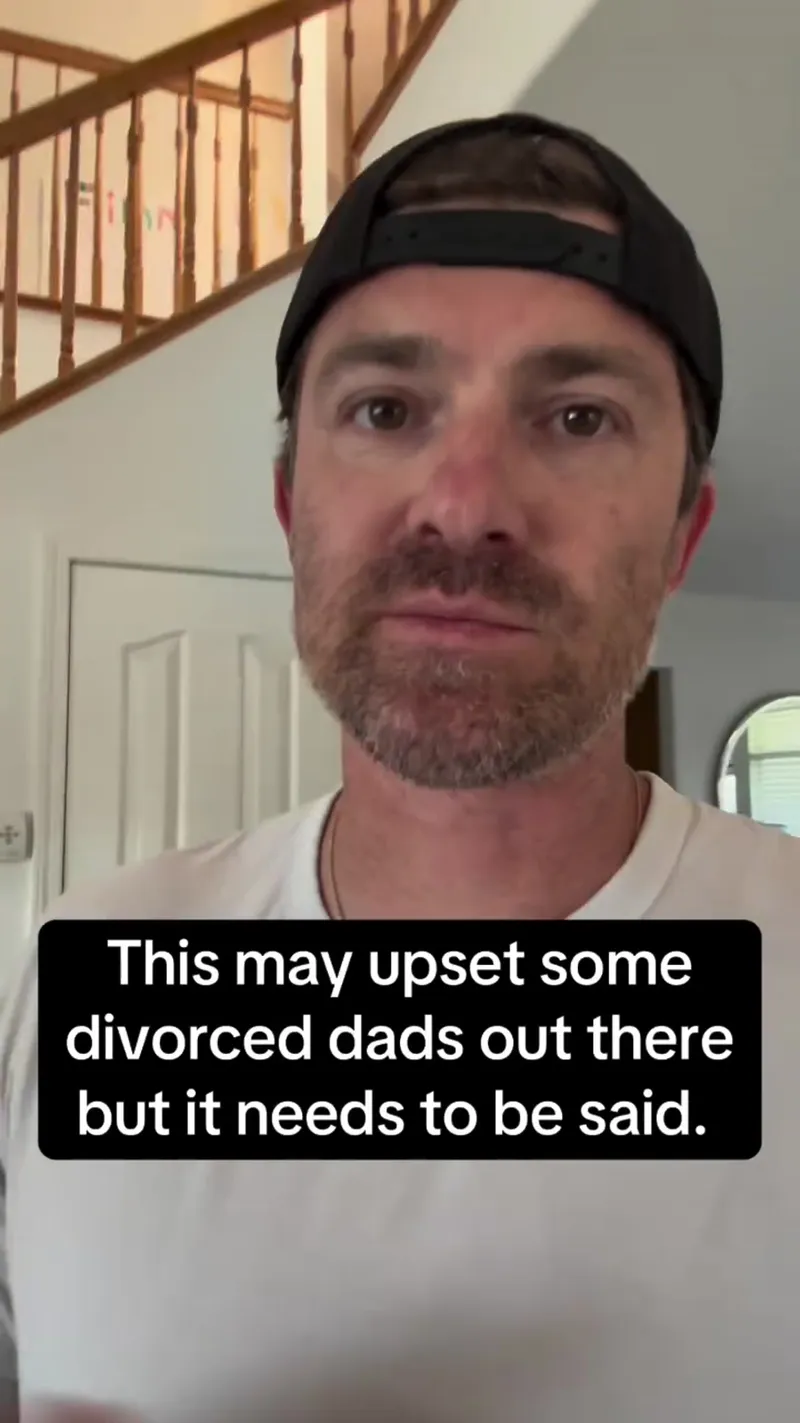
This video challenges divorced fathers to stop intentionally causing their ex-partners emotional or financial stress. The creator argues that parental conflict and retaliation are what truly damage children, urging fathers to prioritize their kids' well-being over personal grudges.
A Hard Truth for Divorced Dads
A divorced father argues that deliberately causing an ex-partner emotional or financial hardship can also hurt the children. He urges fathers to keep boundaries while avoiding retaliation and reducing conflict between households.
- Views
- 685.1K
- Likes
- 45.4K
- Comments
- 2K
- Co-parenting after divorceChildren's emotional well-beingConflict with ex-spouse
Analysis
A divorced father argues that deliberately causing an ex-partner emotional or financial hardship can also hurt the children. He urges fathers to keep boundaries while avoiding retaliation and reducing conflict between households.
- Talking headHot takeMonologue
- Spoken
- Original
“If you're a divorced dad, I'm going to say something that's probably going to piss a lot of people off, but I'm going to say it anyways.”
- On-screen text
- Original
“This may upset some divorced dads out there but it needs to be said.”
- Visual
- Text-led compositionA centered speaker faces the camera in a close-up, with a large white-on-black caption block across the lower part of the frame. The caption states the audience and warns that a difficult message is coming.
- The man speaks directly to the camera, while captions highlight words from his argument about the children's mother and the purpose of his message.
“If you're a divorced dad, I'm going to say something that's probably going to piss a lot of people off, but I'm going to say it anyways. If you are intentionally making the mother of your children suffer, either emotionally or financially, then you're not as good of a father as you think you are. And here's the reason why. It is your job as a father to make sure that your kids are safe emotionally, physically and financially. And when they are at a different household, 50% of the time, when you make that other parent suffer, that actually affects your kids. When they are. When the mother of your children is stressed out, when they're emotionally alone over the place because you added gasoline to that fire, guess who takes the burden of that? Your kids do. When you're, when their mother can't afford to go do things or buy things, guess who suffers? Your kids do. This isn't about you. This isn't about your ex. This is about your children. And like, trust me, I get it. I'm the breadwinner. I, when I was divorced, I had my wife. At the time, my ex wife was a stay at home mother. I get it. Financially, there's been a really rough year. But you know what? I still did. I still showed up. I still paid what I needed to pay. And there were things that were done to me. There were things like narratives and stories and different things that I didn't correct or I didn't push or I didn't take to the extremes and I let it go and gave the other person grace. Not for me, not for them, for my kids. So that my kids grew up or spent the other 50% of the time in the other house in the best possible situation that they possibly could have. And there are a lot of people out there that are so angry at their exes that they will make their exes suffer and not realize that the person actually suffering is your kids. I get that it's hard. I get that it's tough. I get that it feels unfair. But you are the father, you're the leader. Show up in the best possible way so that when you look back at this time, you can be proud of how you showed up instead of looking back going, man, I really messed up or I wish I wouldn't have done that or try to get even with this person. That's not what this is about. This is about your kids. Because divorce doesn't actually damage kids. It's the fighting and the bickering and the back and the fourth and, and just the evilness between the two parents that actually causes the damage. So if you have an opportunity to limit that and help out over there, even when you're not asked to, even when they're doing things to you, and you show up in the best possible way so that your kids can live in a healthy environment, that's a man, that's a dad. That's how more people need to show up.”
- 01Provocative thesis and rationale
Establishes a firm position and opens a clear question—why does this behavior undermine the role?
Address a defined audience, announce an uncomfortable opinion, state the criticized behavior and its contradiction with the audience's stated role, then promise the rationale.
“If you're a divorced dad, I'm going to say something that's probably going to piss a lot of people off, but I'm going to say it anyways. If you are intentionally making the mother of your children suffer, either emotionally or financially, then you're not as good of a father as you think you are. And here's the reason why.”
- 02Explain the indirect harm
Resolves the promised rationale by tracing the consequences from the criticized behavior to those the audience is responsible for; the repeated question-and-answer makes that cost explicit.
State the audience's responsibility to protect others, connect harm to a third party's well-being, and use parallel examples to show who bears the burden.
“It is your job as a father to make sure that your kids are safe emotionally, physically and financially. And when they are at a different household, 50% of the time, when you make that other parent suffer, that actually affects your kids. When they are. When the mother of your children is stressed out, when they're emotionally alone over the place because you added gasoline to that fire, guess who takes the burden of that? Your kids do. When you're, when their mother can't afford to go do things or buy things, guess who suffers? Your kids do.”
- 03Recenter and establish credibility
Moves from the general argument to a personal illustration, showing the speaker understands the hardship while maintaining the central priority.
Recenter the issue on those affected, acknowledge the difficulty, and share relevant personal circumstances and an example of continuing to meet responsibilities.
“This isn't about you. This isn't about your ex. This is about your children. And like, trust me, I get it. I'm the breadwinner. I, when I was divorced, I had my wife. At the time, my ex wife was a stay at home mother. I get it. Financially, there's been a really rough year. But you know what? I still did. I still showed up. I still paid what I needed to pay.”
- 04Model restraint and acknowledge opposition
Turns the argument into a concrete alternative, then concedes the difficulty before restating the consequences.
Recognize perceived wrongs, describe choosing not to escalate and extending grace for the sake of those affected, then acknowledge that many people act from anger and may miss who is harmed.
“And there were things that were done to me. There were things like narratives and stories and different things that I didn't correct or I didn't push or I didn't take to the extremes and I let it go and gave the other person grace. Not for me, not for them, for my kids. So that my kids grew up or spent the other 50% of the time in the other house in the best possible situation that they possibly could have. And there are a lot of people out there that are so angry at their exes that they will make their exes suffer and not realize that the person actually suffering is your kids. I get that it's hard. I get that it's tough. I get that it feels unfair.”
- 05Call to action and lasting perspective
Resolves the argument with a practical direction and a memorable standard for evaluating one's choices.
Urge the audience to lead by example, contrast future pride with regret, explain the broader source of harm, and close with a specific constructive action and values-based affirmation.
“But you are the father, you're the leader. Show up in the best possible way so that when you look back at this time, you can be proud of how you showed up instead of looking back going, man, I really messed up or I wish I wouldn't have done that or try to get even with this person. That's not what this is about. This is about your kids. Because divorce doesn't actually damage kids. It's the fighting and the bickering and the back and the fourth and, and just the evilness between the two parents that actually causes the damage. So if you have an opportunity to limit that and help out over there, even when you're not asked to, even when they're doing things to you, and you show up in the best possible way so that your kids can live in a healthy environment, that's a man, that's a dad. That's how more people need to show up.”