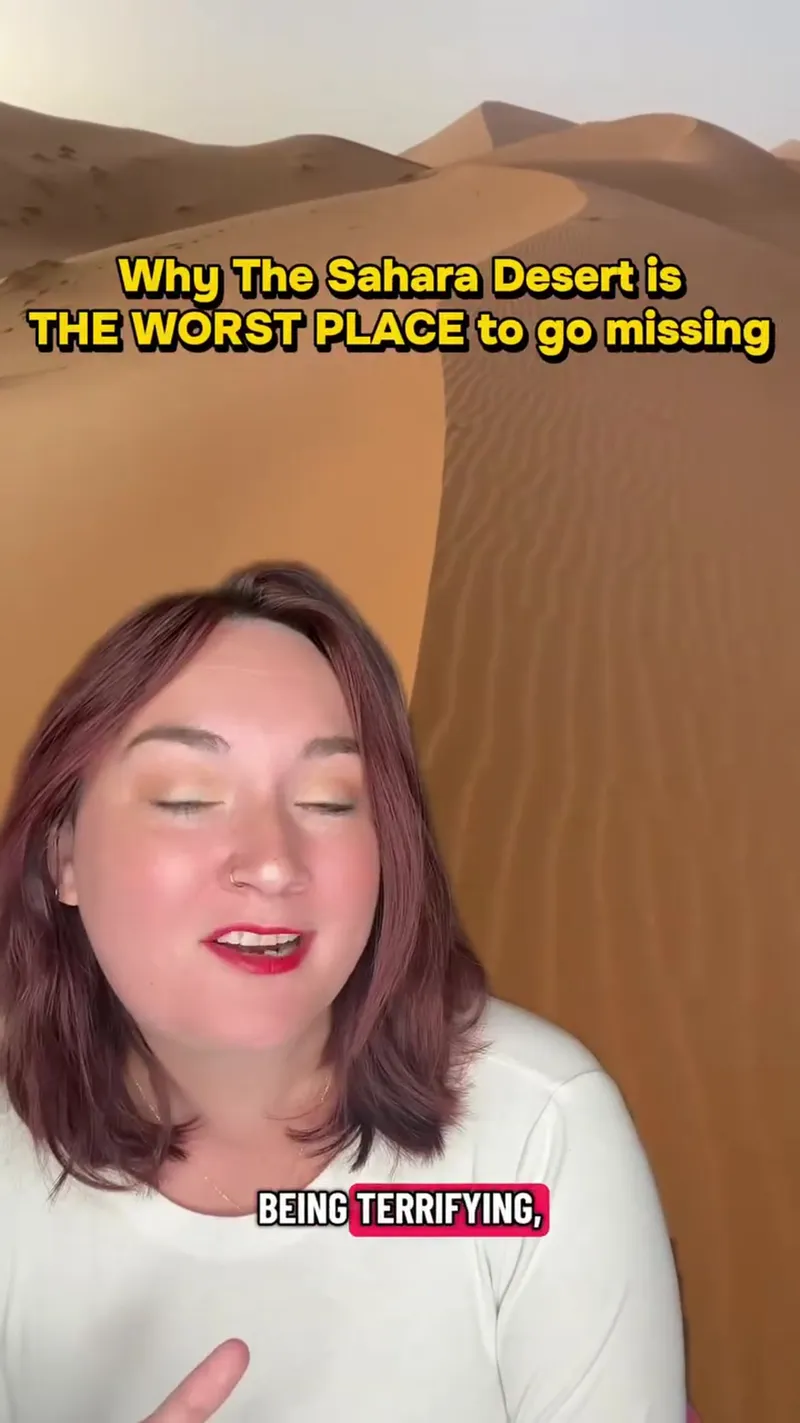
This video outlines why the Sahara Desert is one of the most dangerous places on Earth for anyone lost. It covers extreme heat, hallucinations, massive sandstorms that reshape the land, and deadly wildlife like the deathstalker scorpion.
Why the Sahara Desert is One of the Worst Places to Get Lost
A presenter explains why getting lost in the Sahara can be deadly, citing its vast size, dehydration, hallucinations, sandstorms, venomous animals, and cold nights. The video ends by asking viewers to compare it with the Amazon rainforest.
- Views
- 2.2M
- Likes
- 212.2K
- Comments
- 1.1K
- Sahara survival hazardsDesert disorientationSandstorms and miragesVenomous desert wildlife
Analysis
A presenter explains why getting lost in the Sahara can be deadly, citing its vast size, dehydration, hallucinations, sandstorms, venomous animals, and cold nights. The video ends by asking viewers to compare it with the Amazon rainforest.
- Talking headVoiceoverExplainer
- Spoken
- Original
“Everyone's talking about the Amazon rainforest being terrifying, but nobody's talking about the Sahara Desert. So here's why.”
- On-screen text
- Original
“Why The Sahara Desert is THE WORST PLACE to go missing”
- Visual
- Presenter with contextual backdropA presenter in a medium close-up occupies the lower part of the frame, with expansive desert dunes filling the background. Prominent yellow headline text appears above the presenter; speech captions sit near the bottom.
- The presenter appears over desert dunes during the opening, then sampled visuals of a satellite view and a large scorpion illustrate the spoken points about sandstorms and dangerous wildlife.
“Everyone's talking about the Amazon rainforest being terrifying, but nobody's talking about the Sahara Desert. So here's why. The Sahara is one of the worst places on Earth you could go missing. People don't realize how big this desert actually is. It's about the same size as the entire continental United States. If you get lost there, there is a very real chance that no one will ever find you. We all know about the extreme heat and the dehydration, but the scary part is what that does to your brain. After just a few hours of walking through the desert without enough water, your body will start to shut down. Then come the hallucinations. People. People report seeing big crystal clear lakes in the distance, or even entire villages, then spend hours walking to them, only to realize it was a mirage. And instead of walking towards safety, they've just wandered deeper into the desert. But it gets worse because there are sandstorms. Some of them are so massive that they're visible from space. The wind will blast sand into your face until you can't see or breathe. And then when the storm ends, you'll look around and realize that the entire landscape has changed. Imagine trying to remember which direction you came from when the entire map has been rewritten and everything looks the same. Imagine. And we can't forget to talk about the wildlife. Tons of highly venomous snakes are absolutely everywhere, like sand vipers and cobras. It's also home to a variety of deadly scorpions like the deathstalker scorpion, which can cause excruciating pain, paralysis, and possibly death. And just when you think you survived the day, nighttime comes and temperatures drop dramatically to almost freezing. The same desert that roasted you alive all day is now trying to freeze you instead. So let me know what you think would be worse. Getting lost in the Sahara or getting lost in the Amazon rainforest. And follow for more videos like this.”
- 01Unexpectedly overlooked threat
Introduces the topic through contrast and sets up the explanation of why the place is especially dangerous.
Contrasts a commonly discussed frightening place with a less-discussed one, then promises an explanation and states the central claim.
“Everyone's talking about the Amazon rainforest being terrifying, but nobody's talking about the Sahara Desert. So here's why. The Sahara is one of the worst places on Earth you could go missing.”
- 02Scale and isolation
Supports the opening claim with scale and raises the stakes: a lost person may never be found.
Makes the danger concrete by comparing the place’s size to a familiar large area, then explains the consequence of getting lost there.
“People don't realize how big this desert actually is. It's about the same size as the entire continental United States. If you get lost there, there is a very real chance that no one will ever find you.”
- 03Dehydration and disorientation
Explains a less obvious consequence of exposure and shows how apparent landmarks can worsen the predicament.
Moves from familiar environmental hazards to their effect on the brain, then describes hallucinations that send people toward illusory landmarks and deeper into danger.
“We all know about the extreme heat and the dehydration, but the scary part is what that does to your brain. After just a few hours of walking through the desert without enough water, your body will start to shut down. Then come the hallucinations. People. People report seeing big crystal clear lakes in the distance, or even entire villages, then spend hours walking to them, only to realize it was a mirage. And instead of walking towards safety, they've just wandered deeper into the desert.”
- 04Storms erase the map
Escalates the threat by connecting physical danger to the loss of reliable direction.
Introduces another danger, describes a storm’s scale and immediate effects, then explains how the changed landscape makes navigation harder.
“But it gets worse because there are sandstorms. Some of them are so massive that they're visible from space. The wind will blast sand into your face until you can't see or breathe. And then when the storm ends, you'll look around and realize that the entire landscape has changed. Imagine trying to remember which direction you came from when the entire map has been rewritten and everything looks the same. Imagine.”
- 05Wildlife and temperature reversal
Broadens the list of hazards and closes the danger sequence with a sharp day-to-night reversal.
Adds venomous animals and their possible effects, then pivots to the cold that arrives at night and contrasts it with the day’s heat.
“And we can't forget to talk about the wildlife. Tons of highly venomous snakes are absolutely everywhere, like sand vipers and cobras. It's also home to a variety of deadly scorpions like the deathstalker scorpion, which can cause excruciating pain, paralysis, and possibly death. And just when you think you survived the day, nighttime comes and temperatures drop dramatically to almost freezing. The same desert that roasted you alive all day is now trying to freeze you instead.”
- 06Comparison question and follow request
Turns the completed comparison into a direct invitation for audience input and ends with a clear channel call to action.
Asks viewers which of two dangerous places would be worse to get lost in, then requests a follow for similar videos.
“So let me know what you think would be worse. Getting lost in the Sahara or getting lost in the Amazon rainforest. And follow for more videos like this.”