Blind tasting programming languages. #coding #programming #csmajors
Blind tasting programming languages.
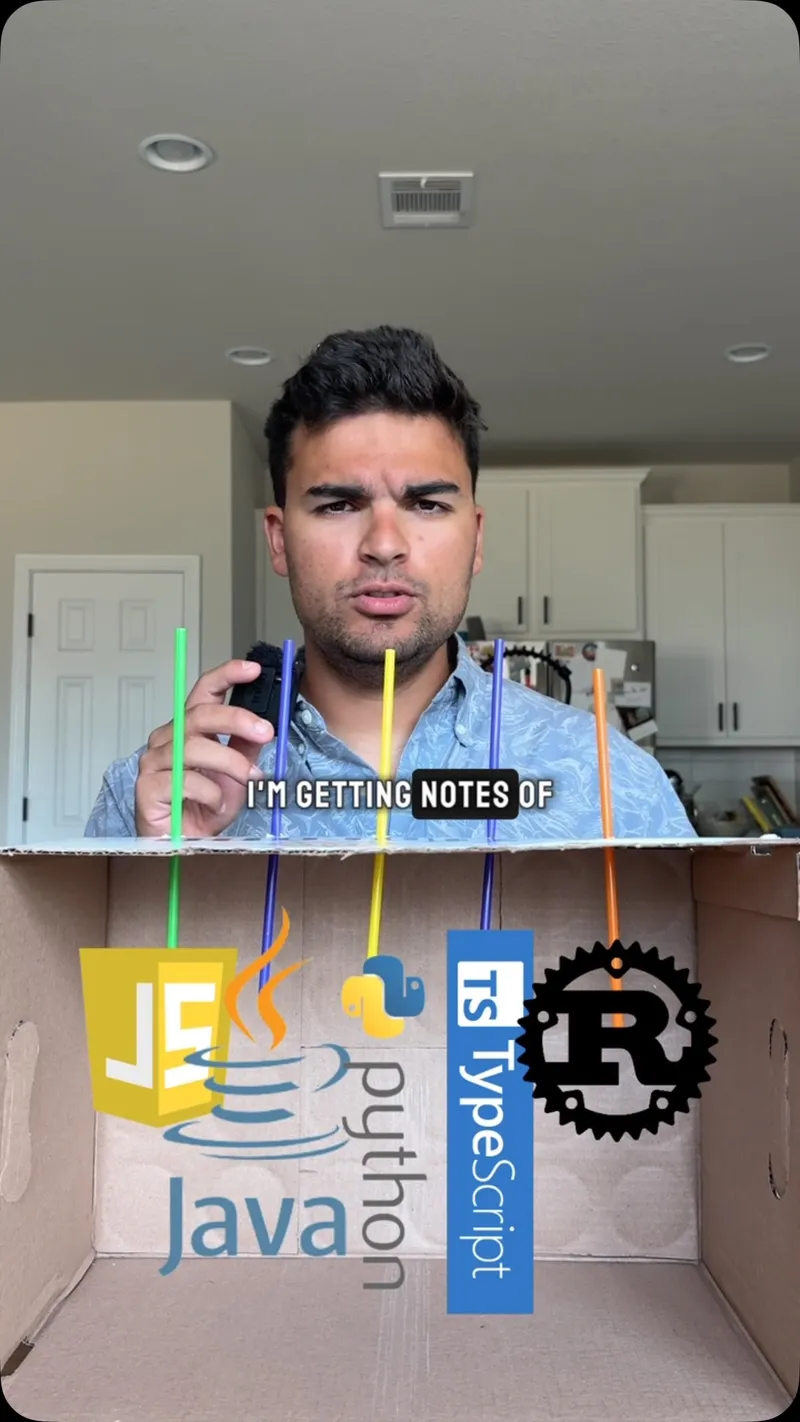
A creator blind-tastes drinks through straws hidden in a box, then guesses which programming language each one represents. He uses playful flavor descriptions and coding references to identify languages such as JavaScript, Java, Python, and TypeScript.

- Views
- 759K
- Likes
- 37.7K
- Comments
- 277
- Programming languagesBlind taste test
Analysis
A creator blind-tastes drinks through straws hidden in a box, then guesses which programming language each one represents. He uses playful flavor descriptions and coding references to identify languages such as JavaScript, Java, Python, and TypeScript.
- Talking headDemoExperiment
- Spoken
- Original
“That is horrible.”
- On-screen text
- Original
“blind tasting programming languages”
- Visual
- Text-led premise with a visual sampling setupA centered person leans over an open box with several colored straws leading to programming-language logos; a prominent two-line headline sits above.
- The box, straws, and language logos set up the blind-tasting premise, while captions repeat parts of the presenter’s spoken reactions. His changing expressions accompany the humorous tasting commentary.
“That is horrible. I'm getting notes of undefined, and it's weird. It tastes completely different if I compare it with 2/2 versus 3. Must be JavaScript. Definitely better. I'm getting a little bit of spring, possibly even some boot. Tastes a little bit vintage. Very legacy. But it's. I think it feels quite popular. I'm gonna say it's Java. Wow, that one goes down very easy. Almost too easy. I'm getting a mix of machine learning, but also vibe coding. Lovely flavor, but I feel like I can only be drinking one glass at a time. Must be python. Ooh. Ooh, that is nice. That. That almost feels like this one, but much more refined. I'm getting type safety. Must be typescript. Ooh, that's clean. Goes down fast. Almost no aftertaste, but I'm getting hints of overrate.”
- 01First impression and clue-based guess
Establishes the blind-evaluation format by turning sensory impressions and comparison into a guess; the contrast invites the next sample's assessment.
The taster reacts negatively to a sample, describes its odd qualities, compares it with another version, then offers a tentative identification and contrasting positive judgment.
“That is horrible. I'm getting notes of undefined, and it's weird. It tastes completely different if I compare it with 2/2 versus 3. Must be JavaScript. Definitely better.”
- 02Descriptive clues and confident guess
Develops the identification game with several distinct impressions before resolving them in a confident guess.
The taster gives seasonal and vintage associations, weighs in on popularity, and guesses the sample's identity.
“I'm getting a little bit of spring, possibly even some boot. Tastes a little bit vintage. Very legacy. But it's. I think it feels quite popular. I'm gonna say it's Java.”
- 03Easy-drinking sample and guess
Uses successive impressions to support another identification; the unusual one-glass-at-a-time comment adds a distinctive comic turn before the guess.
The taster praises how easily the sample goes down, identifies mixed qualities, adds a humorous serving limitation, then guesses what it is.
“Wow, that one goes down very easy. Almost too easy. I'm getting a mix of machine learning, but also vibe coding. Lovely flavor, but I feel like I can only be drinking one glass at a time. Must be python.”
- 04Refined comparison and final evaluation
Provides a final clue-to-guess payoff and closes with a qualified assessment rather than an unreserved endorsement.
The taster reacts positively, compares the sample with an earlier one as more refined, guesses its identity, then notes its clean finish and a possible overrating.
“Ooh. Ooh, that is nice. That. That almost feels like this one, but much more refined. I'm getting type safety. Must be typescript. Ooh, that's clean. Goes down fast. Almost no aftertaste, but I'm getting hints of overrate.”