A street interview featuring Cleo, a young founder who started her brand Hiraya at 15 and became a millionaire by age 20. She shares insights on overcoming limited resources, the value of mentors, and why she believes attention is the new currency for modern businesses.
How She Became a Millionaire at 20 Starting with Only $500
A street interview with the founder of Hiraya, who says she started the fashion essentials business at 15 and made her first million at 20 or 21. She shares lessons about startup challenges, mentorship, defining success, and using online content to grow a business.
- Likes
- 12.1K
- Comments
- 131
- Young business founderFashion essentials businessStartup challengesContent-led marketing
Analysis
A street interview with the founder of Hiraya, who says she started the fashion essentials business at 15 and made her first million at 20 or 21. She shares lessons about startup challenges, mentorship, defining success, and using online content to grow a business.
- Street interviewInterview
- Spoken
- Original
“Excuse me, ladies. Who's the millionaire here?”
- On-screen text
- Original
“EXCUSE ME, / LADIES, WHO’S / MILLIONAIRE”
- Visual
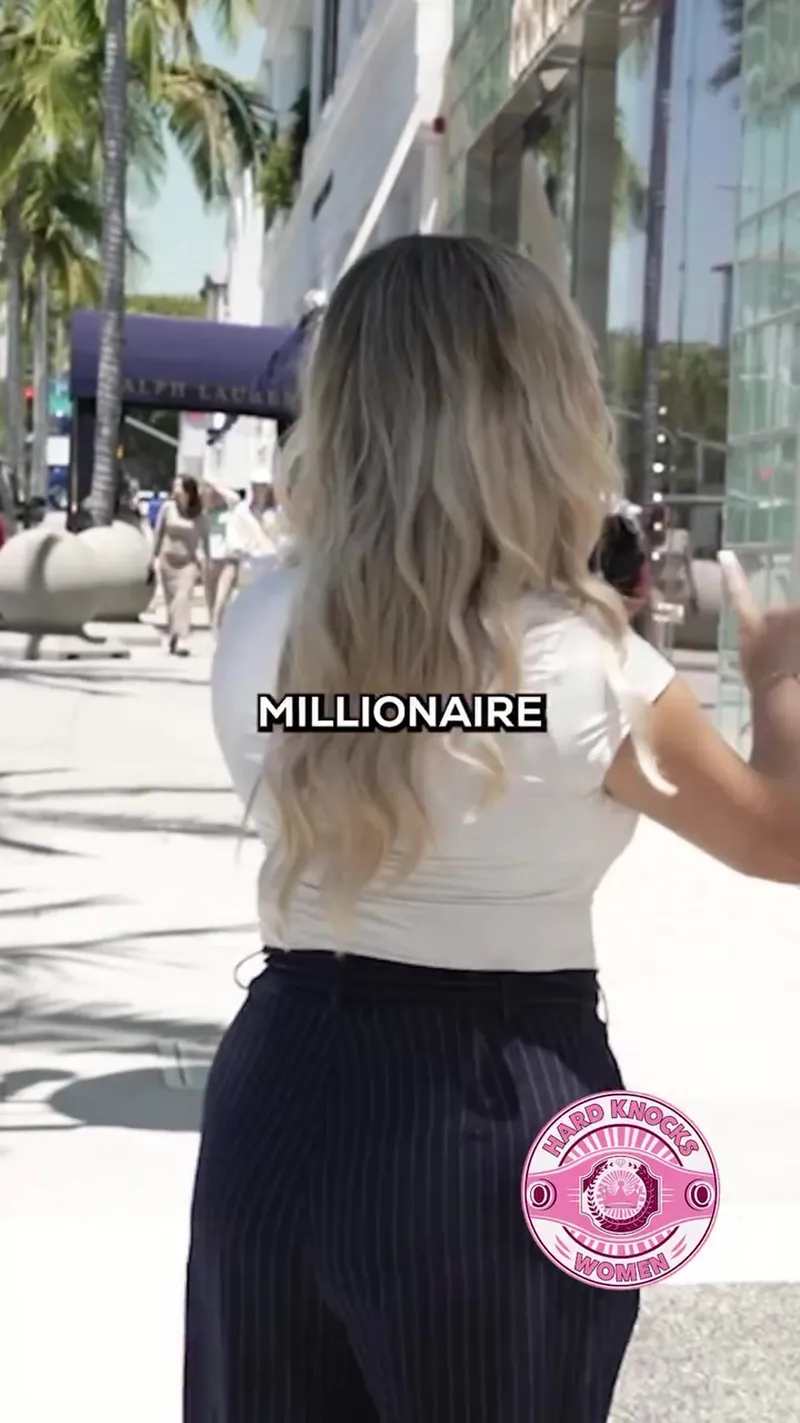
- Text-led compositionVertical street footage follows an interviewer approaching women from behind; large centered captions carry the spoken opening, with a pink circular show badge near the lower right.
- The samples show a street-side exchange between the interviewer and founder, while captions repeat parts of their speech. The opening frames the search for a millionaire; later samples show the founder answering questions.
“Excuse me, ladies. Who's the millionaire here? It's her. You're the millionaire? Yeah. Why? I'm actually part of this. Wait, I recognize you. You do? Yeah, I'm part of the School of Hard Knocks team. Yeah. What do you do for a living? I'm a business owner in the Philippines. Do you mind if I talk to you for 60 seconds about your business? Of course. Yeah. What business do you own? I own Hiraya in the Philippines. So our core product line right now is all about nipple pasties and silicone bras. I started it when I was 15 years old. You were 15 when you started this? Yeah. How old were you when you made your first million? When I was 20 or 21. What have you learned about since you had it so young? That honestly, money is just a tool in order for you to get to where you want to be. And you need to define what success means to you early on, even before you have the money, because it's so easy to be swayed with the different versions of success in society. What type of challenges did you face building a business so young? Oh, definitely limited resources. I started the business with less than $500 and I loaned it from my parents when I was 15. What did they say when you said you want to start a business like that at 15? They crazy. But when I did YouTube, they just supported me. Did you ever have any mentors then? I think it's really my dad at the start. But then now I have different mentors. I have mentors for my personal brand, for growing the business. I think mentors are super important. What's the best advice your dad has given you about life? Cleo? Honestly, you know your business best. Yes. It's important for you to also ask for the opinions of different people. But at the end of the day, that decision is yours and yours to make and it should be your accountability. And you already know the answer. It's already within. You just have to look inward than outward. If you had less than $500 again and you had to start all over, what would you do? I would create content online. I always tell my team that we should be content first. Content is king. Attention is the new currency. I love that. Thank you so much.”
- 01Unexpected introduction and identification
Establishes an engaging subject and an informal interview connection before asking about their work.
An interviewer addresses a group, asks who among them has a notable distinction, then confirms the person and discovers a point of recognition.
“Excuse me, ladies. Who's the millionaire here? It's her. You're the millionaire? Yeah. Why? I'm actually part of this. Wait, I recognize you. You do? Yeah, I'm part of the School of Hard Knocks team. Yeah.”
- 02Permission and business introduction
Sets up the founder’s story with concrete context and a striking early-start detail that leads into her achievements.
The interviewer asks what the person does, requests a brief conversation about their business, and asks what they own. The founder names the business and its products, then reveals she started it at 15; the interviewer confirms the age.
“What do you do for a living? I'm a business owner in the Philippines. Do you mind if I talk to you for 60 seconds about your business? Of course. Yeah. What business do you own? I own Hiraya in the Philippines. So our core product line right now is all about nipple pasties and silicone bras. I started it when I was 15 years old. You were 15 when you started this? Yeah.”
- 03Milestone and guiding lesson
Turns the biographical milestone into a broader principle about purpose and resisting outside definitions of success.
The interviewer asks when the founder reached a major milestone and what she learned from reaching it young. She explains that money is a tool, and advises defining success early rather than being swayed by society’s versions of it.
“How old were you when you made your first million? When I was 20 or 21. What have you learned about since you had it so young? That honestly, money is just a tool in order for you to get to where you want to be. And you need to define what success means to you early on, even before you have the money, because it's so easy to be swayed with the different versions of success in society.”
- 04Early obstacle and support
Adds practical detail and personal context to the origin story, then answers the specific question of how her parents responded.
Asked about the challenges of starting young, the founder describes limited resources and a small loan from her parents. The interviewer asks how they reacted; she says they thought she was crazy but later supported her when she did YouTube.
“What type of challenges did you face building a business so young? Oh, definitely limited resources. I started the business with less than $500 and I loaned it from my parents when I was 15. What did they say when you said you want to start a business like that at 15? They crazy. But when I did YouTube, they just supported me.”
- 05Mentors and personal advice
Broadens the story from resources and family support to ongoing guidance, then delivers a substantial personal lesson.
The founder identifies her father as an early mentor and says she now has different mentors for different areas. Asked for her father’s best advice, she says to know your work best, seek opinions, own the final decision, and look inward for the answer.
“Did you ever have any mentors then? I think it's really my dad at the start. But then now I have different mentors. I have mentors for my personal brand, for growing the business. I think mentors are super important. What's the best advice your dad has given you about life? Cleo? Honestly, you know your business best. Yes. It's important for you to also ask for the opinions of different people. But at the end of the day, that decision is yours and yours to make and it should be your accountability. And you already know the answer. It's already within. You just have to look inward than outward.”
- 06Starting-over answer and closing takeaway
Resolves the final hypothetical with a concrete answer and a succinct principle, then closes the conversation.
The interviewer asks what the founder would do with the same limited starting resources again. She says she would create online content, explains that her team should be content-first, and concludes that attention is the new currency before the interviewer thanks her.
“If you had less than $500 again and you had to start all over, what would you do? I would create content online. I always tell my team that we should be content first. Content is king. Attention is the new currency. I love that. Thank you so much.”