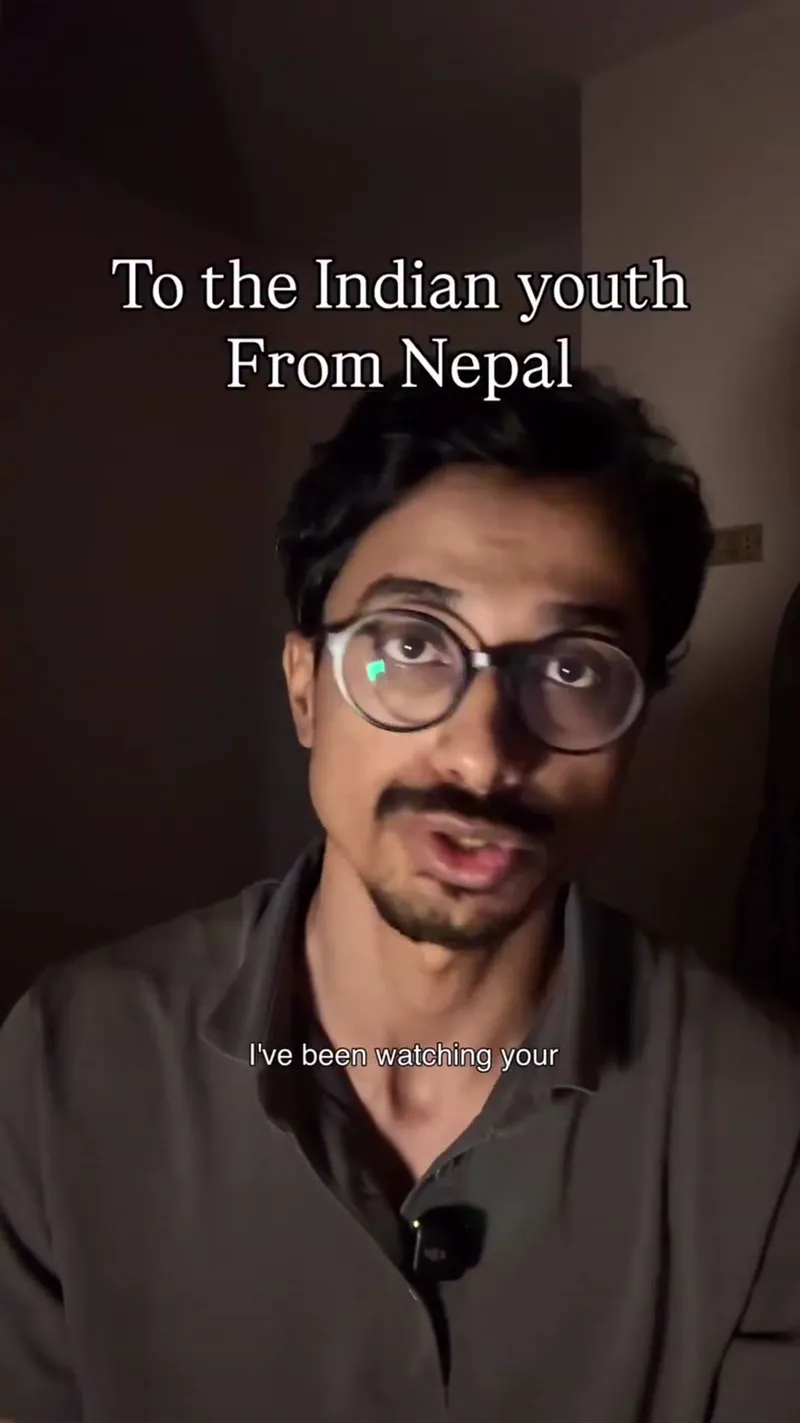
A creator from Nepal shares a heartfelt message of solidarity and five pieces of advice for young people protesting in India. He emphasizes emotional validation, staying focused on long-term goals, and building movements on a foundation of care rather than just anger.
A Supportive Message to Protesting Indian Youth from Nepal
A speaker in Nepal addresses young people protesting in India, drawing on his own protest experience. He offers five points on validating their feelings, staying focused, supporting one another, and acting from care.
- Likes
- 80.5K
- Comments
- 825
- Indian youth protestsProtest solidaritySelf-care in movements
Analysis
A speaker in Nepal addresses young people protesting in India, drawing on his own protest experience. He offers five points on validating their feelings, staying focused, supporting one another, and acting from care.
- Talking headListicleMonologue
- Spoken
- Original
“Hello, young people of India. I've been watching you protest your struggles all day today from right across the border here in Nepal.”
- On-screen text
- Original
“To the Indian youth From Nepal”
- Visual
- Text-led compositionA centered speaker faces the camera in a medium close-up, with the prominent two-line headline above and subtitles lower in the frame.
- The speaker appears to address the camera throughout the sampled frames. The headline identifies his message as being from Nepal to Indian youth, while subtitles track his speech.
“Hello, young people of India. I've been watching you protest your struggles all day today from right across the border here in Nepal. And as someone who has gone through severe protests about eight months ago, here are some things that I wanted to tell you. Number one, whatever you're feeling is valid. Do not let anyone tell you that your feelings are too much, that you're thinking too much, that you're overreacting. All of it, all of what you're saying makes sense and you don't have to justify it. Number two, don't get distracted. Always remember what your goal is. Speaking from personal experience, it's really easy to lose sight of what you're fighting for once the fight begins. But please hold on to it all the way through. Because that is something I couldn't manage to do until the end when I was protesting here. Number three, you're not alone in this. Not in your city, not in your generation, not even outside your country. There are people who are watching you from all across the world. And we care. Four, take care of each other first. Check on your friends. Rest when you need to. A movement is only as strong as the people inside it feel supported. Number five, however you choose to stand up, make sure that it comes from a place of care. I understand you're frustrated. I understand you must be angry. But please remember that whatever you started, it comes from a place of care. You care about all those students who lost their lives. You care about all those students who struggle day in, day out to make sure that they can become something in the country. Any movement, any protest built on this foundation of care lasts more much longer than frustration or anger. Now, whatever happens next, I hope it's good. And I hope you take care of yourselves while you get there.”
- 01Address and establish perspective
Creates a personal and relevant frame for the numbered guidance that follows.
Greets the audience, recognizes their situation, and introduces advice informed by the speaker's experience with a similar challenge.
“Hello, young people of India. I've been watching you protest your struggles all day today from right across the border here in Nepal. And as someone who has gone through severe protests about eight months ago, here are some things that I wanted to tell you.”
- 02Validate the audience's feelings
Offers direct reassurance as the first piece of guidance and establishes a validating tone for the advice.
Presents the first point: whatever the audience feels is valid, rejects accusations that they are overreacting, and says their concerns need no justification.
“Number one, whatever you're feeling is valid. Do not let anyone tell you that your feelings are too much, that you're thinking too much, that you're overreacting. All of it, all of what you're saying makes sense and you don't have to justify it.”
- 03Hold on to the goal
Turns the speaker's past difficulty into a specific caution and encouragement to sustain focus.
The second point advises staying focused on the goal, explains from personal experience how a struggle can obscure it, and urges the audience to persist through to the end.
“Number two, don't get distracted. Always remember what your goal is. Speaking from personal experience, it's really easy to lose sight of what you're fighting for once the fight begins. But please hold on to it all the way through. Because that is something I couldn't manage to do until the end when I was protesting here.”
- 04Affirm solidarity
Expands the reassurance from individual encouragement to a wider sense of support.
The third point says the audience is not alone in their community, generation, or beyond, and notes that people elsewhere are watching and care.
“Number three, you're not alone in this. Not in your city, not in your generation, not even outside your country. There are people who are watching you from all across the world. And we care.”
- 05Prioritize mutual care
Makes support concrete through interpersonal care and explains why that care matters to the larger group.
The fourth point asks people to look after one another, check on friends, and rest when needed; it links collective strength to people feeling supported.
“Four, take care of each other first. Check on your friends. Rest when you need to. A movement is only as strong as the people inside it feel supported.”
- 06Ground action in care
Brings the list to its central principle, connecting the audience's concerns to a durable foundation for action.
The fifth point asks the audience to act from care, acknowledges frustration and anger, and identifies whom and what they care about. It concludes that action grounded in care lasts longer than action grounded in frustration or anger.
“Number five, however you choose to stand up, make sure that it comes from a place of care. I understand you're frustrated. I understand you must be angry. But please remember that whatever you started, it comes from a place of care. You care about all those students who lost their lives. You care about all those students who struggle day in, day out to make sure that they can become something in the country. Any movement, any protest built on this foundation of care lasts more much longer than frustration or anger.”
- 07Close with a hopeful wish
Closes the guidance with goodwill and a final reminder of personal care.
Ends by expressing hope for a good outcome and asking the audience to take care of themselves along the way.
“Now, whatever happens next, I hope it's good. And I hope you take care of yourselves while you get there.”