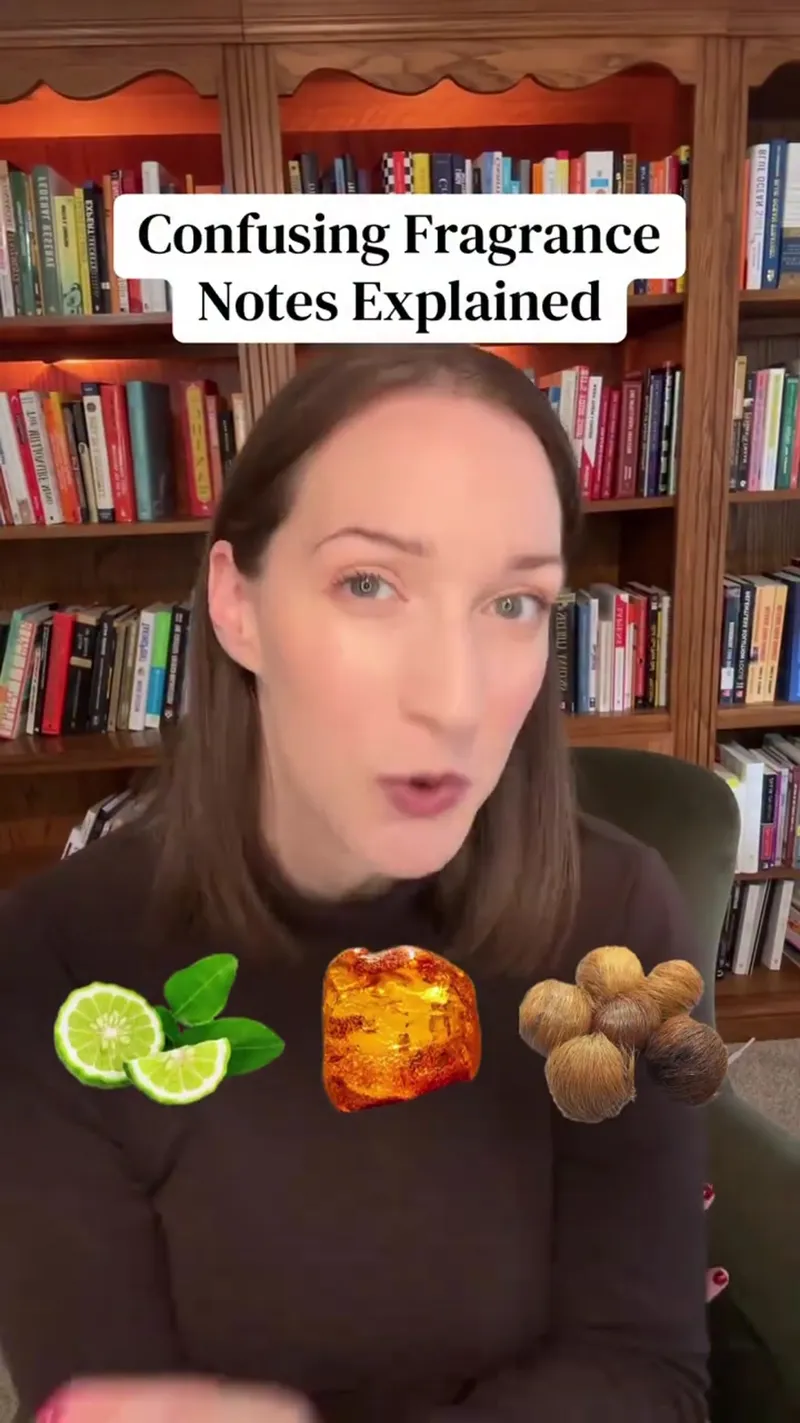
This video breaks down common but misunderstood perfume ingredients like musk, bergamot, and patchouli. The creator explains what these notes actually smell like and clarifies that amber is a 'fantasy accord' rather than a single natural ingredient.
Common Fragrance Notes Explained: Musk, Bergamot, and More
A presenter explains how musk, tonka bean, bergamot, amber, and patchouli are commonly described in fragrance. She compares their scent qualities and gives examples to help viewers talk about perfume notes.
- Views
- 678.7K
- Likes
- 42.7K
- Comments
- 321
- Fragrance note descriptionsMusk scent profilesTonka bean aromaBergamot and amber accordsPatchouli scent profile
Analysis
A presenter explains how musk, tonka bean, bergamot, amber, and patchouli are commonly described in fragrance. She compares their scent qualities and gives examples to help viewers talk about perfume notes.
- Talking headListicleExplainer
- Spoken
- Original
“Here's what every confusing fragrance note actually smells like so you can better understand and describe fragrance.”
- On-screen text
- Original
“Confusing Fragrance Notes Explained”
- Visual
- Text-led composition with supporting illustrationsA centered speaker appears in a medium close-up before bookshelves, with a prominent headline above and, in later supplied frames, three cutout illustrations across the lower part of the image.
- The presenter speaks to camera while labels identify the notes being discussed. Overlaid images, such as citrus and forest scenes, visually support her scent descriptions.
“Here's what every confusing fragrance note actually smells like so you can better understand and describe fragrance. First, we got musk. And there's actually three main types of musk, and they all smell completely different. The first is white musk, which is soft, clean, and airy, like fresh laundry skin. Musk smells like an idealized version of skin. It is very warm and intimate. And then we have animalic musk. And this is a dirtier, sexier kind of musk that can smell a little bit like body heat or sweat. Next we got tonka bean, which is not just another type of vanilla. It's. It smells similar, but it's warmer, it's darker, and it has hints of almond, spices, and tobacco. So overall, it just makes a fragrance feel sweet, warm, and smooth. Number three is bergamot. Now, most people confuse bergamot with lemon, but bergamot is a smoother, softer, and more elegant citrus than lemon. It's not so harsh and acidic. It's a little bit sweet, a little bit bitter, and it has some interesting spicy and floral nuances to it. Number four is amber. Now, amber is not a real ingredient in fragrance, and it doesn't come from this amber. It is a fantasy accord designed to catch capture the vibe of amber, which is like, golden, deep, rich, warm, and sweet. So an amber accord will pretty much always have vanilla and resins, but it will sometimes have other ingredients thrown in there, like tonka bean, spices, or woods. Now, patchouli smells earthy, woody, herbal, and damp. It's kind of like a forest after the rain type of smell. It's used as a base note in a lot of fragrances because it lasts a long time, and it also helps balance out any sweet or heavy notes. But. But it is also a very polarizing ingredient in fragrance because some people think it's very comforting and nostalgic, and some people think it smells kind of dirty. And here is your class homework with examples.”
- 01Promise and first category
Establishes the guide's practical aim and begins the explanation with a useful distinction between subtypes.
Promises to explain what each confusing [subject-specific term] is like so viewers can better understand and describe the broader subject, then introduces the first term and notes that it has several distinct types.
“Here's what every confusing fragrance note actually smells like so you can better understand and describe fragrance. First, we got musk. And there's actually three main types of musk, and they all smell completely different.”
- 02Contrast the first term's types
Makes the promised distinctions concrete through contrast, giving the viewer a memorable way to recognize each type.
Describes two varieties of the first term using sensory qualities and familiar comparisons, moving from a soft, clean type to a dirtier, more sensual one.
“The first is white musk, which is soft, clean, and airy, like fresh laundry skin. Musk smells like an idealized version of skin. It is very warm and intimate. And then we have animalic musk. And this is a dirtier, sexier kind of musk that can smell a little bit like body heat or sweat.”
- 03Correct a familiar misconception
Resolves a likely confusion with a direct contrast, then translates the distinction into an overall impression.
Introduces another term, says it is not merely a familiar substitute, compares their similarities and differences, and summarizes the effect it gives the broader subject.
“Next we got tonka bean, which is not just another type of vanilla. It's. It smells similar, but it's warmer, it's darker, and it has hints of almond, spices, and tobacco. So overall, it just makes a fragrance feel sweet, warm, and smooth.”
- 04Distinguish a look-alike term
Continues the guide by correcting another common mix-up and supplying a layered description rather than a one-word substitute.
Introduces a third term often confused with a familiar alternative, distinguishes it by smoothness and intensity, and adds its subtler qualities.
“Number three is bergamot. Now, most people confuse bergamot with lemon, but bergamot is a smoother, softer, and more elegant citrus than lemon. It's not so harsh and acidic. It's a little bit sweet, a little bit bitter, and it has some interesting spicy and floral nuances to it.”
- 05Explain an abstract category and its ingredients
Prevents a misleading literal interpretation, then explains both the category's intended effect and how its composition can vary.
Clarifies that a named category is not a literal ingredient, but a constructed blend intended to evoke an impression; lists its defining qualities and common and optional components.
“Number four is amber. Now, amber is not a real ingredient in fragrance, and it doesn't come from this amber. It is a fantasy accord designed to catch capture the vibe of amber, which is like, golden, deep, rich, warm, and sweet. So an amber accord will pretty much always have vanilla and resins, but it will sometimes have other ingredients thrown in there, like tonka bean, spices, or woods.”
- 06Describe function and divided reactions
Completes the guide with sensory description, use, and a balanced qualification; the closing prompt turns the explanations into something viewers can apply.
Describes another term with an environmental comparison, explains its practical function, then notes that people react to it differently, ending with a homework prompt and examples.
“Now, patchouli smells earthy, woody, herbal, and damp. It's kind of like a forest after the rain type of smell. It's used as a base note in a lot of fragrances because it lasts a long time, and it also helps balance out any sweet or heavy notes. But. But it is also a very polarizing ingredient in fragrance because some people think it's very comforting and nostalgic, and some people think it smells kind of dirty. And here is your class homework with examples.”