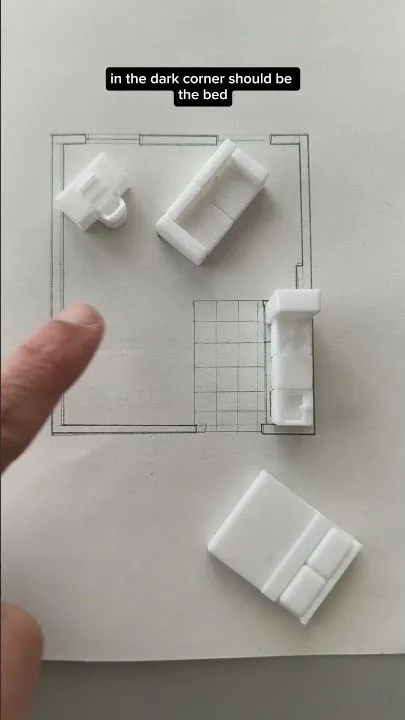
there are a million ways to arrange this studio apartment, but this is my way!
Dear Modern@DearModernthere are a million ways to arrange this studio apartment, but this is my way!
The speaker explains how to arrange a home for sleeping, working, and relaxing. They compare desk, bed, couch, and divider placements to improve natural light, privacy, and how the space feels.
- Views
- 3M
- Likes
- 132.2K
- Comments
- 742
- Small home layoutFurniture placementBedroom privacyNatural lightRoom energy
Analysis
The speaker explains how to arrange a home for sleeping, working, and relaxing. They compare desk, bed, couch, and divider placements to improve natural light, privacy, and how the space feels.
- TutorialProblem–SolutionDemo
- Spoken
- Original
“This is one of the layouts that was most favorited.”
“This is one of the layouts that was most favorited. >> [gasps] [laughter] >> A silly idea is still silly even if it's everyone's favorite. I mean Anyway, we need to first understand the nature of the deployment. This is a home where you sleep, relax, and work. And the best part of the room is here with lots of natural light. So, do the awake things here like work and relax. In the dark corner should be the bed. But, I know the kitchen is here lots of fire energy. So, add a divider like a bookshelf or a screen. You can even rotate the bed so you only enter from the living room side, which also makes the living space bigger. For the living area, this is one way, but your back is to the door while you work so you'll feel exposed. So, you can flip the whole thing around so you can see the door as you work and your messy desk is hidden from view. But, now the couch feels exposed. So, you can flip it all back again, but now have the desk against the couch so the desk is nicely in command of the room with lots of natural light and the living room is the first thing you'll see, very welcoming and social. And the bed is in his own cozy area. See how the screen blocks the kitchen energy? Much nicer, right? So, now you know.”
- 01Introduce the favored option
Establishes the option under discussion while acknowledging that approval alone is not proof of quality, before moving into the reasoning behind it.
Presents one option as a popular or preferred choice, then briefly qualifies that popularity does not make every idea good.
“This is one of the layouts that was most favorited. >> [gasps] [laughter] >> A silly idea is still silly even if it's everyone's favorite. I mean Anyway, we need to first understand the nature of the deployment.”
- 02Explain the constraints and first arrangement
Makes the recommendation legible through specific needs and conditions, then gives an initial arrangement and its practical advantage.
Describes the space's different uses and features, then uses those constraints to propose where activities belong and how to separate them.
“This is a home where you sleep, relax, and work. And the best part of the room is here with lots of natural light. So, do the awake things here like work and relax. In the dark corner should be the bed. But, I know the kitchen is here lots of fire energy. So, add a divider like a bookshelf or a screen. You can even rotate the bed so you only enter from the living room side, which also makes the living space bigger.”
- 03Test a reversal and account for its drawback
Shows that improving one priority can create a different problem; the compromise advances the search for a configuration that balances competing needs.
Offers another arrangement, explains the benefit it provides, then points out the new drawback and proposes a compromise.
“For the living area, this is one way, but your back is to the door while you work so you'll feel exposed. So, you can flip the whole thing around so you can see the door as you work and your messy desk is hidden from view. But, now the couch feels exposed. So, you can flip it all back again, but now have the desk against the couch so the desk is nicely in command of the room”
- 04Present the balanced result and close
Resolves the tradeoffs by presenting the chosen balance and its benefits, then closes with a confirming question and a concise finality cue.
Describes the final arrangement's advantages for different needs, points out how a feature addresses an earlier concern, and ends with a brief approving wrap-up.
“with lots of natural light and the living room is the first thing you'll see, very welcoming and social. And the bed is in his own cozy area. See how the screen blocks the kitchen energy? Much nicer, right? So, now you know.”