The creator shares five actionable financial steps for 18-year-olds to gain a competitive edge over their peers. The advice covers opening tax-advantaged accounts, maximizing savings interest, and the importance of choosing the right social circle.
5 Money Moves to Make at 18
A creator shares five money tips for 18-year-olds: start investing, use a high-interest savings account, build credit, learn basic finance, and choose friends who respect your goals. She also discusses spending habits and mindset.
- Views
- 1.8M
- Likes
- 125.7K
- Comments
- 261
- Financial advice for young adultsInvesting and savings accountsCredit buildingFinancial literacySpending habits and friendships
Analysis
A creator shares five money tips for 18-year-olds: start investing, use a high-interest savings account, build credit, learn basic finance, and choose friends who respect your goals. She also discusses spending habits and mindset.
- Talking headListicleTutorial
- Spoken
- Original
“Here are five things you need to do to get ahead of your peers when you're 18 years old.”
- On-screen text
- Original
“Financial literacy 101 For 18 year olds”
- Visual
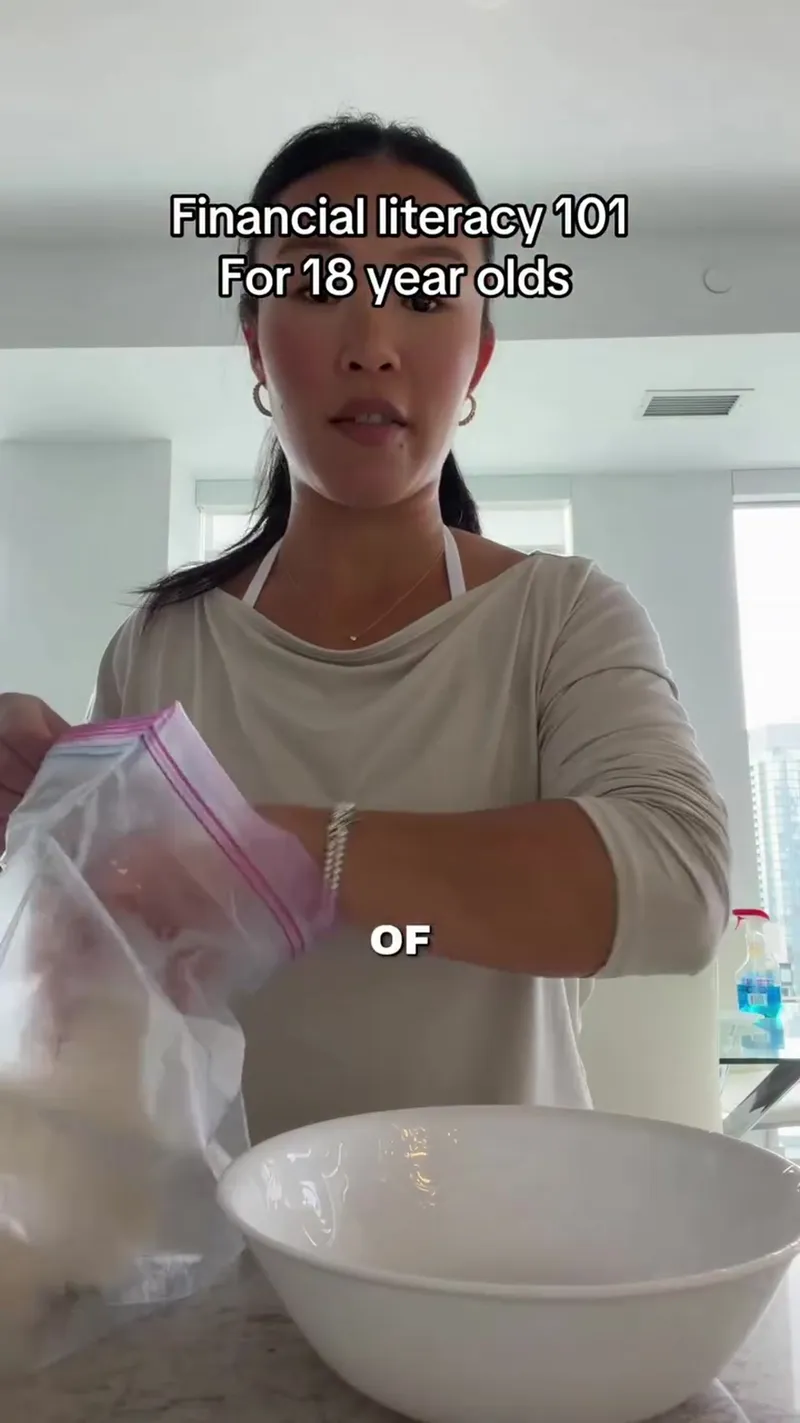
- Text-led compositionA centered presenter faces the camera in a medium shot, handling a clear bag above a bowl in a bright kitchen. The prominent two-line headline sits across the upper center; a bold spoken-word caption appears lower in the frame.
- The speaker addresses the camera while preparing food in the kitchen. On-screen captions highlight words from her speech, and a headline introduces the financial-literacy topic.
“Here are five things you need to do to get ahead of your peers when you're 18 years old. First thing you need to do is you need to open an investing account that is a TFSA if you are in Canada, in a Roth IRA if you are in the US if you can even invest $20 a month, that goes a very long way since you're young. Second thing you'll want to do is to open a high interest savings account. Okay, don't keep your savings in a regular savings account because it'll probably pay you a dollar a year versus if you open a high interest savings account, they pay you like 10 times more and that' money every single month. High interest savings accounts are literally no risk and you get free money. Third thing you should do is to get a credit card now. Use it responsibly. You guys have heard this, you know what's going on. Pay it every single month in full and do not be late. You can save a lot of money on interest for your car and your house if you have good credit. So start building it now. Fourth thing is self explanatory, but you need to start learning financial literacy. Like what is a capital gain, by the way? That is when you buy something at this price and you sell at this price. The profit is a capital what is a dividend? That is passive income from stocks and ETFs. And no, you do not need a finance degree. I literally learned everything I know now from YouTube. Last thing I'll say, and I'm going to eat my lunch is that you're young. So work on your mindset. Stop trying to look rich. All of those, ah, all of those friends that you have that are, you know, partying every day, are not serious about their finances, that want you to spend money and go drinking and partying, those are not great friends. You choose your own life and so make sure you choose your friends well. And you know what I mean. If you have financial goals that you want to reach, like this video and follow me for more financial content.”
- 01Promise and first recommendation
Sets the list’s scope and promises several recommendations; the first example immediately grounds the promise in an action and its long-term benefit.
Introduces five things an audience in a specified situation should do to get ahead, then gives the first recommendation and explains why starting early can help even with a small contribution.
“Here are five things you need to do to get ahead of your peers when you're 18 years old. First thing you need to do is you need to open an investing account that is a TFSA if you are in Canada, in a Roth IRA if you are in the US if you can even invest $20 a month, that goes a very long way since you're young.”
- 02Second recommendation and comparison
Develops the promised list with a concrete choice and supporting comparison, showing why this option is preferable.
Recommends a higher-yield savings option, contrasts it with a conventional alternative, and summarizes the benefit as low-risk extra money.
“Second thing you'll want to do is to open a high interest savings account. Okay, don't keep your savings in a regular savings account because it'll probably pay you a dollar a year versus if you open a high interest savings account, they pay you like 10 times more and that' money every single month. High interest savings accounts are literally no risk and you get free money.”
- 03Third recommendation and responsible use
Adds another practical recommendation and qualifies it with responsible-use guidance so the potential benefits are not presented without a condition.
Advises obtaining and responsibly using a credit card, then explains timely full repayment, possible interest savings, and building credit.
“Third thing you should do is to get a credit card now. Use it responsibly. You guys have heard this, you know what's going on. Pay it every single month in full and do not be late. You can save a lot of money on interest for your car and your house if you have good credit. So start building it now.”
- 04Fourth recommendation with basic definitions
Turns the list from actions into foundational knowledge, supplies brief definitions as examples, and makes learning seem accessible before the final recommendation.
Recommends learning financial literacy, asks what capital gains and dividends are, explains them briefly, and reassures viewers that formal finance education is unnecessary, citing self-directed learning.
“Fourth thing is self explanatory, but you need to start learning financial literacy. Like what is a capital gain, by the way? That is when you buy something at this price and you sell at this price. The profit is a capital what is a dividend? That is passive income from stocks and ETFs. And no, you do not need a finance degree. I literally learned everything I know now from YouTube.”
- 05Final recommendation and closing prompt
Completes the five-part promise with a broader perspective on choices and relationships, then gives the audience a clear engagement prompt tied to their goals.
Introduces the last piece of advice with a brief aside, urges the audience to prioritize mindset over appearing wealthy, criticizes peer pressure to spend, and encourages choosing friends intentionally. It closes by inviting viewers with financial goals to like and follow for more content.
“Last thing I'll say, and I'm going to eat my lunch is that you're young. So work on your mindset. Stop trying to look rich. All of those, ah, all of those friends that you have that are, you know, partying every day, are not serious about their finances, that want you to spend money and go drinking and partying, those are not great friends. You choose your own life and so make sure you choose your friends well. And you know what I mean. If you have financial goals that you want to reach, like this video and follow me for more financial content.”