DO NOT TOUCH THIS
JerryRigEverything@JerryRigEverythingDO NOT TOUCH THIS
The video follows aluminum cans through a recycling facility, from bales being broken open and cans sorted to scrap being cleaned and added to molten aluminum. It explains the role of the machinery and processes shown.
- Views
- 7.5M
- Likes
- 227.1K
- Comments
- 4.5K
- Aluminum can recyclingRecycling plant processAluminum melting
Analysis
The video follows aluminum cans through a recycling facility, from bales being broken open and cans sorted to scrap being cleaned and added to molten aluminum. It explains the role of the machinery and processes shown.
- VoiceoverDemoExplainer
- Spoken
- Original
“Behind me, each of these bales weighs Behind me, each of these bales weighs Behind me, each of these bales weighs about 1,000 lbs and contains about about 1,000 lbs and contains about about 1,000 lbs and contains about 30,000 aluminum drinking cans.”
- Visual
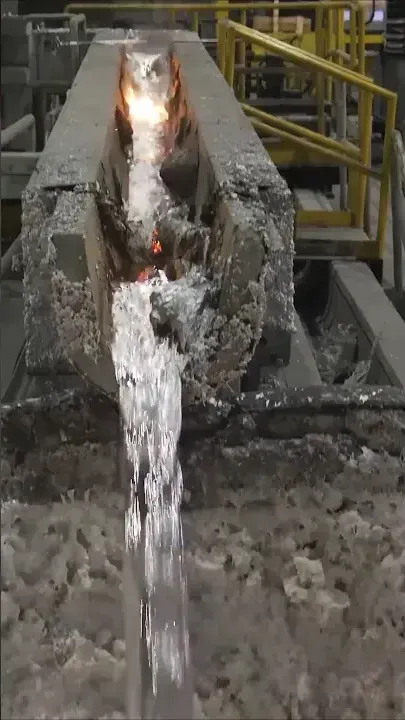
- Process footageA tight vertical view of industrial equipment working on a large bale or mass of material. Bright sparks or a glowing area are visible near the machinery; no editorial headline is readable.
- The sampled footage shows the recycling plant and aluminum scrap discussed in the narration, including a worker beside can bales and processing equipment.
“Behind me, each of these bales weighs Behind me, each of these bales weighs Behind me, each of these bales weighs about 1,000 lbs and contains about about 1,000 lbs and contains about about 1,000 lbs and contains about 30,000 aluminum drinking cans. Here in 30,000 aluminum drinking cans. Here in 30,000 aluminum drinking cans. Here in the United States, Americans consume the United States, Americans consume the United States, Americans consume about 100 billion cans a year and they about 100 billion cans a year and they about 100 billion cans a year and they need to be recycled somewhere. need to be recycled somewhere. need to be recycled somewhere. >> The big bales of cans are offloaded from >> The big bales of cans are offloaded from >> The big bales of cans are offloaded from semi-trucks and stacked neatly, semi-trucks and stacked neatly, semi-trucks and stacked neatly, positioned in rows ready for their turn positioned in rows ready for their turn positioned in rows ready for their turn to be grabbed by the claw. The claw is really a grapple excavator The claw is really a grapple excavator The claw is really a grapple excavator that shreds full bales of cans to get that shreds full bales of cans to get that shreds full bales of cans to get them ready for processing. Thumbs up for them ready for processing. Thumbs up for them ready for processing. Thumbs up for that cool machine. Once the bales are that cool machine. Once the bales are that cool machine. Once the bales are broken open, the big front loader can broken open, the big front loader can broken open, the big front loader can then scoop up the loose cans and drop then scoop up the loose cans and drop then scoop up the loose cans and drop them onto a vibratory conveyor belt. The vibrations help sift the cans down The vibrations help sift the cans down The vibrations help sift the cans down onto the conveyor uniformly so the onto the conveyor uniformly so the onto the conveyor uniformly so the facility inside has a steady stream of facility inside has a steady stream of facility inside has a steady stream of aluminum scrap to work with. Shredding aluminum scrap to work with. Shredding aluminum scrap to work with. Shredding makes sure that there is no liquid makes sure that there is no liquid makes sure that there is no liquid remaining in any of the cans since remaining in any of the cans since remaining in any of the cans since liquid could be catastrophic to the liquid could be catastrophic to the liquid could be catastrophic to the furnaces as we'll talk about later. This furnaces as we'll talk about later. This furnaces as we'll talk about later. This delacquering process strips away the delacquering process strips away the delacquering process strips away the paint and enamel on the outside of the paint and enamel on the outside of the paint and enamel on the outside of the cans to get the aluminum cleaner before cans to get the aluminum cleaner before cans to get the aluminum cleaner before it falls into the furnace. And curiously, [clears throat] the best And curiously, [clears throat] the best And curiously, [clears throat] the best way to mix the new can scraps in with way to mix the new can scraps in with way to mix the new can scraps in with the already hot molten metal is the already hot molten metal is the already hot molten metal is with two mechanically stomping feet, with two mechanically stomping feet, with two mechanically stomping feet, like some kind of steampunk wine press. like some kind of steampunk wine press. like some kind of steampunk wine press. The oversized aluminum boot stompers The oversized aluminum boot stompers The oversized aluminum boot stompers help press the top layers of scrap down help press the top layers of scrap down help press the top layers of scrap down into the molten aluminum underneath.”
- 01Establish scale and context
Makes the subject tangible with a local quantity before widening to its larger context; the scale establishes why the process matters.
Uses nearby bales to quantify the material they contain, then sets that amount against yearly national consumption and the need for processing.
“Behind me, each of these bales weighs Behind me, each of these bales weighs Behind me, each of these bales weighs about 1,000 lbs and contains about about 1,000 lbs and contains about about 1,000 lbs and contains about 30,000 aluminum drinking cans. Here in 30,000 aluminum drinking cans. Here in 30,000 aluminum drinking cans. Here in the United States, Americans consume the United States, Americans consume the United States, Americans consume about 100 billion cans a year and they about 100 billion cans a year and they about 100 billion cans a year and they need to be recycled somewhere. need to be recycled somewhere. need to be recycled somewhere.”
- 02Introduce the incoming material and first machine
Moves from the broad scale-setting to the first concrete operation, clarifying what the incoming material is and what the machine does to it.
Describes the bales arriving and waiting in rows, then identifies the machine that shreds them to prepare them for processing.
“>> The big bales of cans are offloaded from >> The big bales of cans are offloaded from >> The big bales of cans are offloaded from semi-trucks and stacked neatly, semi-trucks and stacked neatly, semi-trucks and stacked neatly, positioned in rows ready for their turn positioned in rows ready for their turn positioned in rows ready for their turn to be grabbed by the claw. The claw is really a grapple excavator The claw is really a grapple excavator The claw is really a grapple excavator that shreds full bales of cans to get that shreds full bales of cans to get that shreds full bales of cans to get them ready for processing. Thumbs up for them ready for processing. Thumbs up for them ready for processing. Thumbs up for that cool machine.”
- 03Feed and regulate the material
Explains the transition from compacted loads to a controlled, continuous feed, including why vibration and even distribution matter.
After the bales are broken open, a loader places the loose material on a vibrating conveyor, which spreads it into a steady stream for the facility.
“Once the bales are that cool machine. Once the bales are that cool machine. Once the bales are broken open, the big front loader can broken open, the big front loader can broken open, the big front loader can then scoop up the loose cans and drop then scoop up the loose cans and drop then scoop up the loose cans and drop them onto a vibratory conveyor belt. The vibrations help sift the cans down The vibrations help sift the cans down The vibrations help sift the cans down onto the conveyor uniformly so the onto the conveyor uniformly so the onto the conveyor uniformly so the facility inside has a steady stream of facility inside has a steady stream of facility inside has a steady stream of aluminum scrap to work with.”
- 04Explain cleanup before heating
Connects preparation to furnace safety and introduces the next treatment. The narration says the furnace risk will be discussed later, creating a specific forward reference.
Describes shredding as a way to remove leftover liquid, warns that liquid could damage the furnaces, and explains how a coating-removal process cleans the material before it enters the furnace.
“Shredding aluminum scrap to work with. Shredding aluminum scrap to work with. Shredding makes sure that there is no liquid makes sure that there is no liquid makes sure that there is no liquid remaining in any of the cans since remaining in any of the cans since remaining in any of the cans since liquid could be catastrophic to the liquid could be catastrophic to the liquid could be catastrophic to the furnaces as we'll talk about later. This furnaces as we'll talk about later. This furnaces as we'll talk about later. This delacquering process strips away the delacquering process strips away the delacquering process strips away the paint and enamel on the outside of the paint and enamel on the outside of the paint and enamel on the outside of the cans to get the aluminum cleaner before cans to get the aluminum cleaner before cans to get the aluminum cleaner before it falls into the furnace.”
- 05Describe mixing and pressing
Continues the material's journey into the furnace stage, using a vivid machine comparison to make the mechanism understandable. The transcript cuts off mid-process, without a concluding payoff.
Introduces a way to combine new scrap with already molten material, likens the machinery to a stomping press, and explains that oversized metal stompers push the scrap into the molten metal.
“And curiously, [clears throat] the best And curiously, [clears throat] the best And curiously, [clears throat] the best way to mix the new can scraps in with way to mix the new can scraps in with way to mix the new can scraps in with the already hot molten metal is the already hot molten metal is the already hot molten metal is with two mechanically stomping feet, with two mechanically stomping feet, with two mechanically stomping feet, like some kind of steampunk wine press. like some kind of steampunk wine press. like some kind of steampunk wine press. The oversized aluminum boot stompers The oversized aluminum boot stompers The oversized aluminum boot stompers help press the top layers of scrap down help press the top layers of scrap down help press the top layers of scrap down into the molten aluminum underneath.”