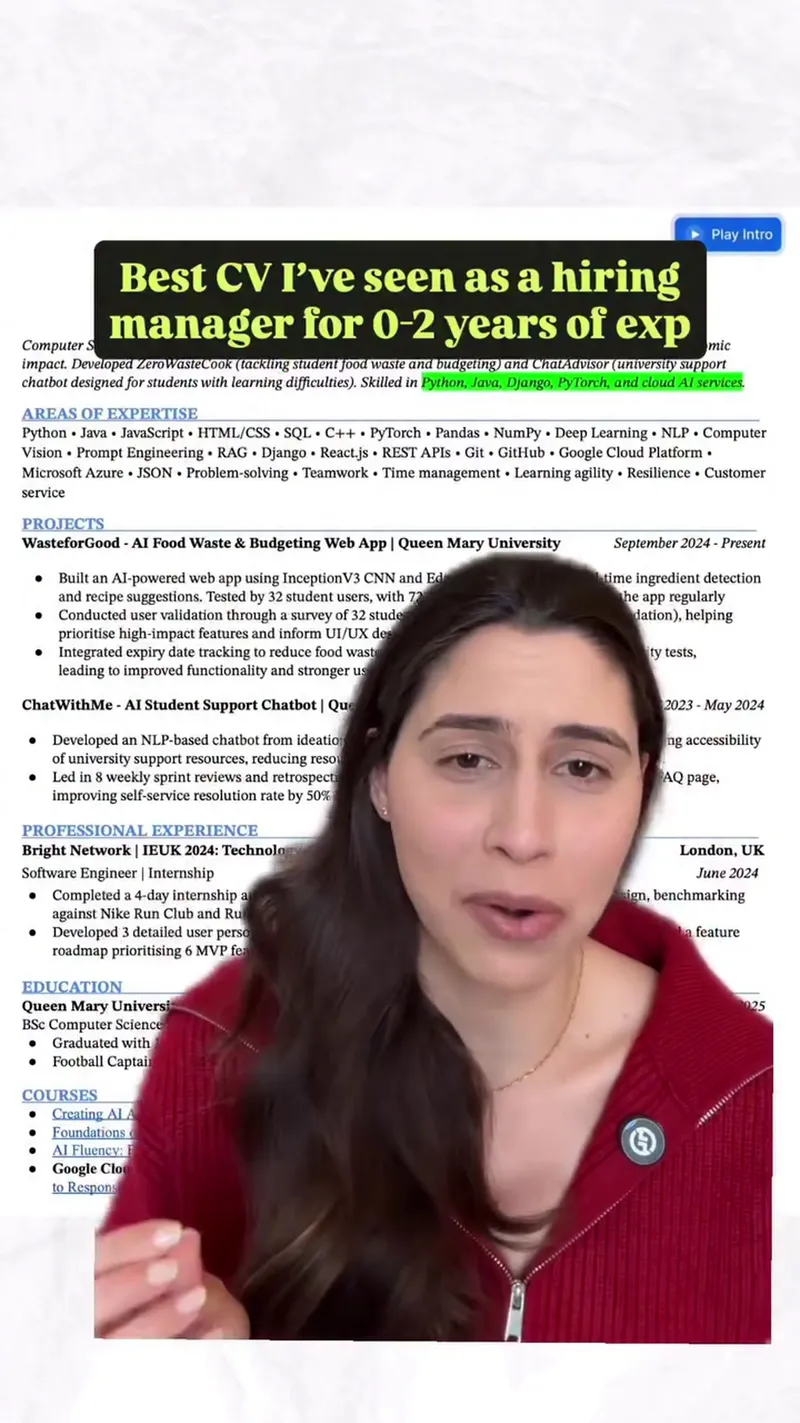
A hiring manager reviews a high-quality CV template designed for candidates with little to no professional experience. She explains how to optimize formatting for ATS systems, keep summaries concise, and prioritize projects to stand out in a competitive tech market.
The Perfect CV for 0-2 Years of Experience
A hiring manager explains why an entry-level CV works, covering its format, headline, contact details, summary, skills and projects. The presenter points out sections on a sample software engineer CV and says the project framework will be covered in part two.
- Likes
- 5.5K
- Comments
- 562
- Entry-level CV writingATS-friendly CV formatSoftware engineering applicationsCV skills and projects
Analysis
A hiring manager explains why an entry-level CV works, covering its format, headline, contact details, summary, skills and projects. The presenter points out sections on a sample software engineer CV and says the project framework will be covered in part two.
- Talking headVoiceoverDemoTutorialListicle
- Spoken
- Original
“This is one of the best CVs I've seen as a hiring manager for someone with little to no experience. And let me tell you why.”
- On-screen text
- Original
“Best CV I’ve seen as a hiring manager for 0-2 years of exp”
- Visual
- Text-led composition with a supporting exampleA centered presenter in a red top appears in front of a large CV image. A prominent black headline box with bright yellow-green text sits across the upper portion of the document; the presenter gestures toward it in the supplied frames.
- The presenter appears over a sample CV and points out sections as she discusses them; on-screen captions highlight key phrases.
“This is one of the best CVs I've seen as a hiring manager for someone with little to no experience. And let me tell you why. First, let's start with the format. This format is very clear, doesn't have graphs, pictures or designs. So it's very likely going to go through the ATS system. And also is one page for people that don't have a lot of experience. One page is more than enough. Then we have the headline. Even though this person doesn't have a lot of experience, they made it clear what are the roles that they're targeting. Because they put here aspiring software engineer and they also put the main skill that they have that they're looking for in the job description. Then we have the professional information in here. I don't want to see your full address. I just want to see the city, the country that you live in, your phone number, your email, and also your LinkedIn profile. Never forget your LinkedIn profile. And because this market is super competitive, they also add a portfolio which is bonus points. Next is the summary. The summary needs to be short and concise. I see a lot of people putting three paragraphs here. You just want to put maximum three lines and again putting things that relate to the job that you are applying for. So make sure to emphasize your skills in your summary. Then we have areas of expertise or AKA skills here. It needs to be a blend between soft skills and hard skills that you have. And it's completely fine for you to put the things you learn in your degree. And and if you have any major gaps with the job description, just make sure to do a couple of courses so you can add them here. Then they completely nailed this by putting projects at the top of their CV and using the right framework. I'm going to break down this exact framework with the rest of the CV on part two. So make sure to follow us.”
- 01Introduce and assess the example
Establishes the example's relevance and credibility before beginning the detailed walkthrough.
The speaker calls the example one of the best for a particular audience or circumstance, then promises to explain why.
“This is one of the best CVs I've seen as a hiring manager for someone with little to no experience. And let me tell you why.”
- 02Explain the format
Begins fulfilling the promised explanation with practical strengths of the overall format.
The speaker evaluates the example's clear, simple format, explains its likely compatibility with a relevant system, and notes why its length suits the audience.
“First, let's start with the format. This format is very clear, doesn't have graphs, pictures or designs. So it's very likely going to go through the ATS system. And also is one page for people that don't have a lot of experience. One page is more than enough.”
- 03Review the headline and contact details
Continues the feature-by-feature assessment, showing how the example communicates its aim and presents useful professional details.
The speaker points out that the headline clarifies the target role and relevant skill, then recommends concise contact information and an optional portfolio link.
“Then we have the headline. Even though this person doesn't have a lot of experience, they made it clear what are the roles that they're targeting. Because they put here aspiring software engineer and they also put the main skill that they have that they're looking for in the job description. Then we have the professional information in here. I don't want to see your full address. I just want to see the city, the country that you live in, your phone number, your email, and also your LinkedIn profile. Never forget your LinkedIn profile. And because this market is super competitive, they also add a portfolio which is bonus points.”
- 04Give guidance on the summary and skills
Turns the example's next sections into practical guidance, including ways to address limited experience or missing qualifications.
The speaker recommends a concise, relevant summary, a balance of skill types, using education to demonstrate skills, and filling major gaps with courses.
“Next is the summary. The summary needs to be short and concise. I see a lot of people putting three paragraphs here. You just want to put maximum three lines and again putting things that relate to the job that you are applying for. So make sure to emphasize your skills in your summary. Then we have areas of expertise or AKA skills here. It needs to be a blend between soft skills and hard skills that you have. And it's completely fine for you to put the things you learn in your degree. And and if you have any major gaps with the job description, just make sure to do a couple of courses so you can add them here.”
- 05Highlight the example's approach and defer the full framework
Closes the current walkthrough with a final positive example while making the promised complete breakdown the reason to continue.
The speaker praises the placement and organization of the example's projects, then says the full framework will be explained in a follow-up and asks viewers to follow.
“Then they completely nailed this by putting projects at the top of their CV and using the right framework. I'm going to break down this exact framework with the rest of the CV on part two. So make sure to follow us.”