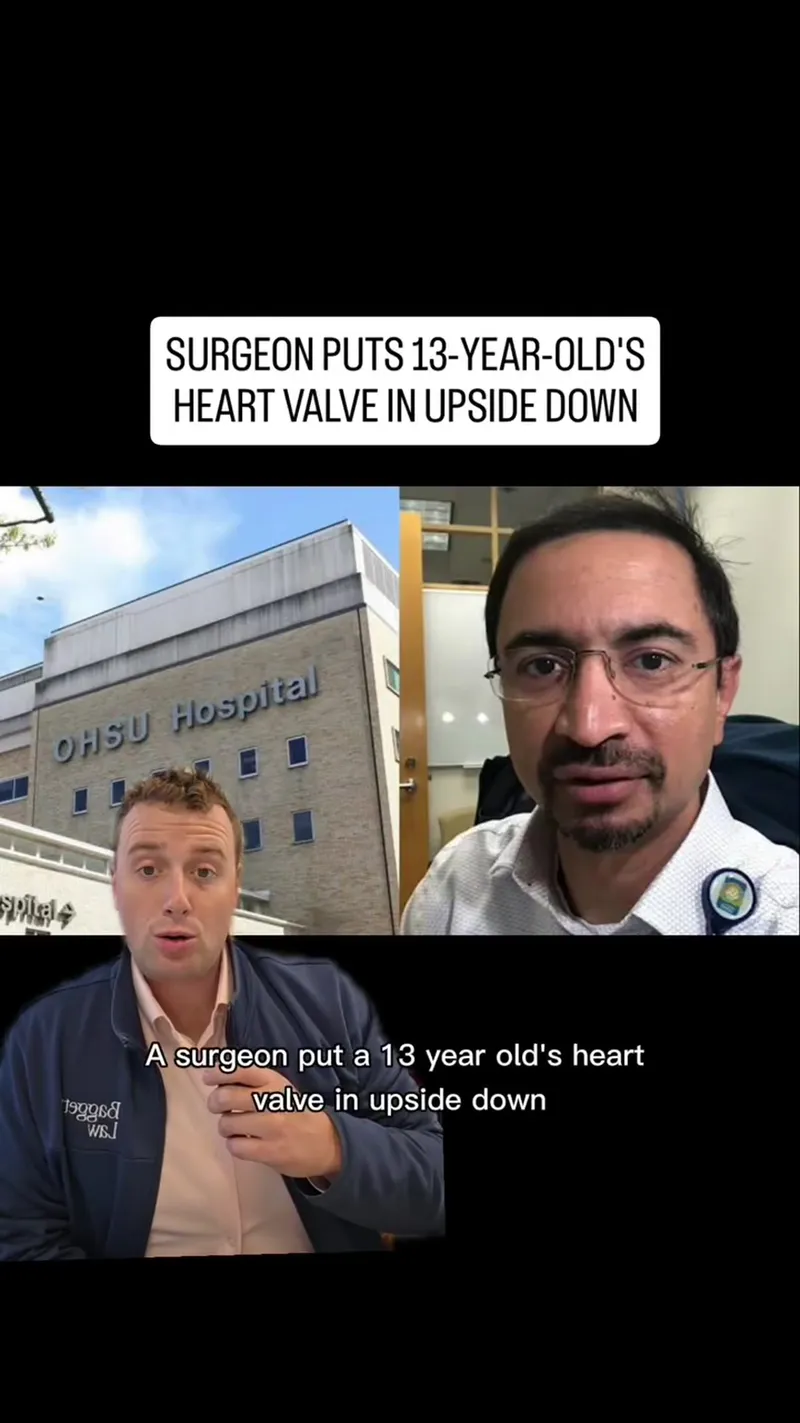
A legal professional narrates the story of a 13-year-old girl whose heart valve was installed upside down by a surgeon. He explains how the mistake was only discovered after moving her to a different hospital and uses the case to advocate for seeking second opinions in medical crises.
The Surgeon Who Put a Heart Valve in Upside Down
A presenter recounts how a 13-year-old girl remained on heart support for 18 days after a valve was implanted upside down. A second hospital found and corrected the problem; the presenter urges viewers to seek another medical opinion when answers do not add up.
- Views
- 1.4M
- Likes
- 95.1K
- Comments
- 6K
- Upside-down heart valvePediatric surgery errorSecond medical opinion
Analysis
A presenter recounts how a 13-year-old girl remained on heart support for 18 days after a valve was implanted upside down. A second hospital found and corrected the problem; the presenter urges viewers to seek another medical opinion when answers do not add up.
- Talking headVoiceoverStory arcHot take
- Spoken
- Original
“A surgeon put a 13 year old's heart valve in upside down”
- On-screen text
- Original
“SURGEON PUTS 13-YEAR-OLD'S HEART VALVE IN UPSIDE DOWN”
- Visual
- Text-led collageA large headline sits above a collage combining a hospital exterior on the left with two men shown in separate panels.
- The presenter speaks over hospital exteriors and a medical image, while subtitles match the narration. The sampled visuals support the account but do not independently show the surgery or recovery.
“A surgeon put a 13 year old's heart valve in upside down and then tried to harvest her organs. When she didn't recover, a little girl named Isabel went in for open heart surgery at a hospital in Oregon. With this surgeon, he installed a mechanical heart valve, but then couldn't get her heart to restart. She ended up in the ICU on a machine that had to pump blood for her. Meanwhile, her parents are told the surgery went well and she's just in shock and will come out of it. She was like this for 18 days before they go in again and they still can't figure out what's wrong. They tell these parents that their child is going to die and start talking about harvesting her organs. So her parents do the only thing left and they risk her life by moving her to Seattle Children's Hospital in the hopes they can do something. They do one scan at Seattle Children's Hospital and find out that this surgeon implanted her heart valve upside down. Competent surgeons go in and fix the heart valve and thankfully it sounds like she's made a miraculous recovery. But for 18 days, a surgeon in a hospital that made a terrible mistake couldn't even find it. A different team found it in one afternoon. So never be afraid to get a second opinion when it comes to medical issues. And if someone you love had a surgery go sideways and no one can explain why, give me a call to figure out what your options are.”
- 01Introduce the failure and its stakes
Establish the central failure and its human stakes, setting up the troubling gap between what happened and what the family was told.
Open with a startling mistake, then identify the affected person and situation, describe the procedure and immediate complication, and explain the resulting life-support intervention and reassurance given to family.
“A surgeon put a 13 year old's heart valve in upside down and then tried to harvest her organs. When she didn't recover, a little girl named Isabel went in for open heart surgery at a hospital in Oregon. With this surgeon, he installed a mechanical heart valve, but then couldn't get her heart to restart. She ended up in the ICU on a machine that had to pump blood for her. Meanwhile, her parents are told the surgery went well and she's just in shock and will come out of it.”
- 02Prolonged uncertainty and urgent escalation
Deepen the unresolved crisis and motivate the transfer as a desperate search for an answer.
State how long the condition persists, explain that another attempt still fails to identify the problem, raise the stakes with a dire prognosis, and describe the family’s risky move to another institution.
“She was like this for 18 days before they go in again and they still can't figure out what's wrong. They tell these parents that their child is going to die and start talking about harvesting her organs. So her parents do the only thing left and they risk her life by moving her to Seattle Children's Hospital in the hopes they can do something.”
- 03Reveal, repair, and general lesson
Resolve the mystery with a concrete diagnosis and recovery, then turn the comparison into actionable advice and a direct invitation for follow-up.
The new team finds the overlooked error with one scan, fixes it, and reports recovery. Contrast the extended failure with the faster discovery, then urge viewers to seek a second opinion and offer help in a comparable situation.
“They do one scan at Seattle Children's Hospital and find out that this surgeon implanted her heart valve upside down. Competent surgeons go in and fix the heart valve and thankfully it sounds like she's made a miraculous recovery. But for 18 days, a surgeon in a hospital that made a terrible mistake couldn't even find it. A different team found it in one afternoon. So never be afraid to get a second opinion when it comes to medical issues. And if someone you love had a surgery go sideways and no one can explain why, give me a call to figure out what your options are.”