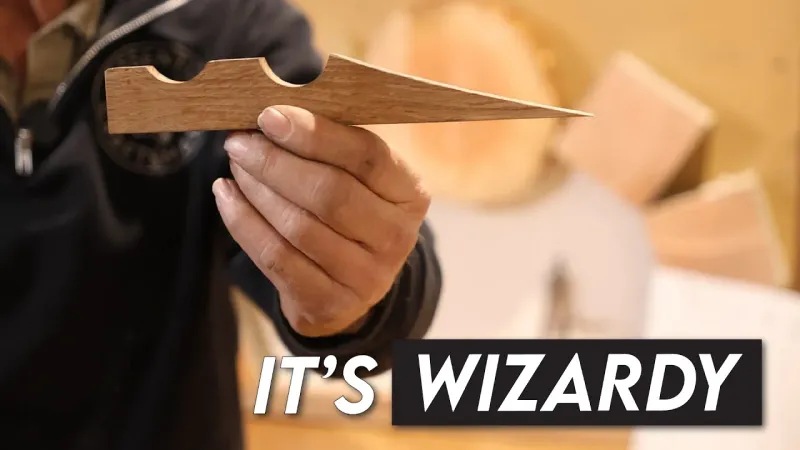
Tick Stick: The Carpentry Tool That Does the Impossible
Essential Craftsman@essentialcraftsmanTick Stick: The Carpentry Tool That Does the Impossible
The video introduces the tick stick, also called a spile or wiggle stick, as a way to transfer an irregular shape so a piece of material can be fitted to it. The speaker recalls learning the technique from blacksmith Dean Mook and says he will demonstrate it in the woodshop.
- Views
- 4.5M
- Likes
- 85.7K
- Comments
- 2.8K
- Tick stick techniqueIrregular shape templatesCarpentry and Boatbuilding
Analysis
The video introduces the tick stick, also called a spile or wiggle stick, as a way to transfer an irregular shape so a piece of material can be fitted to it. The speaker recalls learning the technique from blacksmith Dean Mook and says he will demonstrate it in the woodshop.
- TutorialDemonstration

- Title
- Tick Stick: The Carpentry Tool That Does the Impossible
“This collection of parts and pieces This collection of parts and pieces This collection of parts and pieces represents an imaginary situation in represents an imaginary situation in represents an imaginary situation in construction or cabinetry or boat construction or cabinetry or boat construction or cabinetry or boat building. You've got to create one piece building. You've got to create one piece building. You've got to create one piece of material that fits any kind of a of material that fits any kind of a of material that fits any kind of a bizarre shape and you got one shot to do bizarre shape and you got one shot to do bizarre shape and you got one shot to do it. And none of these conventional it. And none of these conventional it. And none of these conventional carpentry tools are that much help. carpentry tools are that much help. carpentry tools are that much help. But a spile stick, a tick stick, a But a spile stick, a tick stick, a But a spile stick, a tick stick, a wiggle stick is the tool you can wiggle stick is the tool you can wiggle stick is the tool you can use use use to make a piece of material, I don't to make a piece of material, I don't to make a piece of material, I don't care if it's steel or plywood or care if it's steel or plywood or care if it's steel or plywood or glass, that's going to fit this shape or glass, that's going to fit this shape or glass, that's going to fit this shape or any other shape in record time. So, any other shape in record time. So, any other shape in record time. So, we're going to walk into the wood shop we're going to walk into the wood shop we're going to walk into the wood shop and I'm going to make a piece of and I'm going to make a piece of and I'm going to make a piece of material fit in there, probably the material fit in there, probably the material fit in there, probably the first time. But before I do that, I first time. But before I do that, I first time. But before I do that, I learned about spile sticks, tick sticks, learned about spile sticks, tick sticks, learned about spile sticks, tick sticks, let's just call it a tick stick from a let's just call it a tick stick from a let's just call it a tick stick from a man named Dean Mook at the Northwest man named Dean Mook at the Northwest man named Dean Mook at the Northwest Blacksmith Association spring Blacksmith Association spring Blacksmith Association spring conference, probably in 2008. conference, probably in 2008. conference, probably in 2008. Dean is an exceptional blacksmith. He Dean is an exceptional blacksmith. He Dean is an exceptional blacksmith. He does a lot of things and he had worked does a lot of things and he had worked does a lot of things and he had worked in the boat building industry in Seattle in the boat building industry in Seattle in the boat building industry in Seattle and had run into this because it's been and had run into this because it's been and had run into this because it's been in boat building since we've been in boat building since we've been in boat building since we've been building boats. I came home and had to building boats. I came home and had to building boats. I came home and had to try it.”
- 01Set up the fitting challenge
Establishes the task’s constraint so viewers have a reason to care whether an alternative tool can help.
The speaker describes a material that must fit an unusual shape and emphasizes that there is only one shot.
“This collection of parts and pieces This collection of parts and pieces This collection of parts and pieces represents an imaginary situation in represents an imaginary situation in represents an imaginary situation in construction or cabinetry or boat construction or cabinetry or boat construction or cabinetry or boat building. You've got to create one piece building. You've got to create one piece building. You've got to create one piece of material that fits any kind of a of material that fits any kind of a of material that fits any kind of a bizarre shape and you got one shot to do bizarre shape and you got one shot to do bizarre shape and you got one shot to do it.”
- 02Contrast familiar tools with the named tool
Introduces the proposed solution and gives the audience a concrete reason to learn how this particular tool differs from conventional options.
The speaker says conventional tools are not much help, names the tick stick and its alternate names, then describes what it can do for the fit.
“And none of these conventional it. And none of these conventional it. And none of these conventional carpentry tools are that much help. carpentry tools are that much help. carpentry tools are that much help. But a spile stick, a tick stick, a But a spile stick, a tick stick, a But a spile stick, a tick stick, a wiggle stick is the tool you can wiggle stick is the tool you can wiggle stick is the tool you can use use use to make a piece of material, I don't to make a piece of material, I don't to make a piece of material, I don't care if it's steel or plywood or care if it's steel or plywood or care if it's steel or plywood or glass, that's going to fit this shape or glass, that's going to fit this shape or glass, that's going to fit this shape or any other shape in record time. So, any other shape in record time. So, any other shape in record time.”
- 03Preview the attempt and give the tool’s provenance
Signals a coming practical example and provides the source and context behind the tool before the demonstration begins. The introduction ends before the making process starts.
The speaker says they will enter the workshop to make a fitting piece, then credits Dean Mook and briefly explains his boat-building background and the speaker’s encounter with the tool.
“So, we're going to walk into the wood shop we're going to walk into the wood shop we're going to walk into the wood shop and I'm going to make a piece of and I'm going to make a piece of and I'm going to make a piece of material fit in there, probably the material fit in there, probably the material fit in there, probably the first time. But before I do that, I first time. But before I do that, I first time. But before I do that, I learned about spile sticks, tick sticks, learned about spile sticks, tick sticks, learned about spile sticks, tick sticks, let's just call it a tick stick from a let's just call it a tick stick from a let's just call it a tick stick from a man named Dean Mook at the Northwest man named Dean Mook at the Northwest man named Dean Mook at the Northwest Blacksmith Association spring Blacksmith Association spring Blacksmith Association spring conference, probably in 2008. conference, probably in 2008. conference, probably in 2008. Dean is an exceptional blacksmith. He Dean is an exceptional blacksmith. He Dean is an exceptional blacksmith. He does a lot of things and he had worked does a lot of things and he had worked does a lot of things and he had worked in the boat building industry in Seattle in the boat building industry in Seattle in the boat building industry in Seattle and had run into this because it's been and had run into this because it's been and had run into this because it's been in boat building since we've been in boat building since we've been in boat building since we've been building boats. I came home and had to building boats. I came home and had to building boats. I came home and had to try it.”