I Ranked Popular Indian Breads from Worst to Best
I Ranked Popular Indian Breads from Worst to Best
The video lays out a quick method for checking supermarket bread labels, including ingredients, fiber, protein, sugar and sodium. It promises to rank seven breads from worst to best and explain that a suitable choice can depend on goals such as diabetes management or muscle building; the excerpt does not show the ranking or recommendations.
- Views
- 261.9K
- Likes
- 862
- Comments
- 73
- Indian supermarket breadBread label readingBread nutrition rankingChoosing Bread by Goals
Analysis
The video lays out a quick method for checking supermarket bread labels, including ingredients, fiber, protein, sugar and sodium. It promises to rank seven breads from worst to best and explain that a suitable choice can depend on goals such as diabetes management or muscle building; the excerpt does not show the ranking or recommendations.
- RankingExplainer
- Title
- I Ranked Popular Indian Breads from Worst to Best
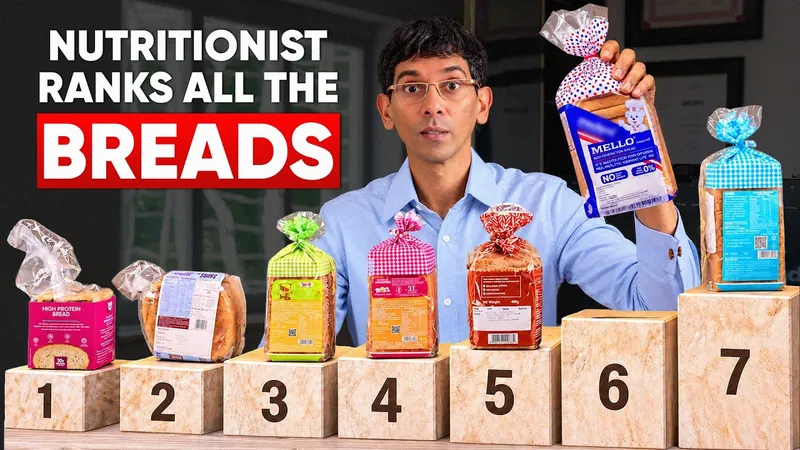
“These are my breads. Most of my videos have little yarn, but this one purely proof based. I mean 10 minutes India bread curry some degree very good. These are my breads. Most of my videos have little yarn, but this one purely proof based. I mean 10 minutes 10 minutes. You will know which bread is actually worth buying which ones you should skip and what to look for the next time you're standing in the supermarket aisle or punching it on your online apps seven breads. One table your mouth. Now every single one of these has a health claim on the front multi grain. High protein brown made with Arthur with dude and most of you are buying the wrong one not because you're careless because you're reading the front of the packet and if you have seen the front of the packet which is facing me is an advertisement the back of the packet is the truth and today I'm going to teach you to read the back in 10 seconds flat end of this video. I am ranking all these seven from worst. To best and then I'm going to tell you something more useful than a ranking which one you should be buying based on your body and your goal because the best bread for a diabetic is not the best bread for somebody trying to build muscle one important note. This isn't against any specific brand. I've picked these breads randomly from a supermarket aisle and most ingredients are almost similar. So please don't hit the brand. This is simply feedback so that the brands can improve your brands. Consumers choose your products and consume them with trust. Please take this feedback seriously and work towards creating products that don't just taste good but are genuinely nutritious and better for the health. Now bread is the most health washed product in the Indian supermarket. Nothing else comes close. Think about it. Nobody buys a packet of biscuits and thinks it's a health food but bread bread has convinced an entire generation that it is a healthy breakfast. Brown color, wheat on the label, some seeds on top, done. Trust established. And the labels are technically legal. And that's my problem. A company can put multigrain on the front and still make that bread mostly out of maida. Nobody's lying to you. They're just letting you assume. So, I'm not going to tell you which brand to buy. Brands change formulas. Instead, I'm going to give you a system. Five things you can check. You can walk into any store in India, pick up that bread and judge for yourself in under 10 seconds. So, what is this five-point system I have for you?”
- 01Set the format and promise
This establishes the episode’s evaluative format and gives viewers a reason to stay beyond the ranking: they will also get criteria for choosing what suits them.
The speaker says the video is proof-based, gives a brief time reference, and promises a ranking plus practical buying guidance.
“These are my breads. Most of my videos have little yarn, but this one purely proof based. I mean 10 minutes India bread curry some degree very good. These are my breads. Most of my videos have little yarn, but this one purely proof based. I mean 10 minutes 10 minutes. You will know which bread is actually worth buying which ones you should skip and what to look for the next time you're standing in the supermarket aisle or punching it on your online apps seven breads.”
- 02Raise the misleading-label problem
This develops the central problem behind the advice: familiar claims can mislead, so viewers need a more dependable way to evaluate what they buy.
The speaker says every item carries a health claim, argues that buyers may choose the wrong one by relying on the front, and contrasts the front as advertising with the back as the truth.
“One table your mouth. Now every single one of these has a health claim on the front multi grain. High protein brown made with Arthur with dude and most of you are buying the wrong one not because you're careless because you're reading the front of the packet and if you have seen the front of the packet which is facing me is an advertisement the back of the packet is the truth and today I'm going to teach you to read the back in 10 seconds flat end of this video.”
- 03Define the ranking and its qualification
The ranking confirms the headline promise, while the personal-goal qualification prevents a single winner from being presented as right for everyone. The brand disclaimer also sets the scope of the evaluation.
The speaker announces a worst-to-best ranking, then promises a more personalized recommendation based on body and goal. They clarify that the video is not targeting a brand and that the products were selected randomly.
“I am ranking all these seven from worst. To best and then I'm going to tell you something more useful than a ranking which one you should be buying based on your body and your goal because the best bread for a diabetic is not the best bread for somebody trying to build muscle one important note. This isn't against any specific brand. I've picked these breads randomly from a supermarket aisle and most ingredients are almost similar. So please don't hit the brand. This is simply feedback so that the brands can improve your brands. Consumers choose your products and consume them with trust. Please take this feedback seriously and work towards creating products that don't just taste good but are genuinely nutritious and better for the health.”
- 04Explain why the issue matters
This gives the checklist a motivating context: the speaker’s stated concern is that buyers may infer healthfulness from cues that do not establish it.
The speaker argues that bread is especially associated with health claims, contrasts it with biscuits, and says its appearance and labeling can create trust despite legally compliant wording.
“Now bread is the most health washed product in the Indian supermarket. Nothing else comes close. Think about it. Nobody buys a packet of biscuits and thinks it's a health food but bread bread has convinced an entire generation that it is a healthy breakfast. Brown color, wheat on the label, some seeds on top, done. Trust established. And the labels are technically legal. And that's my problem. A company can put multigrain on the front and still make that bread mostly out of maida. Nobody's lying to you. They're just letting you assume.”
- 05Promise a system and transition to its first check
This turns the critique into a concrete promised method, including a stated quick-use benefit. The first ingredient check begins the main explanation, so the introduction ends just before its details.
The speaker rejects brand-specific advice because formulas change, offers a five-check system that can be used in stores, and asks what it is before beginning the first ingredient check.
“So, I'm not going to tell you which brand to buy. Brands change formulas. Instead, I'm going to give you a system. Five things you can check. You can walk into any store in India, pick up that bread and judge for yourself in under 10 seconds. So, what is this five-point system I have for you?”