Space Habitats: The Megastructures We’ll Call Home
Isaac Arthur@isaacarthurSFIASpace Habitats: The Megastructures We’ll Call Home
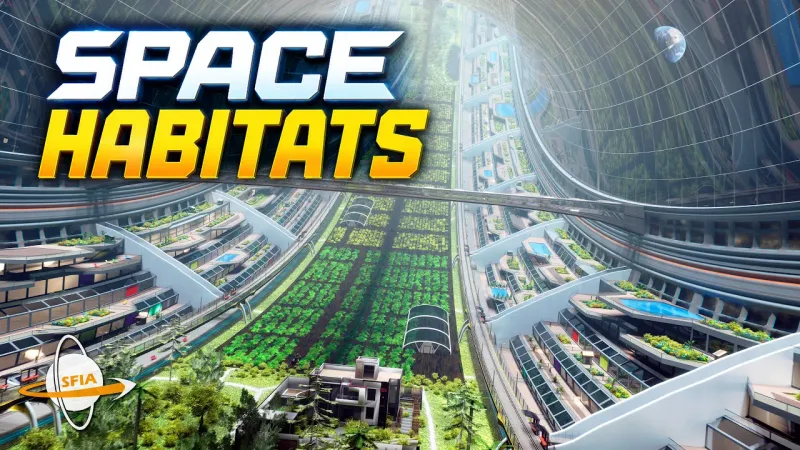
Isaac Arthur introduces space habitats as an alternative to settling on planets, describing them as built environments designed for people to live in space. The video covers designs including the Sunflower, O’Neill Cylinder, Stanford Torus, Bernal Sphere and other proposed megastructures, and raises the question of what counts as a space habitat.
- Views
- 356.5K
- Likes
- 3.1K
- Comments
- 325
- Space habitat designsRotating space habitatsSpace colonization
Analysis
Isaac Arthur introduces space habitats as an alternative to settling on planets, describing them as built environments designed for people to live in space. The video covers designs including the Sunflower, O’Neill Cylinder, Stanford Torus, Bernal Sphere and other proposed megastructures, and raises the question of what counts as a space habitat.
- ExplainerDocumentary
- Title
- Space Habitats: The Megastructures We’ll Call Home
“[music] >> What if the future of humanity is not >> What if the future of humanity is not >> What if the future of humanity is not living on other worlds, but learning how living on other worlds, but learning how living on other worlds, but learning how to build better ones? to build better ones? to build better ones? >> [music] >> [music] >> [music] >> The dream of space colonization usually >> The dream of space colonization usually >> The dream of space colonization usually begins with planets. Mars, the moon, begins with planets. Mars, the moon, begins with planets. Mars, the moon, Venus, maybe Titan if you're feeling Venus, maybe Titan if you're feeling Venus, maybe Titan if you're feeling ambitious and have a very warm coat. ambitious and have a very warm coat. ambitious and have a very warm coat. Planets are where our civilization Planets are where our civilization Planets are where our civilization began, but they may not be where most began, but they may not be where most began, but they may not be where most civilizations live. Planets are big, civilizations live. Planets are big, civilizations live. Planets are big, heavy, awkward gravity wells wrapped in heavy, awkward gravity wells wrapped in heavy, awkward gravity wells wrapped in weather, geology, politics, and whatever weather, geology, politics, and whatever weather, geology, politics, and whatever local inconveniences nature feels like local inconveniences nature feels like local inconveniences nature feels like leaving there. leaving there. leaving there. Space habitats let us do something very Space habitats let us do something very Space habitats let us do something very different. Instead of moving to worlds different. Instead of moving to worlds different. Instead of moving to worlds we find, we build the worlds we want. we find, we build the worlds we want. we find, we build the worlds we want. Mobile worlds that can move if you and Mobile worlds that can move if you and Mobile worlds that can move if you and your neighbors or former countrymen no your neighbors or former countrymen no your neighbors or former countrymen no longer see eye to eye. longer see eye to eye. longer see eye to eye. Most space habitats are not ideally laid Most space habitats are not ideally laid Most space habitats are not ideally laid out to be spaceships, but slap on an out to be spaceships, but slap on an out to be spaceships, but slap on an engine or hire a tug and then go engine or hire a tug and then go engine or hire a tug and then go anywhere. anywhere. anywhere. >> [music] >> [music] >> [music] >> Indeed, that's the entire idea of an >> Indeed, that's the entire idea of an >> Indeed, that's the entire idea of an interstellar arc ship or generation interstellar arc ship or generation interstellar arc ship or generation ship. And that raises a simple question ship. And that raises a simple question ship. And that raises a simple question with a very complicated answer. What with a very complicated answer. What with a very complicated answer. What counts as a space habitat? counts as a space habitat? counts as a space habitat? Recently we discussed the Von Braun Recently we discussed the Von Braun Recently we discussed the Von Braun wheel, one of the first serious space wheel, one of the first serious space wheel, one of the first serious space station designs moving toward the idea station designs moving toward the idea station designs moving toward the idea of people living comfortably in space of people living comfortably in space of people living comfortably in space for long periods without health problems for long periods without health problems for long periods without health problems of microgravity.”
- 01Reframe the future
Establishes the episode’s central alternative as a question rather than assuming that settling other worlds is the only future worth considering.
Opens with a repeated hypothetical about humanity’s future, then contrasts living on other worlds with learning to build better ones.
“[music] >> What if the future of humanity is not >> What if the future of humanity is not >> What if the future of humanity is not living on other worlds, but learning how living on other worlds, but learning how living on other worlds, but learning how to build better ones? to build better ones? to build better ones? >> [music] >> [music] >> [music]”
- 02Explain the familiar option’s limits
Gives a reason to reconsider the familiar option and develops the contrast that makes the habitat alternative relevant.
Names the usual destinations, briefly jokes about the demands of one, and argues that planets may not be where most civilizations live because of their physical and environmental burdens.
“>> The dream of space colonization usually >> The dream of space colonization usually >> The dream of space colonization usually begins with planets. Mars, the moon, begins with planets. Mars, the moon, begins with planets. Mars, the moon, Venus, maybe Titan if you're feeling Venus, maybe Titan if you're feeling Venus, maybe Titan if you're feeling ambitious and have a very warm coat. ambitious and have a very warm coat. ambitious and have a very warm coat. Planets are where our civilization Planets are where our civilization Planets are where our civilization began, but they may not be where most began, but they may not be where most began, but they may not be where most civilizations live. Planets are big, civilizations live. Planets are big, civilizations live. Planets are big, heavy, awkward gravity wells wrapped in heavy, awkward gravity wells wrapped in heavy, awkward gravity wells wrapped in weather, geology, politics, and whatever weather, geology, politics, and whatever weather, geology, politics, and whatever local inconveniences nature feels like local inconveniences nature feels like local inconveniences nature feels like leaving there. leaving there. leaving there.”
- 03Introduce the alternative
Makes the alternative concrete enough to distinguish it from planetary settlement, while keeping its advantages framed as the opening’s proposition.
Presents space habitats as a different approach: build the worlds people want, potentially mobile and independent of neighbors or former countrymen.
“Space habitats let us do something very Space habitats let us do something very Space habitats let us do something very different. Instead of moving to worlds different. Instead of moving to worlds different. Instead of moving to worlds we find, we build the worlds we want. we find, we build the worlds we want. we find, we build the worlds we want. Mobile worlds that can move if you and Mobile worlds that can move if you and Mobile worlds that can move if you and your neighbors or former countrymen no your neighbors or former countrymen no your neighbors or former countrymen no longer see eye to eye. longer see eye to eye. longer see eye to eye.”
- 04Pose the defining question
Turns the premise into the episode’s organizing question: the viewer must understand what qualifies as a habitat before considering the concept further.
Qualifies that habitats are not necessarily designed as spaceships, then identifies them with an interstellar or generation ship and asks what counts as a space habitat.
“Most space habitats are not ideally laid Most space habitats are not ideally laid Most space habitats are not ideally laid out to be spaceships, but slap on an out to be spaceships, but slap on an out to be spaceships, but slap on an engine or hire a tug and then go engine or hire a tug and then go engine or hire a tug and then go anywhere. anywhere. anywhere. >> [music] >> [music] >> [music] >> Indeed, that's the entire idea of an >> Indeed, that's the entire idea of an >> Indeed, that's the entire idea of an interstellar arc ship or generation interstellar arc ship or generation interstellar arc ship or generation ship. And that raises a simple question ship. And that raises a simple question ship. And that raises a simple question with a very complicated answer. What with a very complicated answer. What with a very complicated answer. What counts as a space habitat? counts as a space habitat? counts as a space habitat?”
- 05Connect to prior context
Places the new question in the context of an earlier example and establishes a concrete starting point for discussing habitat designs. The supplied excerpt ends here, so the later transition into the main discussion is not available.
Recalls a previous discussion of the Von Braun wheel and describes it as an early serious station design aimed at comfortable, long-term life in space without microgravity health problems.
“Recently we discussed the Von Braun Recently we discussed the Von Braun Recently we discussed the Von Braun wheel, one of the first serious space wheel, one of the first serious space wheel, one of the first serious space station designs moving toward the idea station designs moving toward the idea station designs moving toward the idea of people living comfortably in space of people living comfortably in space of people living comfortably in space for long periods without health problems for long periods without health problems for long periods without health problems of microgravity.”