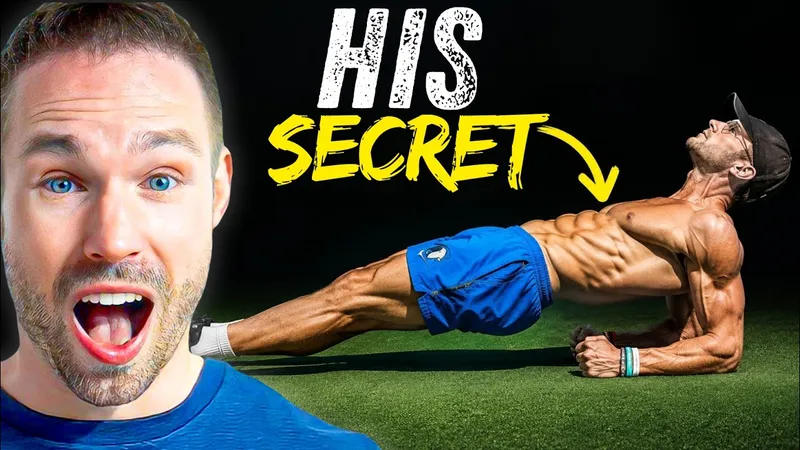
Sitting All Day? This One Exercise Fixes Everything!
Sitting All Day? This One Exercise Fixes Everything!
The video explains how to perform a reverse plank, common form mistakes, and ways to adjust it if shoulder mobility makes the position difficult. It also describes a wall-based posture retest and cites research on muscle activation, presenting the exercise as a useful tool—not a magic fix—for posture and core strength.
- Views
- 1.9M
- Likes
- 59.8K
- Comments
- 883
- Reverse plank techniquePosture and Rounded ShouldersCore and Posterior Chain
Analysis
The video explains how to perform a reverse plank, common form mistakes, and ways to adjust it if shoulder mobility makes the position difficult. It also describes a wall-based posture retest and cites research on muscle activation, presenting the exercise as a useful tool—not a magic fix—for posture and core strength.
- TutorialExplainer

- Title
- Sitting All Day? This One Exercise Fixes Everything!
“POV, you start doing reverse planks every day and your pelvic tilt vanishes, your stomach looks flatter, and you can finally start feeling your deep core muscles. But what this viral clip doesn't show are the common mistakes that can make this exercise either a complete waste of time or a game-changer at reversing the poor postures you get from sitting all day. Let's talk about the science. Now, at first glance, this movement looks simple, but the reverse plank can actually be an excellent counter move to the poor postures many adopt when sitting all day. They tighten your hip flexors and chest while the glutes and postural muscles on your back atrophy. Unlike the front plank, this exercise targets your body's posterior chain, your spinal erectors, your glutes, and core while actually giving you a nice stretch to your chest and opening your shoulders. Now, before I show you how to perform this exercise, let's see how well it can possibly change your posture. One thing we know is that those who have rounded forward shoulders often have a difficult time getting their arms completely over their head. So, here's the test. You're going to stand next to a wall with your hips and low back flush to the wall. Then, raise your arms as high as you can. Video your results because we'll come back to this in a few minutes. Now, if you have really rounded shoulders due to stiff and tight pecs, you'll notice you can't get very high towards the wall. And if you have weak or poorly coordinated stability with your core, you'll notice that as you raise your arms, your core is going to relax and your low back will try to arch so that you can touch the wall. Either way, the reverse plank may just be the antidote that you need.”
- 01Claim and caveat
Introduces the exercise’s appeal while making correct execution and its actual relevance to the problem worth examining.
States a routine exercise and its claimed benefits, then warns that common mistakes may make it ineffective or useful for addressing a problem.
“POV, you start doing reverse planks every day and your pelvic tilt vanishes, your stomach looks flatter, and you can finally start feeling your deep core muscles. But what this viral clip doesn't show are the common mistakes that can make this exercise either a complete waste of time or a game-changer at reversing the poor postures you get from sitting all day.”
- 02Question and overview
Develops the question of whether the exercise can help, while giving a concise rationale before the speaker proposes an assessment.
Transitions to the science, explains why the exercise may counter a common posture pattern, and distinguishes its target from that of a familiar alternative.
“Let's talk about the science. Now, at first glance, this movement looks simple, but the reverse plank can actually be an excellent counter move to the poor postures many adopt when sitting all day. They tighten your hip flexors and chest while the glutes and postural muscles on your back atrophy. Unlike the front plank, this exercise targets your body's posterior chain, your spinal erectors, your glutes, and core while actually giving you a nice stretch to your chest and opening your shoulders.”
- 03Self-test setup
Gives viewers a concrete way to assess their starting point and connects the result to the opening question of whether the exercise may help them.
Promises a test before the exercise instructions and explains how shoulder mobility and core stability may affect its result.
“Now, before I show you how to perform this exercise, let's see how well it can possibly change your posture. One thing we know is that those who have rounded forward shoulders often have a difficult time getting their arms completely over their head. So, here's the test. You're going to stand next to a wall with your hips and low back flush to the wall. Then, raise your arms as high as you can. Video your results because we'll come back to this in a few minutes. Now, if you have really rounded shoulders due to stiff and tight pecs, you'll notice you can't get very high towards the wall. And if you have weak or poorly coordinated stability with your core, you'll notice that as you raise your arms, your core is going to relax and your low back will try to arch so that you can touch the wall. Either way, the reverse plank may just be the antidote that you need.”