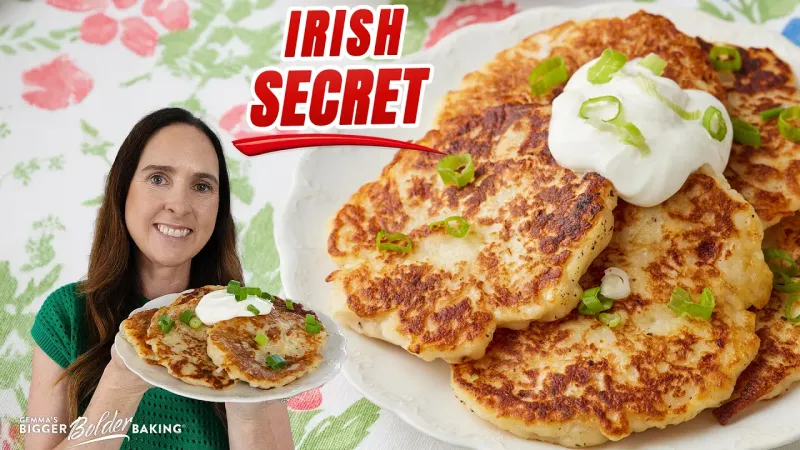
Ireland’s Crispy Potato Pancake (A 200 Year Old Recipe)
Bigger Bolder Baking with Gemma Stafford@biggerbolderbakingIreland’s Crispy Potato Pancake (A 200 Year Old Recipe)
Gemma Stafford demonstrates how to make Irish boxty, a potato pancake combining mashed and grated potatoes. She explains which potatoes to use, why she steams and mashes them while hot, and begins preparing the grated potato; the description also promises frying tips, serving suggestions and background on the recipe’s history.
- Views
- 225.6K
- Likes
- 10.6K
- Comments
- 482
- Irish boxty recipePotato selection and preparationFrying potato pancakesIrish food history
Analysis
Gemma Stafford demonstrates how to make Irish boxty, a potato pancake combining mashed and grated potatoes. She explains which potatoes to use, why she steams and mashes them while hot, and begins preparing the grated potato; the description also promises frying tips, serving suggestions and background on the recipe’s history.
- TutorialDemonstration
- Title
- Ireland’s Crispy Potato Pancake (A 200 Year Old Recipe)
“Crispy on the outside, soft in the middle, one of my favorite ways to cook potatoes. It's a classic in Ireland. Hi I'm Gemma Stafford, a professional chef from Ireland and today I'm going to show you how to make traditional Irish Boxty which is a crisp potato pancake. Well grate and mash potatoes, bring them together and cook them until golden and crisp. So the key to a perfect boxty is actually the type of potato that you use. It's really important to use what we call in Ireland a flowery potato. Flowery potato is type of potato used for like mashing. So in America we use russet potatoes, they are have a thick skin they're always really brown. We do not want to use a Yukon gold which is what we consider a waxy potato because when you mash those it becomes gluey and lumpy and if I hear you say aha it's because you've done that before and they're just not good for mashing so you need a dry flowery potato, maras piper, in England, russet in America. Do not use red potatoes either because they will not work.”
- 01Result and recipe premise
It makes the recipe’s subject and intended result clear immediately, giving the viewer a reason to continue.
The opening names the appealing qualities of the food and establishes its cultural context.
“Crispy on the outside, soft in the middle, one of my favorite ways to cook potatoes. It's a classic in Ireland.”
- 02Guide credentials and episode promise
The relevant experience supports her guide role, while naming the dish clarifies what the recipe instruction will cover.
The speaker introduces herself, gives relevant professional and regional credentials, and names the dish she will teach.
“Hi I'm Gemma Stafford, a professional chef from Ireland and today I'm going to show you how to make traditional Irish Boxty which is a crisp potato pancake.”
- 03Brief method preview
This short roadmap makes the recipe’s general route clear before the introduction narrows to the key ingredient choice.
The speaker summarizes the broad preparation stages and the desired cooked result.
“Well grate and mash potatoes, bring them together and cook them until golden and crisp.”
- 04Key choice and alternatives
The comparison turns the recipe overview into a specific ingredient lesson: viewers learn why the choice matters and which options the speaker recommends or warns against.
The speaker identifies potato type as the key to good boxty, explains the preferred variety, and contrasts it with alternatives that produce less suitable results.
“So the key to a perfect boxty is actually the type of potato that you use. It's really important to use what we call in Ireland a flowery potato. Flowery potato is type of potato used for like mashing. So in America we use russet potatoes, they are have a thick skin they're always really brown. We do not want to use a Yukon gold which is what we consider a waxy potato because when you mash those it becomes gluey and lumpy and if I hear you say aha it's because you've done that before and they're just not good for mashing so you need a dry flowery potato, maras piper, in England, russet in America. Do not use red potatoes either because they will not work.”