Jay Leno Drives the Rare 1953 Hudson Hornet Convertible Coupe | Jay Leno's Garage
Jay Leno's Garage@jaylenosgarageJay Leno Drives the Rare 1953 Hudson Hornet Convertible Coupe | Jay Leno's Garage
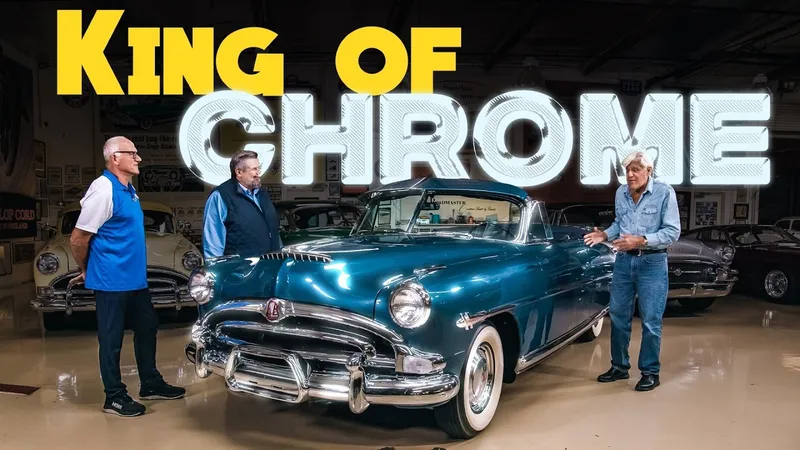
Jay Leno introduces a restored 1953 Hudson Hornet convertible, discussing its step-down design, six-cylinder engine, handling, chrome and place in early-1950s stock-car racing. The episode features owner Chris Duhon and restorer Steve Stratis; the supplied description says the restoration took three and a half years, and the opening excerpt includes a drive and conversation about the car.
- Views
- 389.8K
- Likes
- 7.5K
- Comments
- 471
- 1953 Hudson HornetClassic car restorationHudson engineeringNASCAR history
Analysis
Jay Leno introduces a restored 1953 Hudson Hornet convertible, discussing its step-down design, six-cylinder engine, handling, chrome and place in early-1950s stock-car racing. The episode features owner Chris Duhon and restorer Steve Stratis; the supplied description says the restoration took three and a half years, and the opening excerpt includes a drive and conversation about the car.
- ReviewInterview
- Title
- Jay Leno Drives the Rare 1953 Hudson Hornet Convertible Coupe | Jay Leno's Garage
“You don't get modern convertibles like this that are just so open open, you know? I mean, it's like it's like being in a toboga in this thing. You're outside, you know, but you can drive this as a modern car anywhere, you know, 65 on the freeway, no problem. And, you know, when this come out, the automatic transmission was like the greatest invention. It's true. >> The fact that people could now drive just with two pedals. Oh, that was it that was unbelievable. >> I mean, it's amazing how each year it escalated into something better. >> Yeah. And they would sell millions of cars. Nowadays, you sell 40,000 of one Model O. That's a big success, you know. Yeah. This thing drives very nice. Open up those two one barrels, boy. Put your foot on it. One episode of Jay Love's Garage. the car featuring today 1953 Hudson Hornet convertible coupe. You know, I am a huge Hudson fan. This is my little Hudson area of my garage here. One of the most underappreciated and undervalued cars for a long time. Hudson uh they came out of World War II with something called a step down design. If you look at that post up there, you see how the chassis is lower than the body. Their big downfall was they stayed with the six-cylinder engine a little bit too long. You know, General Motor come out with a V8 and overhead valves and the Rocket 88 Oldsmobile. They stuck with the tried andrue 308 cubic in six-cylinder and the Hornet that had the two one barrels. Woo, that was a that was a big engine. But, you know, it it had more horsepower. It's about 170 horsepower versus the Oldmobile which is 160 or 165. It's just the old mobile, the GM cars seem more the future. Overhead valves, a V8, eight cylinders, not six. These were the stock car champions of the early 50s. The thing was because of that chassis and that low slung design, the other cars would take them in the straits and these guys would catch them in the corners with the Hudson. They were fabulous handling cars, great driving cars, a lot of features. We'll talk with the owner about some things that you couldn't get in other cars. and massive amounts of chrome. Look, look how thick this is. This is probably just 1,500 bucks worth of chrome just to do this. I mean, it's this thick. These came out of the Hudson department store. Hudson was a a big chain of stores in the Midwest. They decided to sell some cars at some point and of course you forgot about the uh department store part of it and and the cars kind of lived on. Hudson lived on until the mid50s, emerged in 54. Uh, I guess 55 be the first the last year. Then he became American Motors. But this was the golden era of these cars. Let's meet the gentleman who owns it, Chris Dwan.”
- 01Distinctive opening quality
This establishes a concrete first impression and a useful contrast, inviting viewers to learn what makes this older convertible feel distinctive.
The opening describes how unusually open the convertible feels and compares it to using a modern car.
“You don't get modern convertibles like this that are just so open open, you know? I mean, it's like it's like being in a toboga in this thing. You're outside, you know, but you can drive this as a modern car anywhere, you know, 65 on the freeway, no problem.”
- 02Period context and comparison
This places the car in its historical context and develops a comparison between past and present automotive expectations.
The speakers describe the automatic transmission's significance at the time and compare the car industry's earlier advances and sales with a modern figure.
“And, you know, when this come out, the automatic transmission was like the greatest invention. It's true. >> The fact that people could now drive just with two pedals. Oh, that was it that was unbelievable. >> I mean, it's amazing how each year it escalated into something better. >> Yeah. And they would sell millions of cars. Nowadays, you sell 40,000 of one Model O. That's a big success, you know. Yeah.”
- 03Episode and subject identification
This makes the episode's subject explicit and follows the historical context with a concise statement of the car's driving appeal.
The speaker praises the car's driving, then identifies the recurring show and names the featured Hudson.
“This thing drives very nice. Open up those two one barrels, boy. Put your foot on it. One episode of Jay Love's Garage. the car featuring today 1953 Hudson Hornet convertible coupe.”
- 04Enthusiasm and background
The personal enthusiasm establishes relevant perspective before the opening moves into the model's design and competitive history.
Jay states his enthusiasm for Hudson, describes his collection area, and calls the cars underappreciated and undervalued.
“You know, I am a huge Hudson fan. This is my little Hudson area of my garage here. One of the most underappreciated and undervalued cars for a long time. Hudson uh they came out of World War II with something called a step down design.”
- 05Design and performance context
This supplies the core context for why the car was distinctive and capable. The sustained historical and mechanical explanation marks the end of the introduction.
The speaker explains the chassis design, contrasts Hudson's engine with competing cars, and describes the Hornet's horsepower, racing reputation, handling, and features.
“If you look at that post up there, you see how the chassis is lower than the body. Their big downfall was they stayed with the six-cylinder engine a little bit too long. You know, General Motor come out with a V8 and overhead valves and the Rocket 88 Oldsmobile. They stuck with the tried andrue 308 cubic in six-cylinder and the Hornet that had the two one barrels. Woo, that was a that was a big engine. But, you know, it it had more horsepower. It's about 170 horsepower versus the Oldmobile which is 160 or 165. It's just the old mobile, the GM cars seem more the future. Overhead valves, a V8, eight cylinders, not six. These were the stock car champions of the early 50s. The thing was because of that chassis and that low slung design, the other cars would take them in the straits and these guys would catch them in the corners with the Hudson. They were fabulous handling cars, great driving cars, a lot of features. We'll talk with the owner about some things that you couldn't get in other cars.”
- 06Chrome emphasis and transition
The chrome remarks reinforce the car's styling before the introduction turns from overview to meeting the owner. The invitation to meet him is the transition into the next section.
The speaker highlights the amount and thickness of chrome, estimates its value, gives brief company background, and introduces the owner.
“and massive amounts of chrome. Look, look how thick this is. This is probably just 1,500 bucks worth of chrome just to do this. I mean, it's this thick. These came out of the Hudson department store. Hudson was a a big chain of stores in the Midwest. They decided to sell some cars at some point and of course you forgot about the uh department store part of it and and the cars kind of lived on. Hudson lived on until the mid50s, emerged in 54. Uh, I guess 55 be the first the last year. Then he became American Motors. But this was the golden era of these cars. Let's meet the gentleman who owns it, Chris Dwan.”