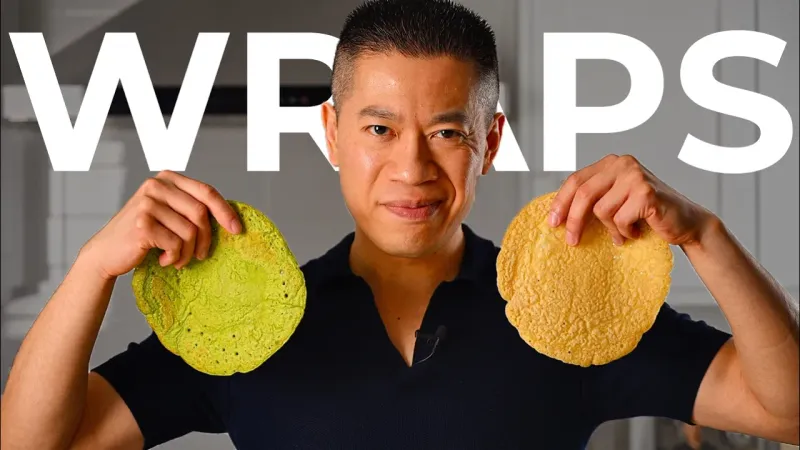
I stopped buying wraps and started making these with Lentils!
Yeung Man Cooking@YEUNGMANCOOKINGI stopped buying wraps and started making these with Lentils!
Wil Yeung demonstrates how to make simple, pliable wraps from red lentils, water and salt, with soaking, blending and pan-cooking instructions. The video also describes an optional spinach version seasoned with garlic and onion powder, presenting the wraps as a versatile homemade alternative to store-bought wraps.
- Views
- 452.5K
- Likes
- 23.7K
- Comments
- 987
- Red lentil wrapsPlant-Based CookingHomemade wrap recipe
Analysis
Wil Yeung demonstrates how to make simple, pliable wraps from red lentils, water and salt, with soaking, blending and pan-cooking instructions. The video also describes an optional spinach version seasoned with garlic and onion powder, presenting the wraps as a versatile homemade alternative to store-bought wraps.
- Tutorial
- Title
- I stopped buying wraps and started making these with Lentils!
“On today's menu, a recipe so simple, On today's menu, a recipe so simple, On today's menu, a recipe so simple, it'll be easy to wrap your head around. it'll be easy to wrap your head around. it'll be easy to wrap your head around. Fantastic lentil wraps. Lay ho ma na, how's it going Cantonese? Lay ho ma na, how's it going Cantonese? Lay ho ma na, how's it going Cantonese? Welcome to Yeung Man Cooking. I'm Wil Welcome to Yeung Man Cooking. I'm Wil Welcome to Yeung Man Cooking. I'm Wil Yeung. Join me in this episode as we Yeung. Join me in this episode as we Yeung. Join me in this episode as we make a really simple recipe and yet it's make a really simple recipe and yet it's make a really simple recipe and yet it's probably one of the most versatile. probably one of the most versatile. probably one of the most versatile. As always, if you enjoyed As always, if you enjoyed As always, if you enjoyed today's recipe, be sure to give it a today's recipe, be sure to give it a today's recipe, be sure to give it a thumbs up, leave a comment below. Let's thumbs up, leave a comment below. Let's thumbs up, leave a comment below. Let's begin. begin. begin.”
- 01Repeated premise and wordplay
This opens directly on the episode’s subject and frames it as approachable. The wordplay adds a light, memorable turn before the specific recipe is named.
A repeated menu-style phrase introduces a simple subject, followed by wordplay connecting the subject to an easy-to-understand explanation.
“On today's menu, a recipe so simple, On today's menu, a recipe so simple, On today's menu, a recipe so simple, it'll be easy to wrap your head around. it'll be easy to wrap your head around. it'll be easy to wrap your head around.”
- 02Name the recipe and greet the viewer
Naming the recipe makes the premise explicit; the greeting and show identification establish the speaker and recurring format before the episode invitation.
The speaker names the lentil wraps, uses a Cantonese greeting, welcomes viewers to the cooking show, and introduces himself.
“Fantastic lentil wraps. Lay ho ma na, how's it going Cantonese? Lay ho ma na, how's it going Cantonese? Lay ho ma na, how's it going Cantonese? Welcome to Yeung Man Cooking. I'm Wil Welcome to Yeung Man Cooking. I'm Wil Welcome to Yeung Man Cooking. I'm Wil Yeung.”
- 03Invite viewers into the episode and characterize the recipe
The invitation moves from show identification into the episode itself. Simplicity and versatility set expectations for the recipe without yet beginning its method.
The presenter invites viewers to join the episode, promises a simple recipe, and describes it as one of the most versatile.
“Join me in this episode as we Yeung. Join me in this episode as we Yeung. Join me in this episode as we make a really simple recipe and yet it's make a really simple recipe and yet it's make a really simple recipe and yet it's probably one of the most versatile. probably one of the most versatile. probably one of the most versatile.”
- 04Engagement request and transition
This brief channel engagement request closes the spoken introduction and signals a transition into the recipe instructions.
The presenter asks viewers to give the recipe a thumbs up and leave a comment, then says, “Let's begin.”
“As always, if you enjoyed As always, if you enjoyed As always, if you enjoyed today's recipe, be sure to give it a today's recipe, be sure to give it a today's recipe, be sure to give it a thumbs up, leave a comment below. Let's thumbs up, leave a comment below. Let's thumbs up, leave a comment below. Let's begin. begin. begin.”