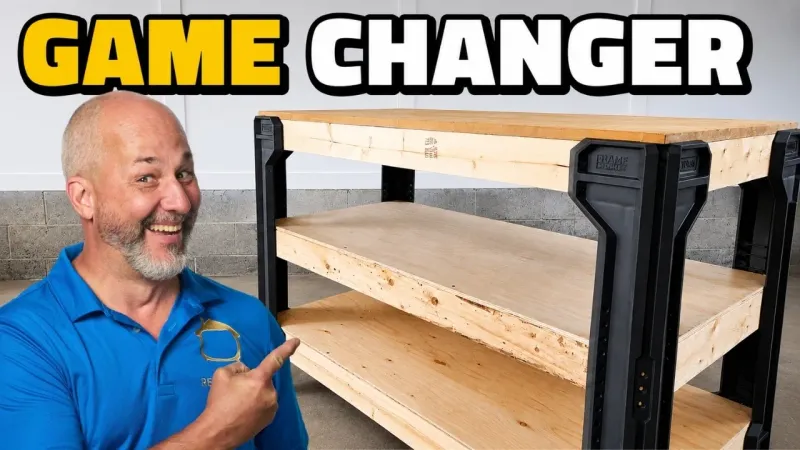
This Makes Building a Workbench Almost Too Easy
Home RenoVision DIY@HomeRenoVisionDIYThis Makes Building a Workbench Almost Too Easy
The video demonstrates building a workbench with the RYOBI Framework kit, explaining how its legs, brackets and screws support the frame and shelves. The host also discusses adding casters or leveling feet and choosing pre-cut sheet material; the opening says he plans to test the bench with a load, but the outcome is not shown here.
- Views
- 1.7M
- Likes
- 8.6K
- Comments
- 474
- Workbench assemblyWorkbench leg systemWorkshop storageRolling workbench
Analysis
The video demonstrates building a workbench with the RYOBI Framework kit, explaining how its legs, brackets and screws support the frame and shelves. The host also discusses adding casters or leveling feet and choosing pre-cut sheet material; the opening says he plans to test the bench with a load, but the outcome is not shown here.
- TutorialDemonstrationWalkthrough

- Title
- This Makes Building a Workbench Almost Too Easy
“Today I'm going to show you how to build the simplest workbench ever. And all you need is a drill and a saw. I saw this product at a trade show and we're not sponsored, but I wanted to give this a shot. Talk me through this because I'm building a whole workshop and I'm thinking this is a perfect solution for a homeowner. I didn't care what products were on the shelf that they were displaying. I wanted to know about these legs because I think this is going to be a solution to a lot of your problems. This thing only weighs 20 lb, but it can carry 1,000 lb. It comes with instructions for four different ways to build a bench. I'm doing number three. And it comes with the cut list right here on the back of the box. Okay, we have one, two, three, four legs. So, let me just demonstrate the basics of the system.”
- 01Simple build promise
State the episode's practical premise and its low tool requirement immediately, so viewers can assess the promised build's accessibility.
The speaker promises to show how to build a very simple workbench and names the two tools required.
“Today I'm going to show you how to build the simplest workbench ever. And all you need is a drill and a saw.”
- 02Why try this product
Disclose the product's origin and sponsorship status, then connect the trial to the speaker's workshop project and its potential relevance to homeowners.
The speaker says they encountered the product at a trade show, clarifies the video is not sponsored, and explains the workshop context behind trying it.
“I saw this product at a trade show and we're not sponsored, but I wanted to give this a shot. Talk me through this because I'm building a whole workshop and I'm thinking this is a perfect solution for a homeowner.”
- 03Product premise and specifications
Move from the reason for trying the product to concrete claimed capabilities and a specific build choice, giving the coming demonstration a practical basis.
The speaker says they focused on the product's legs, presents it as a solution to many problems, and cites its weight, carrying capacity, four build options, and included cut list. They choose the third option.
“I didn't care what products were on the shelf that they were displaying. I wanted to know about these legs because I think this is going to be a solution to a lot of your problems. This thing only weighs 20 lb, but it can carry 1,000 lb. It comes with instructions for four different ways to build a bench. I'm doing number three. And it comes with the cut list right here on the back of the box.”
- 04Transition to the build demonstration
Close the introductory framing and begin the concrete build explanation. The following discussion of how the parts carry the load is sustained procedural content, so it falls outside the introduction.
The speaker counts out the legs and announces a demonstration of the system's basics.
“Okay, we have one, two, three, four legs. So, let me just demonstrate the basics of the system.”