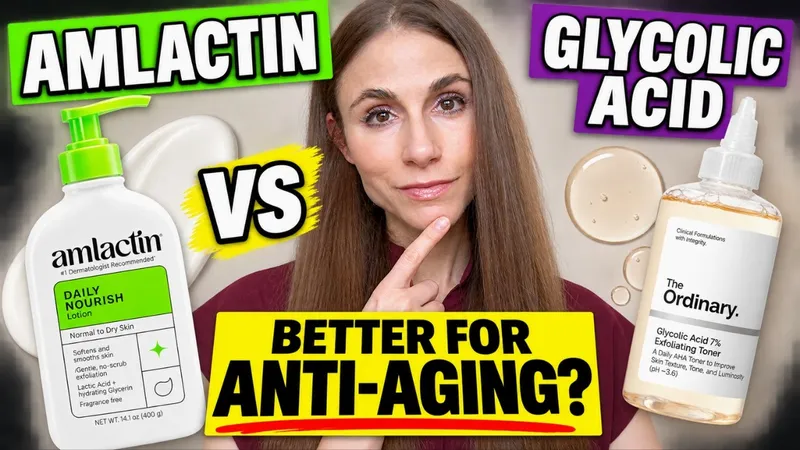
Amlactin vs. Glycolic Acid: Which Is Better for Anti-Aging?
Dr Dray@DrDrayzdayAmlactin vs. Glycolic Acid: Which Is Better for Anti-Aging?
Dermatologist Dr. Dray compares 12% ammonium lactate in AmLactin with glycolic acid for anti-aging, emphasizing how concentration, formulation, pH, and at-home versus in-office use affect their roles. She introduces research on skin thickness, collagen, exfoliation, and texture, and notes that professional peels differ from over-the-counter products.
- Views
- 205.9K
- Likes
- 4.2K
- Comments
- 390
- AmLactin vs Glycolic AcidAHA Anti-Aging ResearchAt-Home Skincare IngredientsChemical peel differences
Analysis
Dermatologist Dr. Dray compares 12% ammonium lactate in AmLactin with glycolic acid for anti-aging, emphasizing how concentration, formulation, pH, and at-home versus in-office use affect their roles. She introduces research on skin thickness, collagen, exfoliation, and texture, and notes that professional peels differ from over-the-counter products.
- ExplainerComparisonLecture

- Title
- Amlactin vs. Glycolic Acid: Which Is Better for Anti-Aging?
“Well, hey guys. Welcome back. If you're new here, I'm Dr. Dray. I'm a board-certified dermatologist. In this video, we're going to talk about a question that comes up a lot. AmLactin versus glycolic acid for anti-aging. Which one is better? Both AmLactin and glycolic acid are alpha hydroxy acids, otherwise known as AHAs. AHAs are a class of ingredients that can smooth the skin surface, exfoliate, improve rough skin texture. It can even lighten unwanted hyperpigmentation. But, when we're talking specifically about anti-aging, there's a key distinction between AmLactin lotion and glycolic acid. The answer depends a lot on the concentration, the formulation, the setting. Are we talking about at-home use or in the office? And in this video, I'm specifically going to be comparing 12% ammonium lactate, which is AmLactin 12% lotion, with glycolic acid. And we're going to focus specifically on what we know about the effects these two ingredients have on the skin. To clarify, when I say AmLactin, that's a skin care brand. It's not a specific product, and they're a brand that has, well, a variety of lotions. I'm specifically talking about 12% ammonium lactate, down in AmLactin daily 12%. Ammonium lactate is a buffered form of lactic acid. Lactic acid is an alpha hydroxy acid naturally found in your skin, but also utilized topically to gently exfoliate the skin and to improve moisture retention. It acts as a humectant. Glycolic acid also does these things, and likewise is an alpha hydroxy acid. The major difference between the two is their overall structure. Glycolic acid has a smaller molecular size compared to lactic acid. That smaller size allows glycolic acid to penetrate the skin more readily compared to lactic acid, which can be an asset when trying to get an ingredient into the skin at a very high and meaningful concentration, which is one of the reasons why glycolic acid has become such a popular ingredient in in-office chemical peels that a dermatologist might offer you to treat certain skin disorders or to improve the look of aging skin. But when we speak of glycolic acid, something that's very important for you to understand is that the glycolic acid that is used in office for chemical peels is very different than what is available to you for the safe at-home use in skin care products. That distinction matters because it really changes how you approach this question with regards to AmLactin 12% lotion versus glycolic acid for aging skin. Because when glycolic is used in office by a dermatologist for a chemical peel, the formulations and the concentrations are very, very strong. Much stronger than what you would get in a product you can buy in the store. Not only are we talking higher percentage strengths ranging from 20 to 70% for in-office peels, but the overall formulation of the peel reagent in comparison to the stuff that you buy in the store. Because other things factor in here as far as the strength, the penetration of glycolic acid. In-office peels, the pH and the overall delivery system, the vehicle, is such to allow really, really high levels of penetration into the skin that introduce a window of potential to actually burn the skin and harm the skin if not properly administered. As far as in-office glycolic acid peels done by a dermatologist, there is ample clinical research-backed and histalogic, meaning biopsy-proven, benefits for the use of in-office glycolic acid peels not only for improving the appearance of aging skin at the surface, but for actually getting in there and improving the deeper layers of the skin including an improvement in collagen production which ultimately helps to improve the look of wrinkles.”
- 01Welcome and credentials
Establish the show context and a relevant reason to trust the comparison that follows.
The speaker welcomes returning viewers, addresses newcomers, and gives a relevant professional qualification.
“Well, hey guys. Welcome back. If you're new here, I'm Dr. Dray. I'm a board-certified dermatologist.”
- 02Comparison premise
State the episode’s central question so viewers can see what the comparison will address.
The speaker introduces a frequently asked comparison, names both options and the goal, and asks which is better.
“In this video, we're going to talk about a question that comes up a lot. AmLactin versus glycolic acid for anti-aging. Which one is better?”
- 03Shared category and qualification
Give viewers a little grounding while making clear that the comparison needs a defined scope and does not have an automatic answer.
The speaker places both options in a shared category, notes what they can do, then says the answer depends on several factors and asks whether the comparison concerns one setting or another.
“Both AmLactin and glycolic acid are alpha hydroxy acids, otherwise known as AHAs. AHAs are a class of ingredients that can smooth the skin surface, exfoliate, improve rough skin texture. It can even lighten unwanted hyperpigmentation. But, when we're talking specifically about anti-aging, there's a key distinction between AmLactin lotion and glycolic acid. The answer depends a lot on the concentration, the formulation, the setting. Are we talking about at-home use or in the office?”
- 04Defined comparison
Set boundaries for the comparison and preview the evidence focus, rather than leaving the options overly broad.
The speaker specifies the formulation being compared and says the discussion will focus on what is known about each option’s effects.
“And in this video, I'm specifically going to be comparing 12% ammonium lactate, which is AmLactin 12% lotion, with glycolic acid. And we're going to focus specifically on what we know about the effects these two ingredients have on the skin.”
- 05Clarify the named option
Prevent ambiguity in the comparison by distinguishing the brand from the specific product under discussion.
The speaker clarifies that one name refers to a brand, not one specific product, and identifies the particular formulation she means.
“To clarify, when I say AmLactin, that's a skin care brand. It's not a specific product, and they're a brand that has, well, a variety of lotions. I'm specifically talking about 12% ammonium lactate, down in AmLactin daily 12%.”
- 06Brief mechanism overview
Give viewers the basic conceptual context for the comparison before emphasizing a difference between the options.
The speaker explains how the specified form relates to a broader ingredient class and briefly describes its effects, then notes that the other option has related effects too.
“Ammonium lactate is a buffered form of lactic acid. Lactic acid is an alpha hydroxy acid naturally found in your skin, but also utilized topically to gently exfoliate the skin and to improve moisture retention. It acts as a humectant. Glycolic acid also does these things, and likewise is an alpha hydroxy acid.”
- 07Structural distinction and relevance
Show why the comparison depends on setting and formulation, and introduce a concrete safety distinction between professional peels and at-home products.
The speaker identifies a structural difference, relates it to penetration and professional use, then qualifies that office treatments differ from products intended for home use.
“The major difference between the two is their overall structure. Glycolic acid has a smaller molecular size compared to lactic acid. That smaller size allows glycolic acid to penetrate the skin more readily compared to lactic acid, which can be an asset when trying to get an ingredient into the skin at a very high and meaningful concentration, which is one of the reasons why glycolic acid has become such a popular ingredient in in-office chemical peels that a dermatologist might offer you to treat certain skin disorders or to improve the look of aging skin. But when we speak of glycolic acid, something that's very important for you to understand is that the glycolic acid that is used in office for chemical peels is very different than what is available to you for the safe at-home use in skin care products. That distinction matters because it really changes how you approach this question with regards to AmLactin 12% lotion versus glycolic acid for aging skin.”
- 08Professional-strength warning and evidence qualifier
Make the setting distinction concrete with both its risk and its evidence qualifier. This is still introductory framing; the supplied excerpt continues into a sustained explanation of the evidence and does not include a clear transition out of the introduction.
The speaker explains that professional peel formulations are much stronger than store-bought products, gives a stated concentration range, describes factors affecting penetration, and warns about potential harm if a peel is not properly administered. She then cites research-backed and biopsy-proven benefits for office peels.
“Because when glycolic is used in office by a dermatologist for a chemical peel, the formulations and the concentrations are very, very strong. Much stronger than what you would get in a product you can buy in the store. Not only are we talking higher percentage strengths ranging from 20 to 70% for in-office peels, but the overall formulation of the peel reagent in comparison to the stuff that you buy in the store. Because other things factor in here as far as the strength, the penetration of glycolic acid. In-office peels, the pH and the overall delivery system, the vehicle, is such to allow really, really high levels of penetration into the skin that introduce a window of potential to actually burn the skin and harm the skin if not properly administered. As far as in-office glycolic acid peels done by a dermatologist, there is ample clinical research-backed and histalogic, meaning biopsy-proven, benefits for the use of in-office glycolic acid peels not only for improving the appearance of aging skin at the surface, but for actually getting in there and improving the deeper layers of the skin including an improvement in collagen production which ultimately helps to improve the look of wrinkles.”