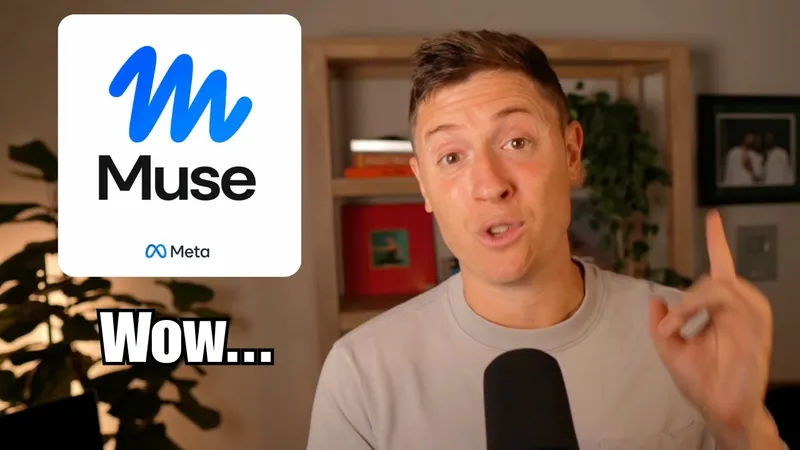
Meta Muse is an INCREDIBLE AI agent
Alex Finn@AlexFinnOfficialMeta Muse is an INCREDIBLE AI agent
The presenter introduces Meta Muse, describing its single-chat “god thread” approach and the activities feed, then promises a tour of its features, strengths and weaknesses. The video is framed as a comparison with other AI agents and advice on who may suit Meta Muse, including users who want simple everyday tasks handled.
- Views
- 328.6K
- Likes
- 2.4K
- Comments
- 304
- Meta muse AI agentAI agent featuresAI tool comparisonChoosing AI agents
Analysis
The presenter introduces Meta Muse, describing its single-chat “god thread” approach and the activities feed, then promises a tour of its features, strengths and weaknesses. The video is framed as a comparison with other AI agents and advice on who may suit Meta Muse, including users who want simple everyday tasks handled.
- ReviewComparisonExplainer

- Title
- Meta Muse is an INCREDIBLE AI agent
Meta's Muse is possibly the best AI agent out there. The issue is is I don't think it's a right fit for a lot of people. In this video, I cover what Meta's Muse is, what it does so well, how it compares to Hermes, Open Claw, Grok Bot, ChatGPT or Claude Co-work, and if you are part of the group I think should actually switch to it. By the end of this video, you'll be a master of Meta's Muse and will know if you should be taking your talents to Meta. Now, let's lock in and get into it. So, this is Meta Muse, the most talked about AI agent at the moment, and there are some things in here that really, really impressed me. The first thing I'm going to do is take you through everything it does, all its capabilities, all its features, how to use it, what I've been doing with it. After that, I will tell you who it's for. So, who is the actual group of people I think should switch to it. I don't think everyone should switch to it, but I will let you know right after if you are one of those people that should be switching to it. I'll go through all of the strengths and weaknesses, and then I will rank it. I'll stack rank it, how it compares to other AI agents, and I'll show you what my current stack is, which AI agents I actually am using. But, let's go through it. Here is Meta Muse. It is what I call a god thread agent. This is a term I'm now coining called the god thread agent. What does that mean? It is not like Grok Bot where it is kind of multi-agent, you have a bunch of different named agents. It's not like ChatGPT work where you have a whole bunch of different threads for one agent. It is a god thread agent, which basically means you have one chat. You can make side chats. Those are kind of like exceptions, but it's built around just having one mega chat you do everything in. Now, I've gone back and forth on do I like the god thread way, or do I like the Grok Bot multi-agent way, or do I like the one agent with multiple threads way? I think it really depends on what kind of work you do. I think for the more hardcore people who use AI agents for a lot of different types of tasks, I actually do think the kind of multi-agent multi-thread way is good to go. But for the people in this little spoiler and who I think this is built for, the people who are like the reserve me a movie or reserve me a restaurant or get this bill negotiated down use case, I think this is actually a better form factor for them. I call that the make me a reservation AI agent crowd. The make me a restaurant reservation crowd doesn't need 10 different named agents to make a reservation at a restaurant. They just need one agent they can quickly go on their phone to open up and say "Hey, find me a reservation at a Greek restaurant near me." So it is one god thread, but there are so many little details in here that I actually really love. So over on the right-hand side, I instantly fell in love with this feature and I wish this is built into every other agent. They have an activities feed so you can see everything you've done with your agent that day by day by time.
- 01Strong claim, qualified
This establishes the central tension: a product can be impressive without being right for everyone, which frames the coming evaluation.
The speaker calls Muse possibly the best AI agent, then immediately says it may not fit many people.
“Meta's Muse is possibly the best AI agent out there. The issue is is I don't think it's a right fit for a lot of people.”
- 02Evaluation and viewer promise
This maps the review’s scope and gives viewers a concrete decision to follow: whether the product fits them and whether they should move to it.
The speaker previews a product overview and comparison, then promises to identify who should switch and what viewers will know by the end.
“In this video, I cover what Meta's Muse is, what it does so well, how it compares to Hermes, Open Claw, Grok Bot, ChatGPT or Claude Co-work, and if you are part of the group I think should actually switch to it. By the end of this video, you'll be a master of Meta's Muse and will know if you should be taking your talents to Meta. Now, let's lock in and get into it.”
- 03Review route and qualifications
This makes the promised evaluation more specific and grounds it in the speaker’s own use. It keeps the recommendation open while stating how the comparison will be approached.
The speaker introduces Muse, promises a feature and usage walkthrough, then says the review will identify its intended users, assess strengths and weaknesses, rank it, and show the speaker’s current set of tools.
“So, this is Meta Muse, the most talked about AI agent at the moment, and there are some things in here that really, really impressed me. The first thing I'm going to do is take you through everything it does, all its capabilities, all its features, how to use it, what I've been doing with it. After that, I will tell you who it's for. So, who is the actual group of people I think should switch to it. I don't think everyone should switch to it, but I will let you know right after if you are one of those people that should be switching to it. I'll go through all of the strengths and weaknesses, and then I will rank it. I'll stack rank it, how it compares to other AI agents, and I'll show you what my current stack is, which AI agents I actually am using. But, let's go through it.”
- 04Define the product structure
This begins the promised explanation of what Muse is and supplies the first concrete basis for comparing agent designs. It is still introductory framing: the speaker next weighs which structure fits different work, before moving into a specific use case.
The speaker calls Muse a “god thread” agent, explains that this is a newly coined term, and distinguishes its one main chat with optional side chats from other agents’ structures.
“Here is Meta Muse. It is what I call a god thread agent. This is a term I'm now coining called the god thread agent. What does that mean? It is not like Grok Bot where it is kind of multi-agent, you have a bunch of different named agents. It's not like ChatGPT work where you have a whole bunch of different threads for one agent. It is a god thread agent, which basically means you have one chat. You can make side chats. Those are kind of like exceptions, but it's built around just having one mega chat you do everything in.”
- 05Match structure to user needs
This delivers a small, useful answer to the fit question without resolving the full recommendation. The contrast turns an abstract product design into a user-based comparison and sets up why one agent may be enough for some people.
The speaker compares three agent arrangements and says the best choice depends on the kind of work, distinguishing high-volume varied tasks from users with a simple reservation request.
“Now, I've gone back and forth on do I like the god thread way, or do I like the Grok Bot multi-agent way, or do I like the one agent with multiple threads way? I think it really depends on what kind of work you do. I think for the more hardcore people who use AI agents for a lot of different types of tasks, I actually do think the kind of multi-agent multi-thread way is good to go. But for the people in this little spoiler and who I think this is built for, the people who are like the reserve me a movie or reserve me a restaurant or get this bill negotiated down use case, I think this is actually a better form factor for them. I call that the make me a reservation AI agent crowd.”
- 06Illustrate the simpler-use case
The example makes the earlier audience distinction concrete and gives a brief basis for the speaker’s enthusiasm. This remains within the introduction’s fit-and-capability framing; the excerpt ends as the speaker begins describing a particular feature.
The speaker explains that a reservation-seeking user does not need many named agents, then gives a phone-based example request and returns to praising details of Muse.
The make me a restaurant reservation crowd doesn't need 10 different named agents to make a reservation at a restaurant. They just need one agent they can quickly go on their phone to open up and say "Hey, find me a reservation at a Greek restaurant near me." So it is one god thread, but there are so many little details in here that I actually really love. So over on the right-hand side, I instantly fell in love with this feature and I wish this is built into every other agent. They have an activities feed so you can see everything you've done with your agent that day by day by time.