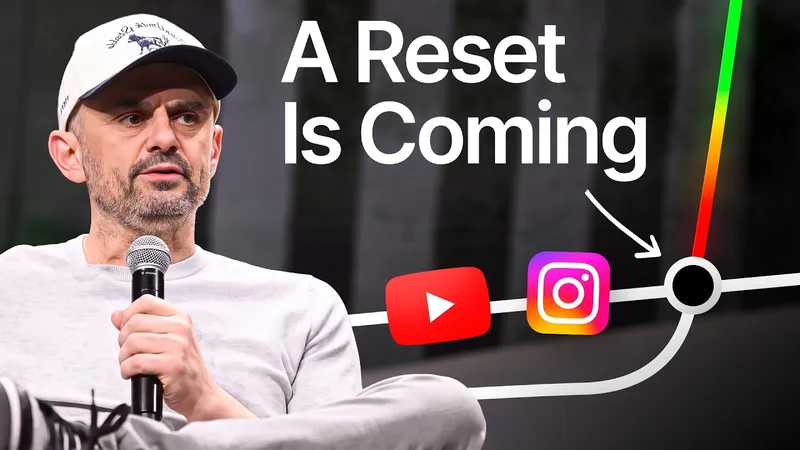
The New Era of Social Media Has Just Begun
The New Era of Social Media Has Just Begun
Gary Vaynerchuk argues that social platforms are shifting from networks based on who users follow to feeds shaped by their interests. He says creators can reach people who do not follow them, emphasizes views as a measure of content reach, and connects relevance with marketing and purchase decisions.
- Views
- 774.3K
- Likes
- 7.8K
- Comments
- 322
- Interest-Based Social MediaSocial media algorithmsContent Views and ReachMarketing relevance
Analysis
Gary Vaynerchuk argues that social platforms are shifting from networks based on who users follow to feeds shaped by their interests. He says creators can reach people who do not follow them, emphasizes views as a measure of content reach, and connects relevance with marketing and purchase decisions.
- ExplainerCommentary

- Title
- The New Era of Social Media Has Just Begun
I believe we are now in the not social media, but interest media. Meaning social was inherently like who was your social network, who are your friends. We are now in an era where what are you interested is coming to you from the algorithm. And so, what you should be looking at is views. The only thing I really care about on every platform is views achieved cuz the creative is the variable to the views now. People that are watching right now that have never posted, if they post a remarkably good piece of content, that piece of content now has the ability to get more views than something I post and I'm one of the most followed people in the world. That is profound. You get content based on what you've recently been into. Do you know that if you went outside right now and made a video of eating a banana and drinking a rum and coke and posted it, that people that have a high propensity of interest in bananas and rum and coke might be the first people that see that content. You can actually reach these people in their feeds by making the contact organically without them even following you. You need to become a psycho at that because the companies got smarter. It really was driven by TikTok. For all the OG's in the room, it was originally done by Tumblr years ago. I was an early investor in Tumblr and I I thought it was going to be bigger than Facebook and Twitter. Those were my first three investments. Thank god I wasn't making prediction videos back then cuz I would have definitely made that video and it was because I believed I knew that I loved the Jets and wine and other things that I would like them forever. I also knew that some high school friends, some former co-workers, some college friends would come in and out of my life. There was more consistency of what I was interested in than whom my acquaintances or lightweight friends. Best friends can stick, they're family. And so, I could really see when social exploded and I was very early on it. I was already 31. I wasn't 16 or 14, so I've lived enough to see the social dynamics moved enough where I understood that social had some vulnerabilities if it was just based on who you followed, people change, interest change, lifestyles, life journeys, but interests the core interests we all have here, they stick, new ones join, and when they join like for example, if I got into fishing right now, very quickly all my social networks would be showing me fishing content because I would start to search and explore fishing content. >> You don't have to linger on that one video and then TikTok suddenly realizes it thinks you want like 50,000 of the same like kind of video. [music] >> It does start to think you want that. We are in control to show the algorithms if we are interested in it. I laugh when people are like, "Oh, the algorithm changed me." The algorithm changed no one. The algorithm exposed everyone. It is being decided by the views achieved when you post it in social. That algorithm from LinkedIn to Snapchat Spotlight to Twitter X to Facebook and Instagram and TikTok and YouTube and YouTube Shorts, all of them over the last 4 years those algos have been written more and more towards relevance. If you're a marketer in here and many things have changed, but what has not changed is that relevance leads to consideration, leads to purchase.
- 01Name the shift
State the central change in a compact, comparable form so viewers can understand what the episode is about and assess the distinction.
The speaker proposes a new label for the current era, then contrasts what the old and new systems organize around.
“I believe we are now in the not social media, but interest media. Meaning social was inherently like who was your social network, who are your friends. We are now in an era where what are you interested is coming to you from the algorithm.”
- 02State the new measure
Translate the proposed shift into a practical lens for understanding platform performance, while setting up the claim that unfamiliar creators can now reach large audiences.
The speaker says views are the key metric across platforms and argues that creative work now determines them.
“And so, what you should be looking at is views. The only thing I really care about on every platform is views achieved cuz the creative is the variable to the views now.”
- 03Illustrate the reach
Make the proposed shift consequential with a striking example, then lead into a concrete illustration of how an interest can shape what appears in a feed.
The speaker contrasts a new poster’s potential reach with their own large following, calls the implication profound, and describes feeds serving content based on recent interests.
“People that are watching right now that have never posted, if they post a remarkably good piece of content, that piece of content now has the ability to get more views than something I post and I'm one of the most followed people in the world. That is profound. You get content based on what you've recently been into.”
- 04Give a concrete feed example
Turn the interest-based-feed claim into a specific hypothetical example, making its audience-discovery implication easier to grasp.
The speaker imagines posting a video about particular interests and says people already interested in those subjects might see it first, without following the poster.
“Do you know that if you went outside right now and made a video of eating a banana and drinking a rum and coke and posted it, that people that have a high propensity of interest in bananas and rum and coke might be the first people that see that content. You can actually reach these people in their feeds by making the contact organically without them even following you.”
- 05Explain the shift and establish experience
Move from the hypothetical to a brief history of the shift, then establish the speaker’s relevant experience before reflecting on an earlier prediction that might have been wrong.
The speaker says creators must understand how feeds work because platforms have improved, attributes the recent change to TikTok while naming Tumblr as an earlier example, and recalls investing in Tumblr and expecting it to outgrow Facebook and Twitter.
“You need to become a psycho at that because the companies got smarter. It really was driven by TikTok. For all the OG's in the room, it was originally done by Tumblr years ago. I was an early investor in Tumblr and I I thought it was going to be bigger than Facebook and Twitter. Those were my first three investments.”
- 06Qualify the prediction with personal history
Qualify the earlier confidence with a personal account and develop the underlying contrast: acquaintances may come and go while interests persist and new ones emerge.
The speaker jokes about having made a prediction video, then explains how personal loyalties and changing relationships shaped the difference between social connections and stable interests.
“Thank god I wasn't making prediction videos back then cuz I would have definitely made that video and it was because I believed I knew that I loved the Jets and wine and other things that I would like them forever. I also knew that some high school friends, some former co-workers, some college friends would come in and out of my life. There was more consistency of what I was interested in than whom my acquaintances or lightweight friends. Best friends can stick, they're family. And so, I could really see when social exploded and I was very early on it. I was already 31. I wasn't 16 or 14, so I've lived enough to see the social dynamics moved enough where I understood that social had some vulnerabilities if it was just based on who you followed, people change, interest change, lifestyles, life journeys, but interests the core interests we all have here, they stick, new ones join, and when they join like for example, if I got into fishing right now, very quickly all my social networks would be showing me fishing content because I would start to search and explore fishing content.”
- 07Clarify how recommendations respond
Qualify the earlier example and explain the proposed interaction between a user’s interests and what algorithms recommend.
A second speaker says one video does not automatically lead to a flood of similar recommendations. The first speaker adds that platforms infer interest and users have some control over what they show the algorithms.
“>> You don't have to linger on that one video and then TikTok suddenly realizes it thinks you want like 50,000 of the same like kind of video. [music] >> It does start to think you want that. We are in control to show the algorithms if we are interested in it.”
- 08Reverse the algorithm claim and broaden the evidence
Deliver the opening’s clearest interpretation of the shift, then support its breadth with examples across platforms and a stated timeframe. The ledger ends at this point, so it does not show where the introduction transitions into the main discussion.
The speaker challenges the claim that algorithms change people, saying instead they expose audience interests through views. The speaker then names multiple platforms and says their recommendation systems have increasingly prioritized relevance over the past four years.
I laugh when people are like, "Oh, the algorithm changed me." The algorithm changed no one. The algorithm exposed everyone. It is being decided by the views achieved when you post it in social. That algorithm from LinkedIn to Snapchat Spotlight to Twitter X to Facebook and Instagram and TikTok and YouTube and YouTube Shorts, all of them over the last 4 years those algos have been written more and more towards relevance. If you're a marketer in here and many things have changed, but what has not changed is that relevance leads to consideration, leads to purchase.