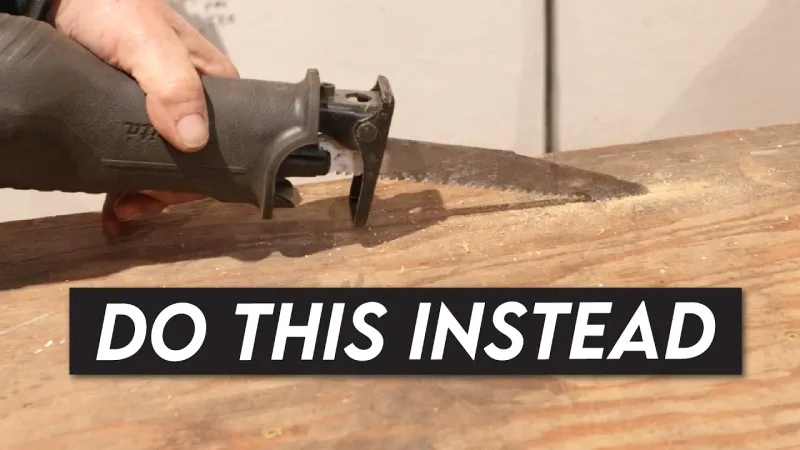
Every Sawzall Trick You Need to Know
Essential Craftsman@essentialcraftsmanEvery Sawzall Trick You Need to Know
The video introduces practical reciprocating-saw techniques for tear-out work, including turning the blade over to begin a plunge cut and using body weight to steady the saw. It also addresses common issues such as bouncing, bent blades, and slow cutting, and promises tips to help the saw work more smoothly.
- Views
- 1.6M
- Likes
- 25.1K
- Comments
- 1.1K
- Reciprocating saw techniquesPlunge cutting woodSaw cutting problems
Analysis
The video introduces practical reciprocating-saw techniques for tear-out work, including turning the blade over to begin a plunge cut and using body weight to steady the saw. It also addresses common issues such as bouncing, bent blades, and slow cutting, and promises tips to help the saw work more smoothly.
- TutorialDemonstration

- Title
- Every Sawzall Trick You Need to Know
“If you're new to the world of Sawzalls, If you're new to the world of Sawzalls, If you're new to the world of Sawzalls, maybe yours is bouncing around. Maybe maybe yours is bouncing around. Maybe maybe yours is bouncing around. Maybe you're bending blades. Maybe it jerks you're bending blades. Maybe it jerks you're bending blades. Maybe it jerks and it's slow and you don't like it. and it's slow and you don't like it. and it's slow and you don't like it. Let me show you some things that are Let me show you some things that are Let me show you some things that are going to solve some of your problems going to solve some of your problems going to solve some of your problems when you pick up your Sawzall. Like when you pick up your Sawzall. Like when you pick up your Sawzall. Like this. Did you know you can plunge cut this. Did you know you can plunge cut this. Did you know you can plunge cut with a Sawzall? Well, you can. But, the with a Sawzall? Well, you can. But, the with a Sawzall? Well, you can. But, the first thing you have to do is turn the first thing you have to do is turn the first thing you have to do is turn the blade over. Makita for the win. Makita for the win. Makita for the win. Turning the blade over changes the angle Turning the blade over changes the angle Turning the blade over changes the angle of approach. As your plunge begins, you start to pull As your plunge begins, you start to pull As your plunge begins, you start to pull the Sawzall back so the point is not the Sawzall back so the point is not the Sawzall back so the point is not banging up against what you've already banging up against what you've already banging up against what you've already cut. Just like that. Just like that. Just like that. Nothing to it. But, Nothing to it. But, Nothing to it. But, you got to hang on to it. We're going to you got to hang on to it. We're going to you got to hang on to it. We're going to talk a little bit about contributing the talk a little bit about contributing the talk a little bit about contributing the weight of your body to the inertia of weight of your body to the inertia of weight of your body to the inertia of the saw. It's a big deal. the saw. It's a big deal. the saw. It's a big deal. There's a couple reasons your Sawzall There's a couple reasons your Sawzall There's a couple reasons your Sawzall could be cutting slowly. First, because could be cutting slowly. First, because could be cutting slowly. First, because the blade might be dull. Setting that the blade might be dull. Setting that the blade might be dull. Setting that aside, because the aside, because the aside, because the reciprocating motion is not in contact reciprocating motion is not in contact reciprocating motion is not in contact with the wood, but it's in contact with with the wood, but it's in contact with with the wood, but it's in contact with your body. your body. your body. If you don't have your body mechanics If you don't have your body mechanics If you don't have your body mechanics firmly backing up the saw, firmly backing up the saw, firmly backing up the saw, >> [snorts] >> then your saw's not cutting.”
- 01Name the audience and its problems
Establishes who the guidance is for and makes its relevance concrete through familiar problems.
Addresses people new to the subject, then lists several difficulties they may recognize.
“If you're new to the world of Sawzalls, If you're new to the world of Sawzalls, If you're new to the world of Sawzalls, maybe yours is bouncing around. Maybe maybe yours is bouncing around. Maybe maybe yours is bouncing around. Maybe you're bending blades. Maybe it jerks you're bending blades. Maybe it jerks you're bending blades. Maybe it jerks and it's slow and you don't like it. and it's slow and you don't like it. and it's slow and you don't like it.”
- 02Promise practical help
Turns the identified frustrations into an explicit practical promise, then leads into a concrete example.
Promises to show several useful things intended to solve some of the audience's problems when they use the subject.
“Let me show you some things that are Let me show you some things that are Let me show you some things that are going to solve some of your problems going to solve some of your problems going to solve some of your problems when you pick up your Sawzall.”
- 03Introduce and explain a technique
Provides an early piece of actionable guidance while giving viewers a reason to follow the explanation of how the adjustment changes the approach.
Introduces a technique as an example, poses a question about whether it is possible, answers affirmatively, and explains an adjustment and its effect.
“Like when you pick up your Sawzall. Like when you pick up your Sawzall. Like this. Did you know you can plunge cut this. Did you know you can plunge cut this. Did you know you can plunge cut with a Sawzall? Well, you can. But, the with a Sawzall? Well, you can. But, the with a Sawzall? Well, you can. But, the first thing you have to do is turn the first thing you have to do is turn the first thing you have to do is turn the blade over. Makita for the win. Makita for the win. Makita for the win. Turning the blade over changes the angle Turning the blade over changes the angle Turning the blade over changes the angle of approach. As your plunge begins, you start to pull As your plunge begins, you start to pull As your plunge begins, you start to pull the Sawzall back so the point is not the Sawzall back so the point is not the Sawzall back so the point is not banging up against what you've already banging up against what you've already banging up against what you've already cut. Just like that. Just like that. Just like that. Nothing to it. But, Nothing to it. But, Nothing to it. But, you got to hang on to it.”
- 04Pivot to another problem and begin its diagnosis
Broadens the promised guidance to another recognizable issue and begins a troubleshooting question: what might be preventing the tool from cutting effectively? The supplied excerpt ends mid-explanation, so the introduction boundary may extend beyond the available text.
Signals a further topic, notes that body weight can contribute to the tool's motion, then introduces slow cutting as a problem and starts listing a possible cause and explanation.
“We're going to you got to hang on to it. We're going to you got to hang on to it. We're going to talk a little bit about contributing the talk a little bit about contributing the talk a little bit about contributing the weight of your body to the inertia of weight of your body to the inertia of weight of your body to the inertia of the saw. It's a big deal. the saw. It's a big deal. the saw. It's a big deal. There's a couple reasons your Sawzall There's a couple reasons your Sawzall There's a couple reasons your Sawzall could be cutting slowly. First, because could be cutting slowly. First, because could be cutting slowly. First, because the blade might be dull. Setting that the blade might be dull. Setting that the blade might be dull. Setting that aside, because the aside, because the aside, because the reciprocating motion is not in contact reciprocating motion is not in contact reciprocating motion is not in contact with the wood, but it's in contact with with the wood, but it's in contact with with the wood, but it's in contact with your body. your body. your body. If you don't have your body mechanics If you don't have your body mechanics If you don't have your body mechanics firmly backing up the saw, firmly backing up the saw, firmly backing up the saw, >> [snorts] >> then your saw's not cutting.”