How OpenAI got hacked with an image
How OpenAI got hacked with an image
The video recounts how security researchers used a malicious HEIF image and a Libheif vulnerability to exploit image processing in Discourse, reportedly gaining access to an employee’s ChatGPT account and leaving a message in OpenAI’s internal repository. It also examines AI’s effect on exploit development and warns self-hosted Discourse operators to rebuild or update vulnerable image-processing dependencies.
- Views
- 286.2K
- Likes
- 4.3K
- Comments
- 267
- HEIF image exploitLibheif heap overflowOpenAI Security BreachAI-Assisted Exploit Development
Analysis
The video recounts how security researchers used a malicious HEIF image and a Libheif vulnerability to exploit image processing in Discourse, reportedly gaining access to an employee’s ChatGPT account and leaving a message in OpenAI’s internal repository. It also examines AI’s effect on exploit development and warns self-hosted Discourse operators to rebuild or update vulnerable image-processing dependencies.
- DocumentaryExplainer
- Title
- How OpenAI got hacked with an image
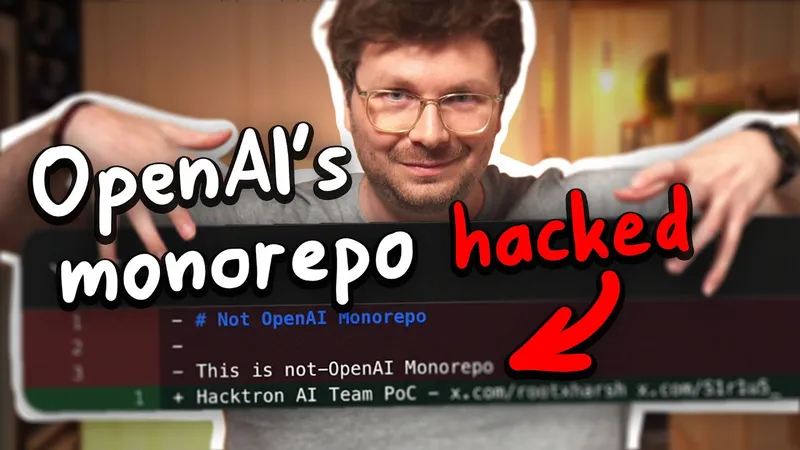
“This video was recorded in late July when Harsh and Mohan...Stop, stop, stop! Sorry, we didn't even start the video yetand I'm already interrupting from the future. I had this really cool intro where I just show you the recording of how Harsh and S1r1us from Hacktron created a pull request in OpenAI's main internal repositoryto leave a message proof that they hacked it. Unfortunately, OpenAI was too scared and requested that we don't show it. So instead you see this lame but pretty accurate reenactment of this moment. Yes, two guys who are, according to the Rand Institute, a silly OC1 or OC2 level threat just hacked into the heart of what is it now, $1 trillion company? Or thanks to AI, which is kind of ironic because AI labs like OpenAI built hacking technology they cannot even protect themselves against.But this is not all. While I was traveling to Black Hat and DEF CON, I received tons of notifications, with a stream of images being uploaded to Slack, and eventually one of those images showed a successful exploit against Slack.In this video, I want to introduce you to the vulnerabilities that connect these two stories and how security through complexity, which kind of worked in the past, doesn't seem to work anymore.The economics of exploitation has completely changed, and threat models defining different attacker capabilities are totally outdated. This video is sponsored by our online cybersecurity training platform, Hextree.io. More on that later.Chapter”
- 01Interrupted cold open
The interruption creates a comic cold open and establishes that the speaker will supply context before the original recording can proceed.
Begins a recording-date setup, interrupts it with a playful objection, and explains that the speaker is already cutting in from the future.
“This video was recorded in late July when Harsh and Mohan...Stop, stop, stop! Sorry, we didn't even start the video yetand I'm already interrupting from the future.”
- 02Withheld proof and reenactment
The claim of concrete proof, its reported withholding, and the substitute reenactment develop the hack premise while leaving the precise technical details to be explained.
The speaker says the original intro would show how two researchers created a pull request in OpenAI's internal repository as proof of a hack. They say OpenAI requested that it not be shown, so the video uses a reenactment, then characterize the researchers and the company's scale.
“I had this really cool intro where I just show you the recording of how Harsh and S1r1us from Hacktron created a pull request in OpenAI's main internal repositoryto leave a message proof that they hacked it. Unfortunately, OpenAI was too scared and requested that we don't show it. So instead you see this lame but pretty accurate reenactment of this moment. Yes, two guys who are, according to the Rand Institute, a silly OC1 or OC2 level threat just hacked into the heart of what is it now, $1 trillion company?”
- 03Irony and second incident
The irony sharpens the central security claim, while the speaker's personal account introduces a second incident that the video promises to connect to the first.
The speaker contrasts AI labs' development of hacking technology with their inability to defend themselves, then recounts traveling to security conferences and receiving notifications as images were uploaded to Slack, one of which showed a successful exploit.
“Or thanks to AI, which is kind of ironic because AI labs like OpenAI built hacking technology they cannot even protect themselves against.But this is not all. While I was traveling to Black Hat and DEF CON, I received tons of notifications, with a stream of images being uploaded to Slack, and eventually one of those images showed a successful exploit against Slack.In”
- 04Connection and thesis
This gives the opening its explanatory route and central claim before the first chapter begins; the sponsorship mention is part of the supplied introduction.
The speaker previews an explanation of vulnerabilities linking the two stories and argues that security through complexity, which worked in the past, no longer seems effective. A sponsor is named, with more information deferred until later.
“this video, I want to introduce you to the vulnerabilities that connect these two stories and how security through complexity, which kind of worked in the past, doesn't seem to work anymore.The economics of exploitation has completely changed, and threat models defining different attacker capabilities are totally outdated. This video is sponsored by our online cybersecurity training platform, Hextree.io. More on that later.Chapter”