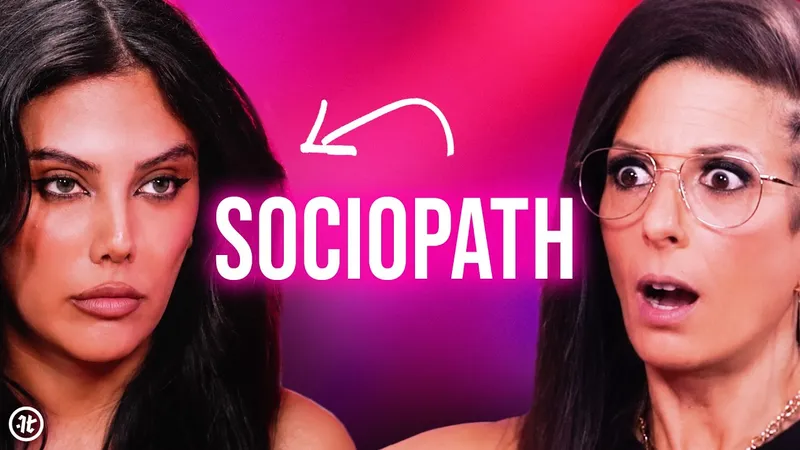
Female Sociopath: How I Manipulate Women Into Thinking I'm Their Best Friend | Kanika Batra
Female Sociopath: How I Manipulate Women Into Thinking I'm Their Best Friend | Kanika Batra
Lisa Bilyeu interviews Kanika Batra, who says she was diagnosed as a sociopath at 21, about masks, manipulation, loyalty and revenge. They discuss how a friend may conceal their intentions, the difference between hot and cold rage, and why actions may be more revealing than words; the episode description promises further discussion of psychological control and reputation warfare.
- Views
- 577.2K
- Likes
- 15.9K
- Comments
- 6.6K
- Sociopathy and ASPDFriendship and ManipulationRage and RevengeRecognizing manipulation
Analysis
Lisa Bilyeu interviews Kanika Batra, who says she was diagnosed as a sociopath at 21, about masks, manipulation, loyalty and revenge. They discuss how a friend may conceal their intentions, the difference between hot and cold rage, and why actions may be more revealing than words; the episode description promises further discussion of psychological control and reputation warfare.
- InterviewPodcast episode

- Title
- Female Sociopath: How I Manipulate Women Into Thinking I'm Their Best Friend | Kanika Batra
So, I got diagnosed at 21. I can go from like, "Yeah, it's been really nice talking to you." You [ __ ] [ __ ] >> Oh, wow. >> If you have my loyalty and you try to do something and break it, I will destroy your life. And I'm not kidding. >> And do you truly mean it? >> Yes. I can either go into a hot rage where I will do damage or I'll go into a cold calculated rage. >> It's coming for you. >> I will [ __ ] ruin your life. So, if you've been victimized by one of us, it's not your fault and you're not stupid. There's nothing wrong with you. It's just you were selected. So, the best way to know that you're not actually being targeted is to >> You're a diagnosed sociopath, which means that you can lie and manipulate people around you without them even knowing and you don't even feel bad about it. So, for any woman watching right now, if a friend we trust is a sociopath, would we even know? >> So, generally you wouldn't be able to tell because we are very, very good at optics. We know how to act the right way in whatever situation we're put in. So, let's say I walked into a certain room of people who I knew were politically opposed to me. I would absolutely go in and blend in and make sure that they think that I'm their friend. But, of course, you have to be very careful. We can't destigmatize sociopathy, psychopathy because there is a lot of damage that we can do. We can and have done. So, you can't fully trust people who have, you know, ASPD, NPD or the mix of both. But, there is that element of being able to tell through the through their actions rather than through their words because words are very easy for us. So, the best way to know that you're not actually being targeted is to see the actions rather than the words. >> All right. Thank you for your honesty. This is going to be to me a fascinating discussion because in your book you have laid out some very strategic ways in which you can either manipulate somebody or you can see the signs of manipulation. So the one thing that you talk about in your book is called the mask collection. And you say you have one personality, we have dozens. >> We absolutely do. It depends on whichever room we're in. >> So you literally will put on whatever mask you need to >> I'll say it. I'm being unmasked at the moment. But naturally, I would absolutely be um trying to blend in with whoever I'm with. There's a certain glibness to us. We can talk about pretty much any topic and then have it sound very genuine and authentic. But there's actually no feeling inside. Like recently, a friend of mine died. People were very angry at me that I wasn't upset. >> All right. Um you you had just said that you the today your mask is down. We had a talk right before the camera started rolling and that was one thing that you had said to me and um I'm going to trust that you are going to be honest with me because again, today is really about knowing exactly what goes on inside your head and the more honest you can be, I think the more you can help us women. So I'd love to talk about some of the masks if you're okay with it.
- 01Personal disclosure and threat
A concrete personal claim quickly establishes the subject and the speaker’s perspective. The threat makes the consequences stark and raises the question of how literally it should be taken.
The speaker says when she was diagnosed, describes shifting from friendly conversation to concealed behavior, and recounts a threatening statement about what happens if loyalty is broken.
So, I got diagnosed at 21. I can go from like, "Yeah, it's been really nice talking to you." You [ __ ] [ __ ] >> Oh, wow. >> If you have my loyalty and you try to do something and break it, I will destroy your life. And I'm not kidding.
- 02Clarification and escalation
The host’s question tests the startling claim, and the answer intensifies it by distinguishing two forms of rage. This develops the threat rather than resolving the broader discussion.
The host asks whether the guest means the threat; the guest distinguishes between a hot rage and a cold, calculated one, followed by a brief exchange about ruining someone’s life.
“>> And do you truly mean it? >> Yes. I can either go into a hot rage where I will do damage or I'll go into a cold calculated rage. >> It's coming for you. >> I will [ __ ] ruin your life.”
- 03Reassurance and recognition question
The reassurance addresses potential victims directly, while the question makes concealment in a trusted relationship the central issue. The answer explains why recognition may be difficult and keeps attention on what signs might be more revealing.
The guest tells people who have been victimized that they are not at fault or stupid, then asks whether women could recognize a trusted friend who is a sociopath. The guest says they generally could not, citing skill at presenting the right appearance in different situations.
“So, if you've been victimized by one of us, it's not your fault and you're not stupid. There's nothing wrong with you. It's just you were selected. So, the best way to know that you're not actually being targeted is to >> You're a diagnosed sociopath, which means that you can lie and manipulate people around you without them even knowing and you don't even feel bad about it. So, for any woman watching right now, if a friend we trust is a sociopath, would we even know? >> So, generally you wouldn't be able to tell because we are very, very good at optics. We know how to act the right way in whatever situation we're put in.”
- 04Example, caution, and behavioral guidance
The example makes the claim about adapting appearances concrete. The caution qualifies the discussion, and the contrast between actions and words offers a grounded direction for the audience’s unresolved recognition question.
The guest gives a hypothetical example of blending in among politically opposed people, cautions against destigmatizing sociopathy and related diagnoses given the potential for harm, and says actions are more informative than words.
“So, let's say I walked into a certain room of people who I knew were politically opposed to me. I would absolutely go in and blend in and make sure that they think that I'm their friend. But, of course, you have to be very careful. We can't destigmatize sociopathy, psychopathy because there is a lot of damage that we can do. We can and have done. So, you can't fully trust people who have, you know, ASPD, NPD or the mix of both. But, there is that element of being able to tell through the through their actions rather than through their words because words are very easy for us. So, the best way to know that you're not actually being targeted is to see the actions rather than the words. >> All right. Thank you for your honesty.”
- 05Book, topic, and mask concept
The host establishes the discussion’s connection to the guest’s book and turns toward a specific concept. The contrast between one personality and many frames the next topic without yet explaining it in depth.
The host introduces the guest’s book as discussing ways to manipulate someone or identify signs of manipulation, then names the “mask collection” concept and asks about the contrast between one personality and dozens. The guest agrees and says it depends on the room.
“This is going to be to me a fascinating discussion because in your book you have laid out some very strategic ways in which you can either manipulate somebody or you can see the signs of manipulation. So the one thing that you talk about in your book is called the mask collection. And you say you have one personality, we have dozens. >> We absolutely do. It depends on whichever room we're in.”
- 06Mask, social adaptation, and emotional claim
This exchange extends the mask concept into a claim about adapting to company and appearing authentic. The personal example adds a concrete, emotionally charged illustration of the guest’s account.
The host asks whether the guest puts on whatever mask is needed. The guest says she is currently unmasked, describes blending in and sounding genuine, then claims there is no feeling inside and gives an example involving a friend’s death and others’ anger at her lack of visible upset.
“>> So you literally will put on whatever mask you need to >> I'll say it. I'm being unmasked at the moment. But naturally, I would absolutely be um trying to blend in with whoever I'm with. There's a certain glibness to us. We can talk about pretty much any topic and then have it sound very genuine and authentic. But there's actually no feeling inside. Like recently, a friend of mine died. People were very angry at me that I wasn't upset. >>”
- 07Host frames the conversation’s purpose
The host states the intended direction of the conversation and connects candor to understanding the guest’s perspective. The excerpt ends as the host begins the next topic, before the discussion of masks develops.
The host recalls that the guest had said her mask was down, explains a commitment to trusting her honesty, and says the discussion is about understanding what goes on in her head, with greater honesty potentially helping women. The host then asks to discuss masks.
“All right. Um you you had just said that you the today your mask is down. We had a talk right before the camera started rolling and that was one thing that you had said to me and um I'm going to trust that you are going to be honest with me because again, today is really about knowing exactly what goes on inside your head and the more honest you can be, I think the more you can help us women. So I'd love to talk about some of the masks if you're okay with it.”