SPIRITUALLY DEPRAVED & MISERY-INDUCING LANDSCAPES OF NORTH AMERICA Episode 1
SPIRITUALLY DEPRAVED & MISERY-INDUCING LANDSCAPES OF NORTH AMERICA Episode 1
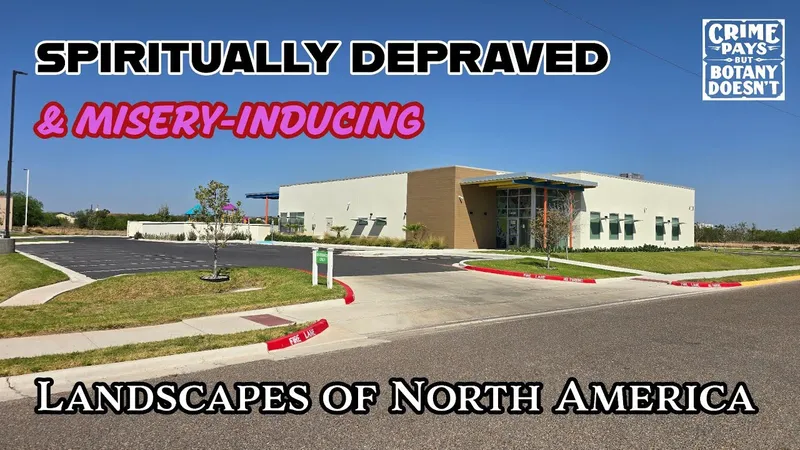
Tony examines a commercial development on former agricultural land near Pharr, Texas, criticizing its water-intensive lawn, asphalt and struggling non-native oaks. The episode argues for using South Texas native trees in parking lots and other developed spaces, which the source presents as better suited to local heat and rainfall.
- Views
- 1M
- Likes
- 88K
- Comments
- 10K
- South texas landscapingNative street treesDrought-Resistant PlantsUrban Heat and Shade
Analysis
Tony examines a commercial development on former agricultural land near Pharr, Texas, criticizing its water-intensive lawn, asphalt and struggling non-native oaks. The episode argues for using South Texas native trees in parking lots and other developed spaces, which the source presents as better suited to local heat and rainfall.
- Field reportCommentary

- Title
- SPIRITUALLY DEPRAVED & MISERY-INDUCING LANDSCAPES OF NORTH AMERICA Episode 1
“[snorts] Hi, this is Tony. On today's episode of soul crushing and spiritually depressing landscapes of North America, we got a real banger coming at you straight out of far Texas. Let's go check it out. Already getting started with this extensive spread of St. Augustine grass, which requires a lot of moisture to stay alive when it's summer 11 months out of the year. Great way to piss away your slowly declining water reserves. Reservoirs are already going dry in the region. Look at what's happening to Corpus Christi. Great way to pitch this away on a crop you're not going to eat and otherwise not going to use and most people aren't going to pay attention to because they're going to be driving by it at 30 mph. But the sense of desperation and wanting to give up doesn't stop there. Let's look at some of these dying trees they put in. Now, these are non-native oaks. They're native to a few hundred miles east of here. Probably gets twice the annual rainfall that we get here. We only get 20 in. And so they're slowly dying due to the heat. All right. It also doesn't get as hot where these grow natively, uh, as it does here. So, but that's not a problem to worry about. You're just going to wrap the tree well, which is lined [clears throat] with a plastic by the way. Wrap the tree well in a few uh just do a few rounds of uh, you know, half inch irrigation drip on it, and don't worry about it. All right, good luck. It's not going to work. The leaves are are very glossy. They don't have any pubesence whatsoever on the undersides. A lot of the native plants have evolved strategies to cope with the intense climate down here, one of the most extreme climates in North America. And so they, a lot of the natives have evolved, you know, a coating of tiny hairs on the leaves which help mitigate the effects of sun, drying winds, and uh and water stress or they've got a thick layer of wax. This tree has neither. I expect it'll be dead in probably, I don't know, let's say 6 months to a year. We also have this wonderful expanse of black asphalt which heats up to about 160° Fahrenheit in the sun. Remember it is summer for about 11 months out of the year here. Uh it's here it is mid-March. It's already 95° that's going to be cooking. You could probably you know cook uh you know cook a plate of rice or some eggs on that come July. Now look at this tree. It's already on its way out. This is a wonderful example of it. This is either Quirkus fusifforma or circus vica. Now, both are native to a few hundred miles north and east of here where they give much more rain. Not enough rain down here. You can also see this thing is already half dead because it was ripped out of the ground with the tree spade at a tree farm. And when the tree spade ripped it out, it severed all the feeder roots since most of the roots that do absorption on a tree are on the distal ends, not in the center. They're on the distal ends uh where the root hairs are. And so when they ripped this out, they already kind of gave it a death sentence. And so it's going to be here and slowly die. Now, you might be asking, why would they plant a tree that's going to slowly die?”
- 01Series and example
This establishes the recurring show and its critical, sarcastic premise, then moves directly into a specific example.
The host identifies himself and the landscape series, announces a Texas example with exaggerated enthusiasm, and invites viewers to look.
“[snorts] Hi, this is Tony. On today's episode of soul crushing and spiritually depressing landscapes of North America, we got a real banger coming at you straight out of far Texas. Let's go check it out.”
- 02First signs of a bad fit
The first concrete example turns the broad negative premise into a critique grounded in local conditions and resource consequences.
The speaker points out an extensive spread of water-demanding grass, criticizes its use amid declining reserves, and notes that regional reservoirs are going dry.
“Already getting started with this extensive spread of St. Augustine grass, which requires a lot of moisture to stay alive when it's summer 11 months out of the year. Great way to piss away your slowly declining water reserves. Reservoirs are already going dry in the region.”
- 03Why the choice feels futile
The critique widens from resource use to the apparent lack of practical purpose, while the dying trees make the bleak assessment more pointed.
The speaker questions the landscaping decision, describing a crop people will not eat or use, its low visibility to passing drivers, and the desperation conveyed by dying trees.
“Look at what's happening to Corpus Christi. Great way to pitch this away on a crop you're not going to eat and otherwise not going to use and most people aren't going to pay attention to because they're going to be driving by it at 30 mph. But the sense of desperation and wanting to give up doesn't stop there. Let's look at some of these dying trees they put in.”
- 04Trees mismatched to the climate
The speaker supplies a specific explanation for the trees’ condition and sharpens the critique by setting an impractical-sounding intervention against the local climate. The prediction is qualified, not presented as certainty.
The speaker says the oaks are non-native, explains their distant native range and greater rainfall there, and attributes their slow decline here to heat. He sarcastically suggests wrapping the tree well in plastic and adding drip irrigation before saying, “good luck” and predicting it will not work.
“Now, these are non-native oaks. They're native to a few hundred miles east of here. Probably gets twice the annual rainfall that we get here. We only get 20 in. And so they're slowly dying due to the heat. All right. It also doesn't get as hot where these grow natively, uh, as it does here. So, but that's not a problem to worry about. You're just going to wrap the tree well, which is lined [clears throat] with a plastic by the way. Wrap the tree well in a few uh just do a few rounds of uh, you know, half inch irrigation drip on it, and don't worry about it. All right, good luck. It's not going to work.”
- 05Evidence and qualified forecast
This adds botanical evidence to the critique and makes a time-bounded but uncertain forecast about the tree’s survival.
The speaker contrasts the glossy, hairless leaves with adaptations in native plants, says the tree lacks both protective features, and expects it to die in roughly six months to a year, while explicitly expressing uncertainty.
“The leaves are are very glossy. They don't have any pubesence whatsoever on the undersides. A lot of the native plants have evolved strategies to cope with the intense climate down here, one of the most extreme climates in North America. And so they, a lot of the natives have evolved, you know, a coating of tiny hairs on the leaves which help mitigate the effects of sun, drying winds, and uh and water stress or they've got a thick layer of wax. This tree has neither. I expect it'll be dead in probably, I don't know, let's say 6 months to a year.”
- 06Heat and another damaged plant
The extreme heat detail reinforces the climate critique, while the second visibly described example carries the examination forward.
The speaker describes asphalt reaching about 160°F in the sun and a mid-March temperature of 95°F, jokes that food could be cooked on the pavement in July, and points out another tree already in decline.
“We also have this wonderful expanse of black asphalt which heats up to about 160° Fahrenheit in the sun. Remember it is summer for about 11 months out of the year here. Uh it's here it is mid-March. It's already 95° that's going to be cooking. You could probably you know cook uh you know cook a plate of rice or some eggs on that come July. Now look at this tree. It's already on its way out. This is a wonderful example of it.”
- 07A tree likely damaged before planting
The new example broadens the critique from climate mismatch to planting damage, giving a further reason to question the landscaping decision.
The speaker tentatively identifies the next plant, notes that its native range gets more rain, then says it is already half dead and explains how transplanting severed its feeder roots.
“This is either Quirkus fusifforma or circus vica. Now, both are native to a few hundred miles north and east of here where they give much more rain. Not enough rain down here. You can also see this thing is already half dead because it was ripped out of the ground with the tree spade at a tree farm. And when the tree spade ripped it out, it severed all the feeder roots since most of the roots that do absorption on a tree are on the distal ends, not in the center. They're on the distal ends uh where the root hairs are.”
- 08Unresolved planting question
This completes the opening’s series of concrete criticisms and leaves the central question of the planting decision open. The supplied excerpt ends at that question, so the introduction boundary is limited to the available transcript.
The speaker says the transplanting damage gave the tree a death sentence, predicts that it will slowly die there, and asks why it was planted.
“And so when they ripped this out, they already kind of gave it a death sentence. And so it's going to be here and slowly die. Now, you might be asking, why would they plant a tree that's going to slowly die?”