If I Had 2 Hours in Your House, Here’s What I’d Remove First
The Minimal Mom@TheMinimalMomIf I Had 2 Hours in Your House, Here’s What I’d Remove First
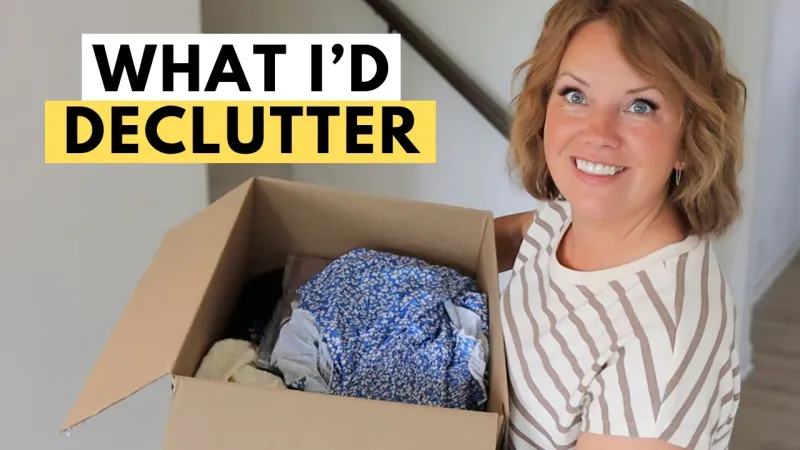
The video offers a room-by-room approach to deciding what to declutter, starting with clothes that do not fit or suit your current life. The listed topics also include kitchen and bathroom items, children’s toys, and a “Time Will Tell” bin, with advice on how simplifying a home may reduce daily strain.
- Views
- 540.9K
- Likes
- 16.5K
- Comments
- 1.3K
- Home declutteringCloset and clothing clutterKitchen and bathroom declutteringManaging household bandwidth
Analysis
The video offers a room-by-room approach to deciding what to declutter, starting with clothes that do not fit or suit your current life. The listed topics also include kitchen and bathroom items, children’s toys, and a “Time Will Tell” bin, with advice on how simplifying a home may reduce daily strain.
- TutorialWalkthrough

- Title
- If I Had 2 Hours in Your House, Here’s What I’d Remove First
“If I could come to your house for two If I could come to your house for two If I could come to your house for two hours, I would know exactly what to get hours, I would know exactly what to get hours, I would know exactly what to get rid of. I would get so much done because rid of. I would get so much done because rid of. I would get so much done because your house is giving really clear clues your house is giving really clear clues your house is giving really clear clues what you use and what you don't use. The what you use and what you don't use. The what you use and what you don't use. The problem is you can't see them because problem is you can't see them because problem is you can't see them because you feel guilty about it and fantasy you feel guilty about it and fantasy you feel guilty about it and fantasy self and shame and oh, but what if self and shame and oh, but what if self and shame and oh, but what if someday I need it? I can see the clues someday I need it? I can see the clues someday I need it? I can see the clues so clearly because I don't feel guilty so clearly because I don't feel guilty so clearly because I don't feel guilty about this stuff or the money that was about this stuff or the money that was about this stuff or the money that was spent on them. So, let me show you what spent on them. So, let me show you what spent on them. So, let me show you what I mean and we're going to start upstairs I mean and we're going to start upstairs I mean and we're going to start upstairs in your closets. All right. Now, the in your closets. All right. Now, the in your closets. All right. Now, the closet is guilt, guilt, guilt, guilt closet is guilt, guilt, guilt, guilt closet is guilt, guilt, guilt, guilt guilt. That is what's causing you to guilt. That is what's causing you to guilt. That is what's causing you to keep all these clothes that don't fit. keep all these clothes that don't fit. keep all these clothes that don't fit. So, I would go in here and I would get So, I would go in here and I would get So, I would go in here and I would get rid of everything that does not fit your rid of everything that does not fit your rid of everything that does not fit your two-day body. I would get rid of clothes two-day body. I would get rid of clothes two-day body. I would get rid of clothes that are too dressy, clothes that still that are too dressy, clothes that still that are too dressy, clothes that still have the tag in them, clothes that are have the tag in them, clothes that are have the tag in them, clothes that are too small, too big, and I would only too small, too big, and I would only too small, too big, and I would only leave the things that fit you today and leave the things that fit you today and leave the things that fit you today and that fit your season of life. A lot of that fit your season of life. A lot of that fit your season of life. A lot of us end up with clothes that are too us end up with clothes that are too us end up with clothes that are too dressy or not the actual season of life dressy or not the actual season of life dressy or not the actual season of life that we're in.”
- 01Set the hypothetical and promise
This establishes the time-limited scenario and the promise to identify what should go. The clues offer a reason the speaker thinks the decision can be made from the viewer’s circumstances.
The speaker imagines coming to the viewer’s house for two hours and says they would know what to remove, because the house offers clear clues about what the viewer uses.
“If I could come to your house for two If I could come to your house for two If I could come to your house for two hours, I would know exactly what to get hours, I would know exactly what to get hours, I would know exactly what to get rid of. I would get so much done because rid of. I would get so much done because rid of. I would get so much done because your house is giving really clear clues your house is giving really clear clues your house is giving really clear clues what you use and what you don't use.”
- 02Name the hidden decision barriers
This explains why a viewer may not act on the clues: emotional attachment and the possibility of future use complicate the decision. The speaker’s stated freedom from guilt supports their role as the one making the hypothetical assessment.
The speaker says the relevant items are hard to see because of guilt, shame, and the fantasy that they may be needed someday, then says they can see the clues without feeling guilty about the belongings or their cost.
“The what you use and what you don't use. The what you use and what you don't use. The problem is you can't see them because problem is you can't see them because problem is you can't see them because you feel guilty about it and fantasy you feel guilty about it and fantasy you feel guilty about it and fantasy self and shame and oh, but what if self and shame and oh, but what if self and shame and oh, but what if someday I need it? I can see the clues someday I need it? I can see the clues someday I need it? I can see the clues so clearly because I don't feel guilty so clearly because I don't feel guilty so clearly because I don't feel guilty about this stuff or the money that was about this stuff or the money that was about this stuff or the money that was spent on them.”
- 03Give the first location and a practical criterion
This moves from the general decision problem to a concrete household category and introduces a reason those items may remain. It prepares the viewer for the clothing examples that follow.
The speaker offers to show what they mean, says they will start upstairs in the closets, and identifies guilt as a reason people keep clothes that do not fit.
“So, let me show you what spent on them. So, let me show you what spent on them. So, let me show you what I mean and we're going to start upstairs I mean and we're going to start upstairs I mean and we're going to start upstairs in your closets. All right. Now, the in your closets. All right. Now, the in your closets. All right. Now, the closet is guilt, guilt, guilt, guilt closet is guilt, guilt, guilt, guilt closet is guilt, guilt, guilt, guilt guilt. That is what's causing you to guilt. That is what's causing you to guilt. That is what's causing you to keep all these clothes that don't fit. keep all these clothes that don't fit. keep all these clothes that don't fit.”
- 04List clothing examples and qualify what stays
This begins to answer what the speaker would remove, while the advice to keep what fits the viewer’s present circumstances prevents the list from being an unconditional rule. This is the introduction’s ending in the supplied excerpt; no later transition is available to verify where the video moves into its main discussion.
The speaker lists clothes that are too dressy, still tagged, too small, or too big, then says to leave what fits today and this season of life. The passage continues by noting that people can end up with clothes that are not suited to the season of life they are actually in.
“So, I would go in here and I would get So, I would go in here and I would get So, I would go in here and I would get rid of everything that does not fit your rid of everything that does not fit your rid of everything that does not fit your two-day body. I would get rid of clothes two-day body. I would get rid of clothes two-day body. I would get rid of clothes that are too dressy, clothes that still that are too dressy, clothes that still that are too dressy, clothes that still have the tag in them, clothes that are have the tag in them, clothes that are have the tag in them, clothes that are too small, too big, and I would only too small, too big, and I would only too small, too big, and I would only leave the things that fit you today and leave the things that fit you today and leave the things that fit you today and that fit your season of life. A lot of that fit your season of life. A lot of that fit your season of life. A lot of us end up with clothes that are too us end up with clothes that are too us end up with clothes that are too dressy or not the actual season of life dressy or not the actual season of life dressy or not the actual season of life that we're in.”