Noodle Veggie Stir Fry - 20 Minute Recipe
Laura in the Kitchen@LauraintheKitchenNoodle Veggie Stir Fry - 20 Minute Recipe
The creator shows how to make a quick noodle and vegetable stir-fry with sliced pork, while noting that other proteins or vegetables can be used. They describe seasoning the pork, prepping the vegetables, and mixing a hoisin-soy sauce; the transcript ends before the full recipe is shown.
- Views
- 201.7K
- Likes
- 1.5K
- Comments
- 44
- Vegetable noodle stir-fryFlexible dinner ingredientsHoisin soy sauce
Analysis
The creator shows how to make a quick noodle and vegetable stir-fry with sliced pork, while noting that other proteins or vegetables can be used. They describe seasoning the pork, prepping the vegetables, and mixing a hoisin-soy sauce; the transcript ends before the full recipe is shown.
- DemoTutorialVoiceover
- Spoken
- Original
“Let me show you how I made this”
- Visual
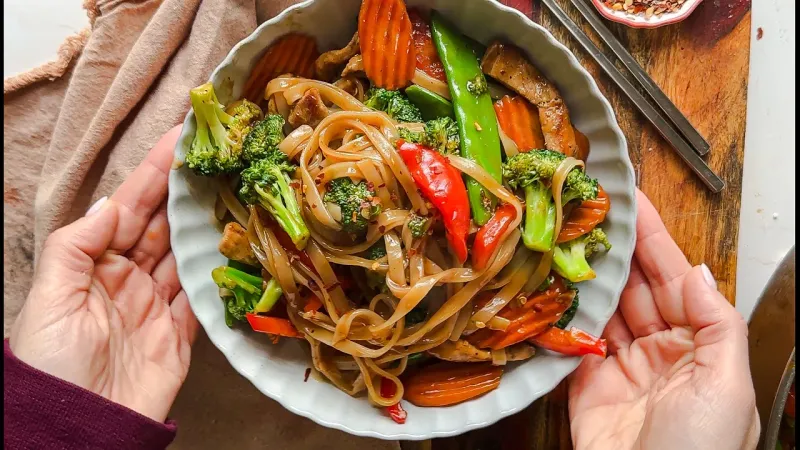
- Finished-result presentationOverhead close view of hands presenting a bowl of finished noodles and vegetables on a wooden board; the dish fills much of the frame.
- The overhead samples show the finished stir-fry, then pork cooking and noodles with vegetables being mixed, illustrating the recipe described in the speech.

- Title
- Noodle Veggie Stir Fry - 20 Minute Recipe
“Let me show you how I made this Let me show you how I made this Let me show you how I made this delicious, easy, and so quick little delicious, easy, and so quick little delicious, easy, and so quick little noodle veggie stir fry. I am adding some noodle veggie stir fry. I am adding some noodle veggie stir fry. I am adding some protein. I'm adding some sliced pork to protein. I'm adding some sliced pork to protein. I'm adding some sliced pork to this. But you can do this with chicken. this. But you can do this with chicken. this. But you can do this with chicken. You can do it with shrimp. You can do it You can do it with shrimp. You can do it You can do it with shrimp. You can do it with no meat at all and just use a bunch with no meat at all and just use a bunch with no meat at all and just use a bunch of vegetables or even tofu. It's so of vegetables or even tofu. It's so of vegetables or even tofu. It's so delicious. I had a couple of center cut delicious. I had a couple of center cut delicious. I had a couple of center cut pork chops and I sliced them really nice pork chops and I sliced them really nice pork chops and I sliced them really nice and thin and added a little bit of soy and thin and added a little bit of soy and thin and added a little bit of soy sauce, a little black pepper. Give it a sauce, a little black pepper. Give it a sauce, a little black pepper. Give it a mix and set those aside for just a few mix and set those aside for just a few mix and set those aside for just a few minutes while you get everything else minutes while you get everything else minutes while you get everything else prepped. For the veggies, this is a prepped. For the veggies, this is a prepped. For the veggies, this is a great time to clean out your fridge. I great time to clean out your fridge. I great time to clean out your fridge. I had some little carrot chips. So, had some little carrot chips. So, had some little carrot chips. So, they're called sliced carrots. I had they're called sliced carrots. I had they're called sliced carrots. I had some broccoli fuettes, some snow peas, some broccoli fuettes, some snow peas, some broccoli fuettes, some snow peas, and some bell pepper that I just sliced and some bell pepper that I just sliced and some bell pepper that I just sliced up. And these are perfect. This is what up. And these are perfect. This is what up. And these are perfect. This is what I have on hand, but like I said, feel I have on hand, but like I said, feel I have on hand, but like I said, feel free to use anything that you have. And free to use anything that you have. And free to use anything that you have. And to make the sauce, you need some to make the sauce, you need some to make the sauce, you need some beeftock, a little hoyen sauce, some soy beeftock, a little hoyen sauce, some soy beeftock, a little hoyen sauce, some soy sauce, brown sugar, a little bit of sauce, brown sugar, a little bit of sauce, brown sugar, a little bit of cornstarch, and I like to add just like cornstarch, and I like to add just like cornstarch, and I like to add just like a little kiss of Sriracha for heat a little kiss of Sriracha for heat a little kiss of Sriracha for heat because I love a little bit of spice.”
- 01Introduce the demonstration
Establishes a practical, appealing demonstration before naming the dish; the repeated introductory wording emphasizes the promise.
Invites the viewer to see how the creator made the item, then presents it as delicious, easy, and quick.
“Let me show you how I made this Let me show you how I made this Let me show you how I made this delicious, easy, and so quick little delicious, easy, and so quick little delicious, easy, and so quick little noodle veggie stir fry.”
- 02Name the dish and choose a base
Moves from the general promise to a concrete example, then introduces flexibility in a central ingredient.
Names the dish and adds a protein, specifying sliced pork while noting chicken as an alternative.
“I am adding some noodle veggie stir fry. I am adding some noodle veggie stir fry. I am adding some protein. I'm adding some sliced pork to protein. I'm adding some sliced pork to protein. I'm adding some sliced pork to this. But you can do this with chicken. this. But you can do this with chicken. this. But you can do this with chicken.”
- 03Expand ingredient options and explain prep
Shows that the dish can adapt to different preferences, then gives the specific preparation step and a short resting period while other components are prepared.
Offers shrimp, a meat-free version using vegetables or tofu, then explains that pork chops were sliced thin and seasoned with soy sauce and black pepper before being set aside.
“You can do it with shrimp. You can do it You can do it with shrimp. You can do it You can do it with shrimp. You can do it with no meat at all and just use a bunch with no meat at all and just use a bunch with no meat at all and just use a bunch of vegetables or even tofu. It's so of vegetables or even tofu. It's so of vegetables or even tofu. It's so delicious. I had a couple of center cut delicious. I had a couple of center cut delicious. I had a couple of center cut pork chops and I sliced them really nice pork chops and I sliced them really nice pork chops and I sliced them really nice and thin and added a little bit of soy and thin and added a little bit of soy and thin and added a little bit of soy sauce, a little black pepper. Give it a sauce, a little black pepper. Give it a sauce, a little black pepper. Give it a mix and set those aside for just a few mix and set those aside for just a few mix and set those aside for just a few minutes while you get everything else minutes while you get everything else minutes while you get everything else prepped.”
- 04Prep and adapt the vegetables
Turns the recipe into a flexible use-what-you-have approach, with concrete examples supporting the invitation to substitute ingredients.
Suggests using the prep time to clear out the fridge, lists the vegetables on hand, and encourages using whatever is available.
“For the veggies, this is a prepped. For the veggies, this is a prepped. For the veggies, this is a great time to clean out your fridge. I great time to clean out your fridge. I great time to clean out your fridge. I had some little carrot chips. So, had some little carrot chips. So, had some little carrot chips. So, they're called sliced carrots. I had they're called sliced carrots. I had they're called sliced carrots. I had some broccoli fuettes, some snow peas, some broccoli fuettes, some snow peas, some broccoli fuettes, some snow peas, and some bell pepper that I just sliced and some bell pepper that I just sliced and some bell pepper that I just sliced up. And these are perfect. This is what up. And these are perfect. This is what up. And these are perfect. This is what I have on hand, but like I said, feel I have on hand, but like I said, feel I have on hand, but like I said, feel free to use anything that you have. And free to use anything that you have. And free to use anything that you have.”
- 05Begin the sauce explanation
Begins the next recipe component and gives flavor-adjustment detail, but the supplied text provides no completed sauce or dish payoff.
Starts listing sauce ingredients and preferences, ending with a small amount of hot sauce for heat and a stated fondness for spice; the transcript cuts off here.
“And to make the sauce, you need some to make the sauce, you need some to make the sauce, you need some beeftock, a little hoyen sauce, some soy beeftock, a little hoyen sauce, some soy beeftock, a little hoyen sauce, some soy sauce, brown sugar, a little bit of sauce, brown sugar, a little bit of sauce, brown sugar, a little bit of cornstarch, and I like to add just like cornstarch, and I like to add just like cornstarch, and I like to add just like a little kiss of Sriracha for heat a little kiss of Sriracha for heat a little kiss of Sriracha for heat because I love a little bit of spice.”