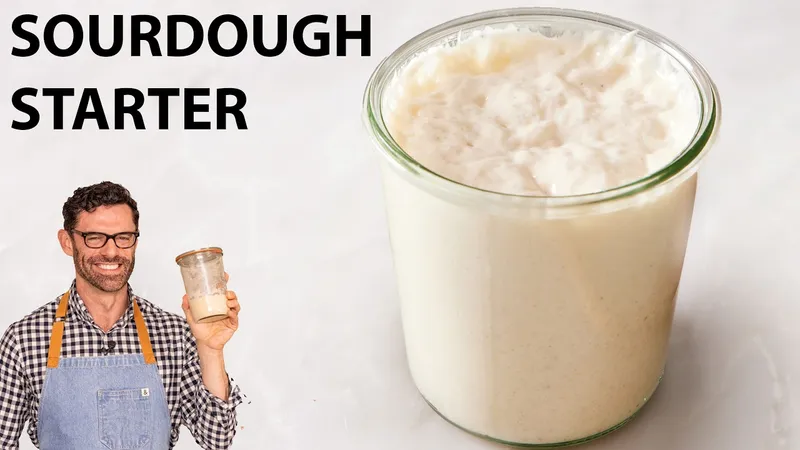
How to Make a Sourdough Starter
How to Make a Sourdough Starter
John Cannell gives a step-by-step guide to starting sourdough with flour and water, including choosing ingredients, mixing, and keeping the jar warm. The opening shows that activity can take longer than a day to appear and says the starter will be fed once bubbles develop; the description notes it can later be used in bread, pizza crusts, waffles, and more.
- Views
- 330K
- Likes
- 9.9K
- Comments
- 337
- Sourdough starterFeeding and FermentationBread baking basics
Analysis
John Cannell gives a step-by-step guide to starting sourdough with flour and water, including choosing ingredients, mixing, and keeping the jar warm. The opening shows that activity can take longer than a day to appear and says the starter will be fed once bubbles develop; the description notes it can later be used in bread, pizza crusts, waffles, and more.
- Tutorial
- Title
- How to Make a Sourdough Starter
“Hey, I'm John Cannell. Into the Upright Kitchen, I'm showing you how to make sourdough starter with all my tips and tricks. So, let's get started. First off, grab a clean glass container. It should be at least a pint or larger. I'm going to use a scale today. It really is your best friend in the kitchen, but I'll give you the conventional measurements as well. First off, we're going to grab some whole wheat flour and add half a cup or 60 g. I think almost everyone loves sourdough, but in order to make that, you have to have sourdough starter. So, this can be a little bit intimidating to make it first, but it's quite easy to both make and take care of. And I have some tips if you'd like to take long vacations or you just don't think you're responsible enough to deal with an active sourdough starter in your fridge. But, that's coming up later. We're starting off with whole wheat flour as opposed to all purpose because the wild yeast that we need to form our starter lives on the bran. We're using a stripped or bleached flour, it just won't have that wild yeast and you'll be quite frustrated.”
- 01Identify the tutorial
Establish the instructional subject immediately and set expectations that the tutorial includes advice alongside the basic process.
The presenter introduces himself, identifies the show, and says the episode will explain how to make sourdough starter with tips and tricks.
“Hey, I'm John Cannell. Into the Upright Kitchen, I'm showing you how to make sourdough starter with all my tips and tricks.”
- 02Reassure and preview care tips
Lower the perceived barrier to trying the task and promise advice addressing a specific maintenance concern. The phrase “coming up later” marks that advice as a later part of the tutorial.
The presenter says to get started, acknowledges that making a starter may feel intimidating, reassures viewers that it is easy to make and care for, and previews tips for travelers or people unsure about maintaining one.
“So, let's get started. First off, grab a clean glass container. It should be at least a pint or larger. I'm going to use a scale today. It really is your best friend in the kitchen, but I'll give you the conventional measurements as well. First off, we're going to grab some whole wheat flour and add half a cup or 60 g. I think almost everyone loves sourdough, but in order to make that, you have to have sourdough starter. So, this can be a little bit intimidating to make it first, but it's quite easy to both make and take care of. And I have some tips if you'd like to take long vacations or you just don't think you're responsible enough to deal with an active sourdough starter in your fridge. But, that's coming up later.”
- 03Begin the practical explanation
Start the tutorial’s first substantive explanation and give a concrete choice that matters to the promised result. This is where the introduction ends: the following instructions move into the sustained procedure.
The presenter contrasts whole wheat with all-purpose flour and explains the role of bran and wild yeast, warning that stripped or bleached flour lacks the yeast needed.
“We're starting off with whole wheat flour as opposed to all purpose because the wild yeast that we need to form our starter lives on the bran. We're using a stripped or bleached flour, it just won't have that wild yeast and you'll be quite frustrated.”