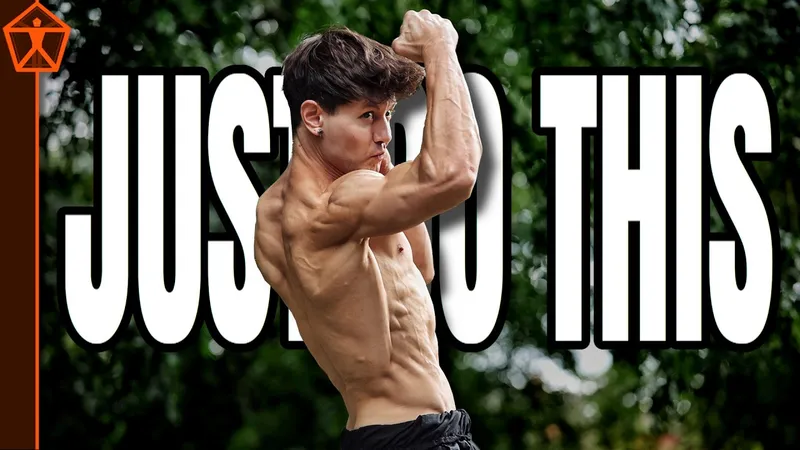
Train Martial Arts SOLO and Build a Ripped, Athletic Physique - Full, Free Guide!
The Bioneer@TheBioneerTrain Martial Arts SOLO and Build a Ripped, Athletic Physique - Full, Free Guide!
Grant presents solo martial arts practice as an accessible way to build conditioning, mobility, coordination, and body control without a class or coach. He challenges the idea that martial arts must involve competition, then promises a home workout later in the video combining footwork, shadow boxing, and explosive calisthenics.
- Views
- 334.7K
- Likes
- 12.9K
- Comments
- 532
- Solo martial arts trainingAt-Home Fitness RoutineMobility and coordinationMartial arts gatekeeping
Analysis
Grant presents solo martial arts practice as an accessible way to build conditioning, mobility, coordination, and body control without a class or coach. He challenges the idea that martial arts must involve competition, then promises a home workout later in the video combining footwork, shadow boxing, and explosive calisthenics.
- TutorialExplainer
- Title
- Train Martial Arts SOLO and Build a Ripped, Athletic Physique - Full, Free Guide!
“If you look at fitness today, everyoneassumes martial arts belongs strictly in a class setting, but there'sa massive side to martial arts movement that gets overlooked. Using it as anindependent system to develop exceptional conditioning, mobility, andcontrol of the body. I've trained this way for years using martial arts on myown terms as a tool to stay lean, athletic, and explosive. Rightfrom home without needing a coach or a class. When most people think aboutcardio activities, their mind jumps to the obvious things like going on thetreadmill, rowing, or cycling. And one of the best things that I love about itpersonally is you get all of those great cardio benefits without feeling likeyou're even training. Cuz let's face it, that's way more appealing thanknowing you've got to go and do an activity you hate just to getyourself in shape. And that's what makes it a much more sustainable form oftraining. And so in this video, I'm going to be speaking aboutfirstly some of the benefits that you can get from martial arts. And then wehave a full workout for you guys to try at home that will be later in thevideo and will be time stamped below. But before I do that, I just want totouch on something really important, which is a thing me and Adam oftenpersonally discuss. And it's that we notice a lot of people are put off fromthis kind of training because of all the kind of gatekeeping that [music]surrounds it. It seems to be this weird thing with martial arts where peopledon't look at it the same as other forms of training. And they comeout with all of these dogmatic statements like unless you're competing,then you're not a real martial artist. If that were the case, would you sayBruce Lee wasn't a real martial artist? So it's mine and Adam's goal notonly in this video, but in other work we do together to make martial arts moreaccessible to everybody. Because honestly, you don't even have to bereally great at it to get the benefits. You know, just moving yourself in all ofthese different planes of movement that martial arts provides justhas innumerable benefits to your overall fitness. >> [music]>> Why is martial arts training such a powerful form of exercise then?”
- 01Challenge the usual setting
This establishes the central alternative the video will explore: martial arts can serve as fitness training outside a class, giving viewers a reason to reconsider what the activity is for.
The opening contrasts the assumption that martial arts belongs in a class with its use as independent movement training for conditioning, mobility, and body control.
“If you look at fitness today, everyoneassumes martial arts belongs strictly in a class setting, but there'sa massive side to martial arts movement that gets overlooked. Using it as anindependent system to develop exceptional conditioning, mobility, andcontrol of the body.”
- 02Personal experience and accessibility
The speaker's experience lends context to the alternative, while the at-home framing makes the approach more accessible and previews the kind of results the speaker associates with it.
The speaker says they have trained this way for years to stay lean, athletic, and explosive, and says it can be done at home without a coach or class.
“I've trained this way for years using martial arts on myown terms as a tool to stay lean, athletic, and explosive. Rightfrom home without needing a coach or a class.”
- 03Relatable exercise alternative
This connects the premise to viewers who dislike conventional cardio and explains why the speaker considers martial arts a more appealing, sustainable way to exercise.
The speaker compares martial-arts movement with familiar cardio options, then says it can provide cardio benefits without feeling like training. They contrast that experience with doing an activity one dislikes just to get in shape and call the approach more sustainable.
“When most people think aboutcardio activities, their mind jumps to the obvious things like going on thetreadmill, rowing, or cycling. And one of the best things that I love about itpersonally is you get all of those great cardio benefits without feeling likeyou're even training. Cuz let's face it, that's way more appealing thanknowing you've got to go and do an activity you hate just to getyourself in shape. And that's what makes it a much more sustainable form oftraining.”
- 04Preview the video and raise an access barrier
The preview tells viewers what the video will cover and promises a practical workout. The shift to gatekeeping introduces an obstacle the speaker intends to address before making the case for wider access.
The speaker previews benefits and a full workout to try at home, then turns to a concern discussed with Adam: people being put off by gatekeeping around martial arts.
“And so in this video, I'm going to be speaking aboutfirstly some of the benefits that you can get from martial arts. And then wehave a full workout for you guys to try at home that will be later in thevideo and will be time stamped below. But before I do that, I just want totouch on something really important, which is a thing me and Adam oftenpersonally discuss. And it's that we notice a lot of people are put off fromthis kind of training because of all the kind of gatekeeping that [music]surrounds it.”
- 05Challenge gatekeeping and defend participation
This gives the access concern a concrete example and challenges the idea that competition is required for legitimacy, reinforcing the opening's case for independent participation.
The speaker says martial arts is treated differently from other training and cites the claim that a person is not a real martial artist unless they compete, countering it with a rhetorical question about Bruce Lee.
“It seems to be this weird thing with martial arts where peopledon't look at it the same as other forms of training. And they comeout with all of these dogmatic statements like unless you're competing,then you're not a real martial artist. If that were the case, would you sayBruce Lee wasn't a real martial artist?”
- 06State the broader purpose and conclude the introduction
This concludes the opening's access argument and offers a brief rationale for trying the activity without mastery. The introduction ends before the video moves into a detailed explanation of why martial arts is exercise.
The speaker says they and Adam aim to make martial arts more accessible, argues that a person need not be highly skilled to benefit, and adds that moving through different planes of movement supports overall fitness. The following speaker question and extended explanation begin the substantive discussion.
“So it's mine and Adam's goal notonly in this video, but in other work we do together to make martial arts moreaccessible to everybody. Because honestly, you don't even have to bereally great at it to get the benefits. You know, just moving yourself in all ofthese different planes of movement that martial arts provides justhas innumerable benefits to your overall fitness. >> [music]>> Why is martial arts training such a powerful form of exercise then?”