RATING YOUR ART GLOW UPS (I'm genuinely scared)
SamDoesArts@samdoesartsRATING YOUR ART GLOW UPS (I'm genuinely scared)
Samdoesarts reviews viewers’ older and newer artwork, pointing out changes in rendering, color, anatomy, and confidence across different time spans. The opening also encourages artists to try challenging features and notes that improvement does not require switching to realism.
- Views
- 830.2K
- Likes
- 31.2K
- Comments
- 1.4K
- Art progress reviewsBefore and after artworkDrawing improvement
Analysis
Samdoesarts reviews viewers’ older and newer artwork, pointing out changes in rendering, color, anatomy, and confidence across different time spans. The opening also encourages artists to try challenging features and notes that improvement does not require switching to realism.
- ReactionReview

- Title
- RATING YOUR ART GLOW UPS (I'm genuinely scared)
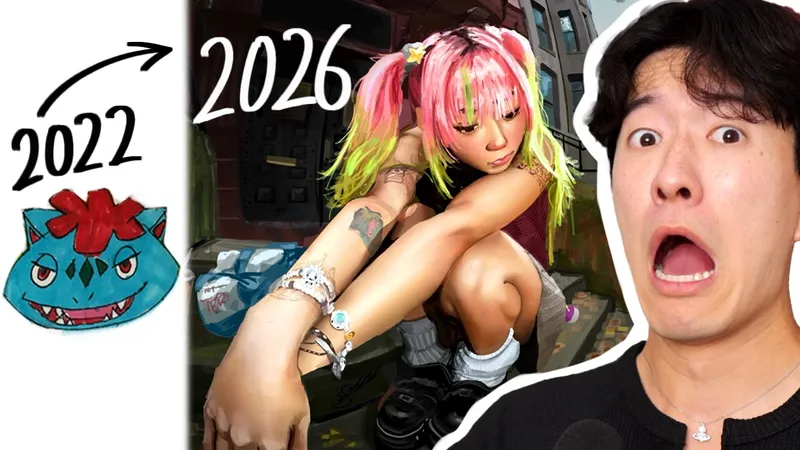
“This is my transformation. First one isfrom around 2022 and the other is from February 2026.>> [sighs] >> OH, GUYS, I'M SCARED. IT seems like allof the best artists in the world are attracted to my Patreon. Never mind, Itake back what I just said. Hello my nephews, welcome to one of my favoriteseries of all time where we rate some of your guys' art glow-ups. I've asked mybeautiful patrons to submit one piece of their old work and one piece of theirnewest work so we can see their art improvement and be inspired, be shocked,and in my case be terrified of the sheer power within some of these littlenephews. First up here we have a portrait from February 2026 versustoday. >> [laughter]>> Oh my goodness, I just took in this was the span of what? Six months? Sixmonths? Oh my No, that's incredible. Keep up the greatwork. Unemployment might just be the move here, guys. Here we have 2019 toAugust 2026, a 7-year difference and of course huge improvements. Look at thecolors, the rendering, the lighting. It used to be just flat colors, right? Ilove when I see an artist go out of their comfort zone and push themselvesinto entirely new territories like this. Here we have 2024 to early 2026. Wow. Icredit all my improvements to Sam's Patreon tutorials. Why, thank you. Soonce again, we're going from something that looks very flat here with a lotless line variation to something that's a lot more organic looking in terms ofthe rendering. I love it, man. Hey, this free advertisement for me. If you guyswatch Sam's art Patreon tutorials, you too can draw gooner content like this.That's exactly what I teach. Here we have a cute little I don't know what thehell that is from 2020 to 2026. I'm scared, guys. You make me feel soproud. How do you do this? Okay, granted it is a 6-year difference and I'm sure alot of hard work has been put in over these past 6 years to get you to thispoint here. If you just go back and and between these pieces, they don't evenlook like they've been done by the same person. Here is the same OC about a yearapart. Look, I love nothing more than seeing people who are afraid of certainthings in their art stop running from their responsibilities. Now, if you'rewatching this video and you find yourself doing this to your charactersbecause you want to avoid drawing facial features, don't be scared. Look, you cando it. If they can do it, you can do it, too. You're trying to do anything inlife, you'll never be ready. You'll never be {quote} fully ready. So, evenif you feel like you can't draw facial features that well now, just give it ashot. You'll never be fully ready. Just do it. So, the first is from 2023 andthe second is from this year. Wow. You can just tell from the way you'rerendering the faces, the way you're drawing the facial features that likeyou're way, way, way more confident with your anatomy. Like, I think you were ina pretty rough place here. I mean, this hand is literally on this character'sbody the wrong way. It's the left hand, but it's on the right side of the body.So, I don't think we have that problemanymore. These hands look good. These faces look good.Yeah. I think this is almost a 6-year difference, 2020 to now.Wow. Wow. Well, you know what I love about this is you're not necessarilygoing to like a realism style. You're still sticking with anime style andthat's perfectly fine. A lot of people get the misconception that, you know, inorder to improve as an artist, you have to, you know, become like a realismartist or something, but no.”
- 01Establish the transformation premise
This gives the episode an immediate before-and-after premise and makes clear what the comparison concerns.
The creator opens by identifying a transformation, then specifies that the two works come from different points in time.
“This is my transformation. First one isfrom around 2022 and the other is from February 2026.>>”
- 02React and introduce the series
The playful reaction sets an entertaining tone, while the welcome names the format and the audience work being assessed.
After a sigh, the creator humorously voices apprehension, reverses a remark about the skill of the artists, and welcomes viewers to the recurring rating series.
“[sighs] >> OH, GUYS, I'M SCARED. IT seems like allof the best artists in the world are attracted to my Patreon. Never mind, Itake back what I just said. Hello my nephews, welcome to one of my favoriteseries of all time where we rate some of your guys' art glow-ups.”
- 03Explain the submissions and expected reactions
This sets expectations for the sequence of comparisons and frames its appeal as both the contributors’ progress and the creator’s entertaining response.
The creator explains that patrons submitted an old and a newer work, then previews the improvement and the creator’s possible reactions.
“I've asked mybeautiful patrons to submit one piece of their old work and one piece of theirnewest work so we can see their art improvement and be inspired, be shocked,and in my case be terrified of the sheer power within some of these littlenephews.”
- 04Begin the first comparison
The first concrete comparison starts delivering the promised format; the time span and reaction make this example a lively opening assessment.
The creator introduces a dated example, reacts with laughter, asks how much time passed, and praises the improvement while joking about unemployment.
“First up here we have a portrait from February 2026 versustoday. >> [laughter]>> Oh my goodness, I just took in this was the span of what? Six months? Sixmonths? Oh my No, that's incredible. Keep up the greatwork. Unemployment might just be the move here, guys.”
- 05Praise a longer-term improvement
This comparison extends the promised range of glow-ups and identifies specific kinds of development the creator notices.
The creator compares work separated by seven years, points out changes in color, rendering, and lighting, and praises the artist for exploring new territory.
“Here we have 2019 toAugust 2026, a 7-year difference and of course huge improvements. Look at thecolors, the rendering, the lighting. It used to be just flat colors, right? Ilove when I see an artist go out of their comfort zone and push themselvesinto entirely new territories like this.”
- 06Credit a resource and joke about promotion
This continues the assessment while adding a concrete explanation for the creator’s own progress and a playful promotional aside.
The creator credits improvements to a named tutorial resource, thanks its creator, then jokingly calls the praise an advertisement and says what viewers could learn there.
“Here we have 2024 to early 2026. Wow. Icredit all my improvements to Sam's Patreon tutorials. Why, thank you. Soonce again, we're going from something that looks very flat here with a lotless line variation to something that's a lot more organic looking in terms ofthe rendering. I love it, man. Hey, this free advertisement for me. If you guyswatch Sam's art Patreon tutorials, you too can draw gooner content like this.That's exactly what I teach.”
- 07Encourage a hesitant viewer
This shifts briefly from rating individual work to speaking directly to viewers who recognize the same hesitation, offering reassurance and encouragement to try.
The creator reacts to another transformation, expresses pride in the viewer, and addresses people who avoid drawing facial features because they are afraid.
“Here we have a cute little I don't know what thehell that is from 2020 to 2026. I'm scared, guys. You make me feel soproud. How do you do this? Okay, granted it is a 6-year difference and I'm sure alot of hard work has been put in over these past 6 years to get you to thispoint here. If you just go back and and between these pieces, they don't evenlook like they've been done by the same person. Here is the same OC about a yearapart. Look, I love nothing more than seeing people who are afraid of certainthings in their art stop running from their responsibilities. Now, if you'rewatching this video and you find yourself doing this to your charactersbecause you want to avoid drawing facial features, don't be scared. Look, you cando it. If they can do it, you can do it, too. You're trying to do anything inlife, you'll never be ready. You'll never be {quote} fully ready. So, evenif you feel like you can't draw facial features that well now, just give it ashot. You'll never be fully ready. Just do it.”
- 08Compare skill development and qualify the progress
This gives a concrete example of the kind of change the creator is assessing and qualifies the improvement with specific evidence from the comparison.
The creator returns to a dated comparison, identifies greater confidence in rendering faces and anatomy, and notes an earlier anatomical mistake before saying it is no longer a problem.
“So, the first is from 2023 andthe second is from this year. Wow. You can just tell from the way you'rerendering the faces, the way you're drawing the facial features that likeyou're way, way, way more confident with your anatomy. Like, I think you were ina pretty rough place here. I mean, this hand is literally on this character'sbody the wrong way. It's the left hand, but it's on the right side of the body.So, I don't think we have that problemanymore. These hands look good. These faces look good.Yeah. I think this is almost a 6-year difference, 2020 to now.Wow. Wow.”
- 09Correct a misconception and close on the style choice
This turns the comparison into an encouraging perspective for viewers: improvement can be recognized without abandoning a preferred style. The supplied opening ends during this correction, so its continuation is not available here.
The creator says improvement does not require changing to realism, affirms the artist’s chosen style, and begins correcting the idea that artists must become realists to improve.
“Well, you know what I love about this is you're not necessarilygoing to like a realism style. You're still sticking with anime style andthat's perfectly fine. A lot of people get the misconception that, you know, inorder to improve as an artist, you have to, you know, become like a realismartist or something, but no.”