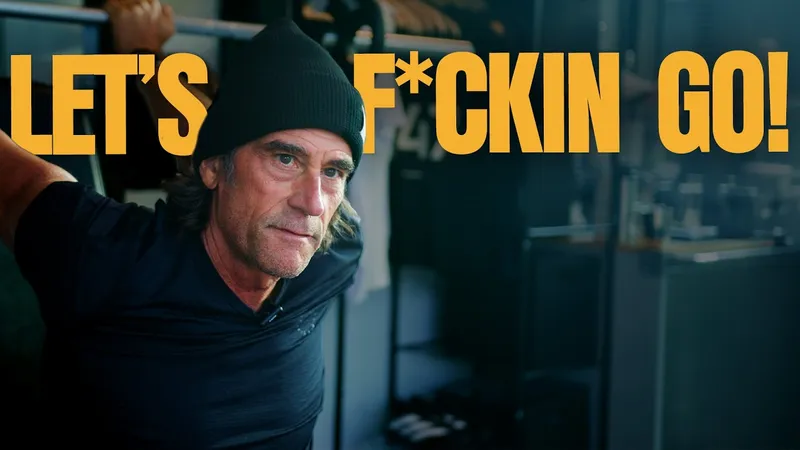
WE'RE SO BACK...
Rich Roll@richrollWE'RE SO BACK...
Rich Roll introduces a new series about rebuilding his fitness after spinal fusion surgery. He describes starting with gentle aerobic training and prioritizing strength and mobility, with goals of feeling fit for his 60th birthday and completing the New York City Marathon if his recovery allows.
- Views
- 514K
- Likes
- 9.6K
- Comments
- 684
- Spinal fusion recoveryStrength and mobilityEndurance fitness rebuildNew york city marathon
Analysis
Rich Roll introduces a new series about rebuilding his fitness after spinal fusion surgery. He describes starting with gentle aerobic training and prioritizing strength and mobility, with goals of feeling fit for his 60th birthday and completing the New York City Marathon if his recovery allows.
- Vlog
- Title
- WE'RE SO BACK...
Welcome to the container, my home gym. I wanted to bring you guys inside my world because I've been on a bit of a journey. I am a lifetime athlete. I was a collegiate Division 1 swimmer at Stanford. Turned attorney, turned sedentary slob. I reinvented myself at 40, became this ultra endurance athlete, did a whole bunch of crazy things. And then I endured about a decade of debilitating back pain. Last spring I finally underwent spinal fusion surgery and I am in the process of recovering from that, which has required an unbelievable amount of patience in which I have not been able to move my body until very recently. And so now I'm in the process of putting the pieces back together, figuring out how to reassemble myself and build the ultimate foundation for strength, mobility, endurance, and adventure. I wanted to share with you guys what I'm doing, why I'm doing it, how I'm doing it, and this is episode one of my attempt to do that very thing. It's Grand Theft Auto for endurance nerds. It's called Zwift. There's no NPCs in Zwift. Everybody is a protagonist. So these are all real people. That's for right now, though. All I'm doing is creating a very base level of aerobic fitness. I'm not riding hard. I have such a long way to go to rebuild my fitness. And I'm not in a rush. I want to do it the right way. So, I'm just keeping everything chill. My body is still very much healing. And just trying to >> [music] >> reconnect with my body, reconnect with my relationship with fitness, remember why I fell in love with it in the first place. >> [music] >> I feel like I'm becoming myself again, looking in the mirror like, "Oh, yeah, I remember that guy. I'm him." And that's been really fun and exciting. And it's given me this sense of possibility and this uptick in my vitality and energy where I feel enthusiastic for the first time in a long time to start storytelling and bringing all of you guys kind of inside my world to share what I've learned uh in service to all of you. At the end of October, I turn 60, and I have a twofold goal. The first is to be as fit as humanly possible on that birthday to celebrate turning 60, and then to participate a week or so later in the New York City >> [music] >> Marathon as a sort of final conclusion to this recovery from spinal fusion surgery. I'm not going into that race trying to PR or impress anybody. I just want to be a runner among runners, and I want to complete the race. I haven't been able to run in probably about 3 and 1/2 years. Right now, I'm still too soon in the spinal fusion recovery process to begin running again. Uh my surgeon was not exactly enthusiastic about the prospect of me running again. >> [music] >> I'm pretty convinced that I'm going to be able to do that, but it depends upon my commitment to rebuilding my strength with resistance training to create a bulletproof core to support my lower back and to become functionally strong with a focus on mobility. These are things I haven't really ever emphasized or focused on in my athletic life.
- 01Background and setback
This establishes the personal context and why the coming account concerns a return rather than an ordinary training update. The speaker’s athletic history also gives relevant context for the recovery story.
The speaker welcomes viewers into a personal setting, gives a compact history of athletic and career changes, and explains the physical setback that interrupted activity.
“Welcome to the container, my home gym. I wanted to bring you guys inside my world because I've been on a bit of a journey. I am a lifetime athlete. I was a collegiate Division 1 swimmer at Stanford. Turned attorney, turned sedentary slob. I reinvented myself at 40, became this ultra endurance athlete, did a whole bunch of crazy things. And then I endured about a decade of debilitating back pain.”
- 02Recovery and rebuilding
This moves from the history into the central recovery premise: what rebuilding now involves and what capabilities the speaker hopes to regain.
The speaker describes undergoing surgery, the patience and inactivity recovery required, and the present effort to rebuild a foundation for future physical pursuits.
“Last spring I finally underwent spinal fusion surgery and I am in the process of recovering from that, which has required an unbelievable amount of patience in which I have not been able to move my body until very recently. And so now I'm in the process of putting the pieces back together, figuring out how to reassemble myself and build the ultimate foundation for strength, mobility, endurance, and adventure.”
- 03What the series will cover
This clarifies the format and subject of the episode, connecting the personal recovery account to an ongoing effort viewers can follow.
The speaker explains what they want to share, identifies the episode as the first attempt at rebuilding, and introduces the platform they are using with a comparison to a familiar game.
“I wanted to share with you guys what I'm doing, why I'm doing it, how I'm doing it, and this is episode one of my attempt to do that very thing. It's Grand Theft Auto for endurance nerds. It's called Zwift.”
- 04Current approach and motivation
This sets realistic expectations for the recovery effort and explains why the speaker is proceeding cautiously. The personal sense of rediscovery makes the return meaningful beyond the training itself.
The speaker distinguishes the current low-intensity foundation work from harder training, stresses patience while healing, and describes reconnecting with physical activity and a former sense of self.
There's no NPCs in Zwift. Everybody is a protagonist. So these are all real people. That's for right now, though. All I'm doing is creating a very base level of aerobic fitness. I'm not riding hard. I have such a long way to go to rebuild my fitness. And I'm not in a rush. I want to do it the right way. So, I'm just keeping everything chill. My body is still very much healing. And just trying to >> [music] >> reconnect with my body, reconnect with my relationship with fitness, remember why I fell in love with it in the first place. >> [music] >> I feel like I'm becoming myself again, looking in the mirror like, "Oh, yeah, I remember that guy. I'm him." And that's been really fun and exciting. And it's given me this sense of possibility and this uptick in my vitality and energy where I feel enthusiastic for the first time in a long time to start storytelling and bringing all of you guys kind of inside my world to share what I've learned uh in service to all of you.
- 05A concrete future goal
This turns the general rebuilding effort into a time-linked aspiration with a specific event as a later marker of progress.
The speaker sets a two-part goal tied to turning 60: becoming as fit as possible by the birthday and later participating in the New York City Marathon as a milestone in recovery.
“At the end of October, I turn 60, and I have a twofold goal. The first is to be as fit as humanly possible on that birthday to celebrate turning 60, and then to participate a week or so later in the New York City >> [music] >> Marathon as a sort of final conclusion to this recovery from spinal fusion surgery.”
- 06Qualifications and remaining uncertainty
This adds important limits to the ambition: the speaker is not claiming readiness or certainty. The qualification keeps the future goal grounded in the recovery still ahead.
The speaker says the goal is completion rather than a personal record or impressing others, notes that running has been out of reach for years, and qualifies the goal with the current recovery stage and the surgeon’s reservations.
“I'm not going into that race trying to PR or impress anybody. I just want to be a runner among runners, and I want to complete the race. I haven't been able to run in probably about 3 and 1/2 years. Right now, I'm still too soon in the spinal fusion recovery process to begin running again. Uh my surgeon was not exactly enthusiastic about the prospect of me running again.”
- 07What the goal depends on
This gives the ambition a conditional basis and previews the underlying priorities in the rebuilding effort. It is the final framing before the excerpt continues into a broader reflection on what matters with age and after hardship.
The speaker is convinced the goal may be possible, but says it depends on committed strength rebuilding, core support, functional strength, and mobility work—areas not previously emphasized in their athletic life.
“>> [music] >> I'm pretty convinced that I'm going to be able to do that, but it depends upon my commitment to rebuilding my strength with resistance training to create a bulletproof core to support my lower back and to become functionally strong with a focus on mobility. These are things I haven't really ever emphasized or focused on in my athletic life.”