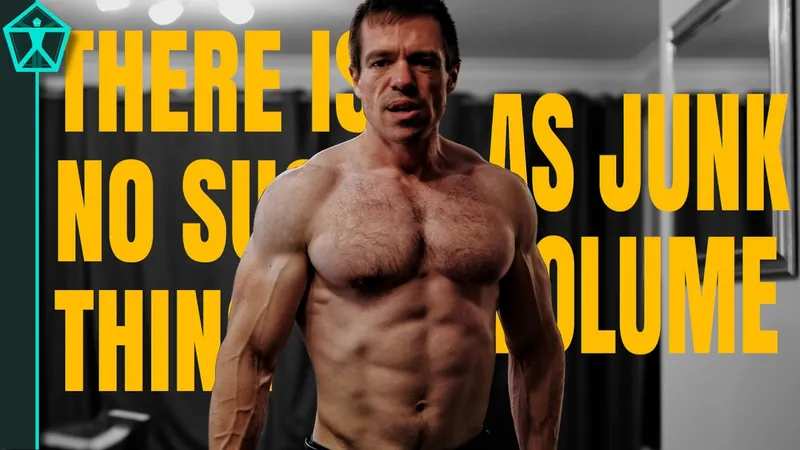
Light Reps Do Amazing Things to Your Body
The Bioneer@TheBioneerLight Reps Do Amazing Things to Your Body
The video argues that high-repetition bodyweight and light-weight training is not “junk volume.” It describes possible benefits for endurance, work capacity, conditioning, and muscle growth, including training slow-twitch muscle fibers, and makes the case for this approach alongside heavier lifting.
- Views
- 296.5K
- Likes
- 6K
- Comments
- 646
- High-Rep TrainingBodyweight exercisesMuscle and StrengthExercise endurance
Analysis
The video argues that high-repetition bodyweight and light-weight training is not “junk volume.” It describes possible benefits for endurance, work capacity, conditioning, and muscle growth, including training slow-twitch muscle fibers, and makes the case for this approach alongside heavier lifting.
- ExplainerCommentary

- Title
- Light Reps Do Amazing Things to Your Body
“There is no such thing as junk volume. So, one of the most common criticisms I get of the kind of high repetition, body weight, lightweight training that I like to do is that I'm just doing loads of junk volume for no reason. The argument being that in order to build size and strength, you need to stimulate the high threshold motor units. You only tend to do this once the movements become difficult, which is often during the last few repetitions of a given set. So, why would you do so many repetitions and waste all that time when you could just use a heavier weight and get there sooner? Oh, you poor hapless fools. Allow me to explain. First, getting tired is a good thing. It means you're training endurance, both cardio and strength endurance. Strength endurance, by the way, is what you need for the majority of strength-based tasks. You need to exert strength for a significant period of time, whether wrestling, doing DIY, carrying something heavy, moving furniture, you name it. Meanwhile, you'll boost your work capacity, meaning you can get more from every subsequent workout. This means you'll have more energy and endurance for the workouts themselves, so you'll be able to do more exercises at a higher level. Plus, with high rep training, you get cardiovascular benefits and angioenesis, meaning you feel better during the day and recover faster from training. You're getting the aerobic training and the accompanying fat loss for free, taking the pressure off the need to go for long runs or the like. If you find you're getting tired from this type of training before you're able to build muscle, that just means you need to improve your cardio until that's no longer an issue so that they improve in tandem. Again, this is a good thing. The whole reason we think of powerlifterss and bodybuilders as being constantly out of breath, even if that's not always fair, is that they prioritize their strength so far above their aerobic training. When you train with higher reps, you prevent this from happening. But let's say you're only interested in strength and muscle gains. High rep training will get you there, but could you not get there faster using lower rep? Well, here's the thing. Those lighter reps aren't doing nothing. They are actually isolating the lower threshold motor units and taking them to failure and this actually creates strength and size in those smaller slow twitch muscle fibers. The slow twitch fibers are smaller than the faster ones, but there are also more of them, meaning that they contribute roughly an equivalent surface area of the muscle and they contribute to your power output too in the vast majority of scenarios. Sidebar here. This concept of training the slow twitch muscle fibers to failure is something people struggle to understand. So, let's use an analogy. Imagine a competition where you have teams of people trying to tug increasingly heavy objects attached to a rope. Our team has some extremely strong guys in it who tire out fast. So, we only use those guys when the object getting pulled is sufficiently heavy or when the weaker guys collapse. Of course, they represent your fast twitch muscle fiber or your larger motor units. The smaller guys on the team have more endurance, so they contribute to pulling everything either on their own or with the help of the strong guys when the object gets heavier. They are your slow twitch muscle fiber. When the team starts tugging a lighter object, the bigger guys will stay on the bench.”
- 01State the counterclaim and criticism
A bold claim aligned with the packaging establishes the position. Naming the criticism makes clear what the opening must defend.
The speaker rejects the “junk volume” label, then explains that critics apply it to the high-repetition, lightweight training the speaker prefers.
“There is no such thing as junk volume. So, one of the most common criticisms I get of the kind of high repetition, body weight, lightweight training that I like to do is that I'm just doing loads of junk volume for no reason.”
- 02Lay out the opposing argument
Stating the rationale behind the criticism gives the counterargument substance and sets up the speaker’s response.
The speaker summarizes the claim that building size and strength requires recruiting high-threshold motor units, usually during the difficult final repetitions of a set.
“The argument being that in order to build size and strength, you need to stimulate the high threshold motor units. You only tend to do this once the movements become difficult, which is often during the last few repetitions of a given set.”
- 03Ask the practical challenge and signal a response
The time-and-efficiency challenge gives the defense a concrete question to answer. The comic aside adds personality before the explanation begins.
The speaker asks why someone would do many repetitions and spend more time instead of using a heavier weight, then delivers a teasing aside and offers to explain.
“So, why would you do so many repetitions and waste all that time when you could just use a heavier weight and get there sooner? Oh, you poor hapless fools. Allow me to explain.”
- 04Offer initial benefits and qualify the case
The speaker starts answering the challenge with concrete claimed benefits, then qualifies the case by addressing an apparent limitation and framing it as a trainable capacity. This remains introductory evidence and qualification rather than a sustained technical explanation.
The speaker argues that getting tired is beneficial because it trains endurance, describes strength endurance as useful for many strength-based tasks, and lists possible workout-capacity, cardiovascular, recovery, and fat-loss benefits. The speaker then addresses what it means if fatigue arrives before muscle-building work is complete.
“First, getting tired is a good thing. It means you're training endurance, both cardio and strength endurance. Strength endurance, by the way, is what you need for the majority of strength-based tasks. You need to exert strength for a significant period of time, whether wrestling, doing DIY, carrying something heavy, moving furniture, you name it. Meanwhile, you'll boost your work capacity, meaning you can get more from every subsequent workout. This means you'll have more energy and endurance for the workouts themselves, so you'll be able to do more exercises at a higher level. Plus, with high rep training, you get cardiovascular benefits and angioenesis, meaning you feel better during the day and recover faster from training. You're getting the aerobic training and the accompanying fat loss for free, taking the pressure off the need to go for long runs or the like. If you find you're getting tired from this type of training before you're able to build muscle, that just means you need to improve your cardio until that's no longer an issue so that they improve in tandem.”
- 05Extend the argument and introduce the limits of the claim
This beat broadens the argument, then explicitly limits it to viewers whose only concern is strength and muscle. That qualification sets up a sharper comparison rather than presenting the initial benefits as a complete answer.
The speaker returns to the benefit of high-rep training, links breathlessness among lifters to prioritizing strength over aerobic training, and says higher reps can prevent that imbalance. The speaker then narrows the question to someone interested only in strength and muscle gains and asks whether lower reps could reach those goals faster.
“Again, this is a good thing. The whole reason we think of powerlifterss and bodybuilders as being constantly out of breath, even if that's not always fair, is that they prioritize their strength so far above their aerobic training. When you train with higher reps, you prevent this from happening. But let's say you're only interested in strength and muscle gains. High rep training will get you there, but could you not get there faster using lower rep?”
- 06Give the initial answer and begin an analogy
The speaker gives a direct answer to the muscle-and-strength question, then begins to make the technical explanation accessible through an analogy. The ledger ends mid-analogy, before the explanation is complete; the introduction boundary is therefore limited to the supplied excerpt.
The speaker says lighter repetitions are not doing nothing, claims they can train slow-twitch fibers to failure and build strength and size, and explains that these fibers contribute to muscle area and power output. After noting that the concept is hard to understand, the speaker begins a team-tugging analogy and assigns different roles to the stronger, quicker-fatiguing and smaller, more enduring members.
“Well, here's the thing. Those lighter reps aren't doing nothing. They are actually isolating the lower threshold motor units and taking them to failure and this actually creates strength and size in those smaller slow twitch muscle fibers. The slow twitch fibers are smaller than the faster ones, but there are also more of them, meaning that they contribute roughly an equivalent surface area of the muscle and they contribute to your power output too in the vast majority of scenarios. Sidebar here. This concept of training the slow twitch muscle fibers to failure is something people struggle to understand. So, let's use an analogy. Imagine a competition where you have teams of people trying to tug increasingly heavy objects attached to a rope. Our team has some extremely strong guys in it who tire out fast. So, we only use those guys when the object getting pulled is sufficiently heavy or when the weaker guys collapse. Of course, they represent your fast twitch muscle fiber or your larger motor units. The smaller guys on the team have more endurance, so they contribute to pulling everything either on their own or with the help of the strong guys when the object gets heavier. They are your slow twitch muscle fiber. When the team starts tugging a lighter object, the bigger guys will stay on the bench.”