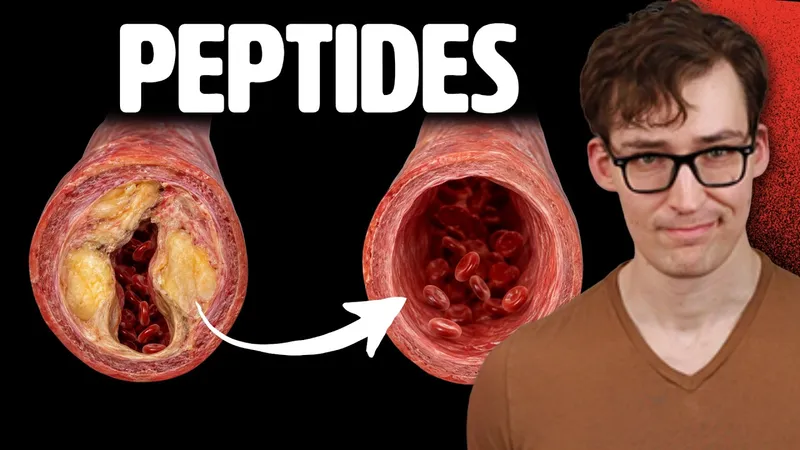
Peptides with HUGE Cardiovascular Impact!
Physionic@PhysionicPeptides with HUGE Cardiovascular Impact!
The video reviews clinical studies on GLP-1 receptor agonist peptides and cardiovascular outcomes, including evidence in people with and without diabetes. It then asks whether these drugs can reverse existing arterial plaque, introducing carotid intima-media thickness as one measure; the excerpt does not establish the answer.
- Views
- 544.2K
- Likes
- 5.2K
- Comments
- 481
- GLP-1 PeptidesCardiovascular diseaseArterial plaqueClinical study evidence
Analysis
The video reviews clinical studies on GLP-1 receptor agonist peptides and cardiovascular outcomes, including evidence in people with and without diabetes. It then asks whether these drugs can reverse existing arterial plaque, introducing carotid intima-media thickness as one measure; the excerpt does not establish the answer.
- Explainer
- Title
- Peptides with HUGE Cardiovascular Impact!
“We've been so focused on other peptides that we never thought to ask if we were done with the peptides on our plate. Instead of focusing our attention on I don't know, GUCK4 aluminum peptide 45 formulated by GenCon Industries and injecting it into our eyeballs based on a mouse study done in North Korea, let's refocus on the big players, the GLP-1 receptor agonist peptides that are widely available. Why? Well, might not be sexy and you can't brag to your biohacker bros about your newest peptide causing your eyes to bleed, but these peptides aren't done blowing us away with their massive health effects. This time on the greatest killer of our generation, heart disease. But, not only do I want to show you the scientific evidence across 14 studies on heart disease, I also wanted to know if we might be able to reverse the damage that we've already done to our arteries of our cardiovascular system. Can we reverse the plaque in our arteries using these yesterday's news peptides? I won't keep you waiting. The answer to the first question is, do GLP-1 receptor agonist peptides protect us from cardiovascular disease? is yes, unequivocally. Across six clinical trials, these peptides universally reduced not cardiovascular disease risk factors, but actual cardiovascular disease events. We can see an example of that here. The higher the lines go, the worse, because that's more cardiovascular disease. The horizontal axis being the amount of time on the peptide or on the placebo, the non-peptide control condition. And clearly, the peptide semaglutide here reduced the number of cardiovascular disease events. One issue with these data that we've been going over is the fact that they are in people with type 2 diabetes, so a very sick population as many had diabetes for years. They're also overweight and some studies are in people with established cardiovascular disease. So, that raises a question. Does this also apply to people without diabetes? Plain and simple, yes. There are studies indicating benefit even in people without diabetes. It's a very similar story. The higher the lines, the worse and the orange line there being the peptide again, semaglutide. And again, a significant reduction in cardiovascular disease events compared to placebo over a few years. This is all to say that GLP-1 peptides reduce the risk of having a cardiovascular disease event in people with extreme disease like metabolic syndrome and even in people who are overweight but not diabetic. All right. Pretty amazing that something touted initially for fat loss has robust evidence fighting against cardiovascular disease. But, let's not stop there because while we've been focused on the big picture, what happens within our arteries? If you have plaque that has already built up in your arteries, can we reverse that plaque? By the way, I put together a quick guide on several different GLP-1 peptides and the strength of evidence for each including dosing information across multiple studies. That and there's some additional aspects of these peptides related to different cardiovascular diseases. If you're interested, that's all included as a Physiologic Insider member. I'm also going to be updating the quick guide as more research releases. You also get all of these perks right here like podcast, live sessions with me, etc. I've started weekly live sessions with the Insiders. Anyway, you can join the Insiders using the link in the description.”
- 01Redirect attention
This establishes the episode’s specific subject and uses comic contrast to distinguish it from the peptide discussion the speaker is setting aside.
The speaker jokes about fixation on obscure peptides and redirects attention to widely available GLP-1 receptor agonists, framing why they merit focus.
“We've been so focused on other peptides that we never thought to ask if we were done with the peptides on our plate. Instead of focusing our attention on I don't know, GUCK4 aluminum peptide 45 formulated by GenCon Industries and injecting it into our eyeballs based on a mouse study done in North Korea, let's refocus on the big players, the GLP-1 receptor agonist peptides that are widely available. Why? Well, might not be sexy and you can't brag to your biohacker bros about your newest peptide causing your eyes to bleed, but these peptides aren't done blowing us away with their massive health effects.”
- 02State the cardiovascular premise and evidence
This develops the cardiovascular claim with evidence and a population caveat, while distinguishing protection from the still-unanswered question of reversing existing plaque.
The speaker identifies heart disease as the focus, promises evidence across 14 studies, and asks whether existing arterial damage might be reversible. The speaker answers the first question with a claim of protection supported across six clinical trials, then qualifies the evidence by describing the populations studied and citing benefit among people without diabetes.
“This time on the greatest killer of our generation, heart disease. But, not only do I want to show you the scientific evidence across 14 studies on heart disease, I also wanted to know if we might be able to reverse the damage that we've already done to our arteries of our cardiovascular system. Can we reverse the plaque in our arteries using these yesterday's news peptides? I won't keep you waiting. The answer to the first question is, do GLP-1 receptor agonist peptides protect us from cardiovascular disease? is yes, unequivocally. Across six clinical trials, these peptides universally reduced not cardiovascular disease risk factors, but actual cardiovascular disease events. We can see an example of that here. The higher the lines go, the worse, because that's more cardiovascular disease. The horizontal axis being the amount of time on the peptide or on the placebo, the non-peptide control condition. And clearly, the peptide semaglutide here reduced the number of cardiovascular disease events. One issue with these data that we've been going over is the fact that they are in people with type 2 diabetes, so a very sick population as many had diabetes for years. They're also overweight and some studies are in people with established cardiovascular disease. So, that raises a question. Does this also apply to people without diabetes? Plain and simple, yes. There are studies indicating benefit even in people without diabetes. It's a very similar story. The higher the lines, the worse and the orange line there being the peptide again, semaglutide. And again, a significant reduction in cardiovascular disease events compared to placebo over a few years. This is all to say that GLP-1 peptides reduce the risk of having a cardiovascular disease event in people with extreme disease like metabolic syndrome and even in people who are overweight but not diabetic. All right. Pretty amazing that something touted initially for fat loss has robust evidence fighting against cardiovascular disease.”
- 03Reopen the plaque question and offer related resources
The question about reversing existing plaque remains the principal unresolved issue. The guide and membership mention adds a promotional detour but remains part of the opening; the next sentence starts a sustained explanation of what plaque reversal entails, so the introduction ends before it.
The speaker returns to what may happen inside arteries, restates the plaque-reversal question, and mentions a quick guide, additional cardiovascular information, and member resources before beginning the next explanation.
“But, let's not stop there because while we've been focused on the big picture, what happens within our arteries? If you have plaque that has already built up in your arteries, can we reverse that plaque? By the way, I put together a quick guide on several different GLP-1 peptides and the strength of evidence for each including dosing information across multiple studies. That and there's some additional aspects of these peptides related to different cardiovascular diseases. If you're interested, that's all included as a Physiologic Insider member. I'm also going to be updating the quick guide as more research releases. You also get all of these perks right here like podcast, live sessions with me, etc. I've started weekly live sessions with the Insiders. Anyway, you can join the Insiders using the link in the description.”