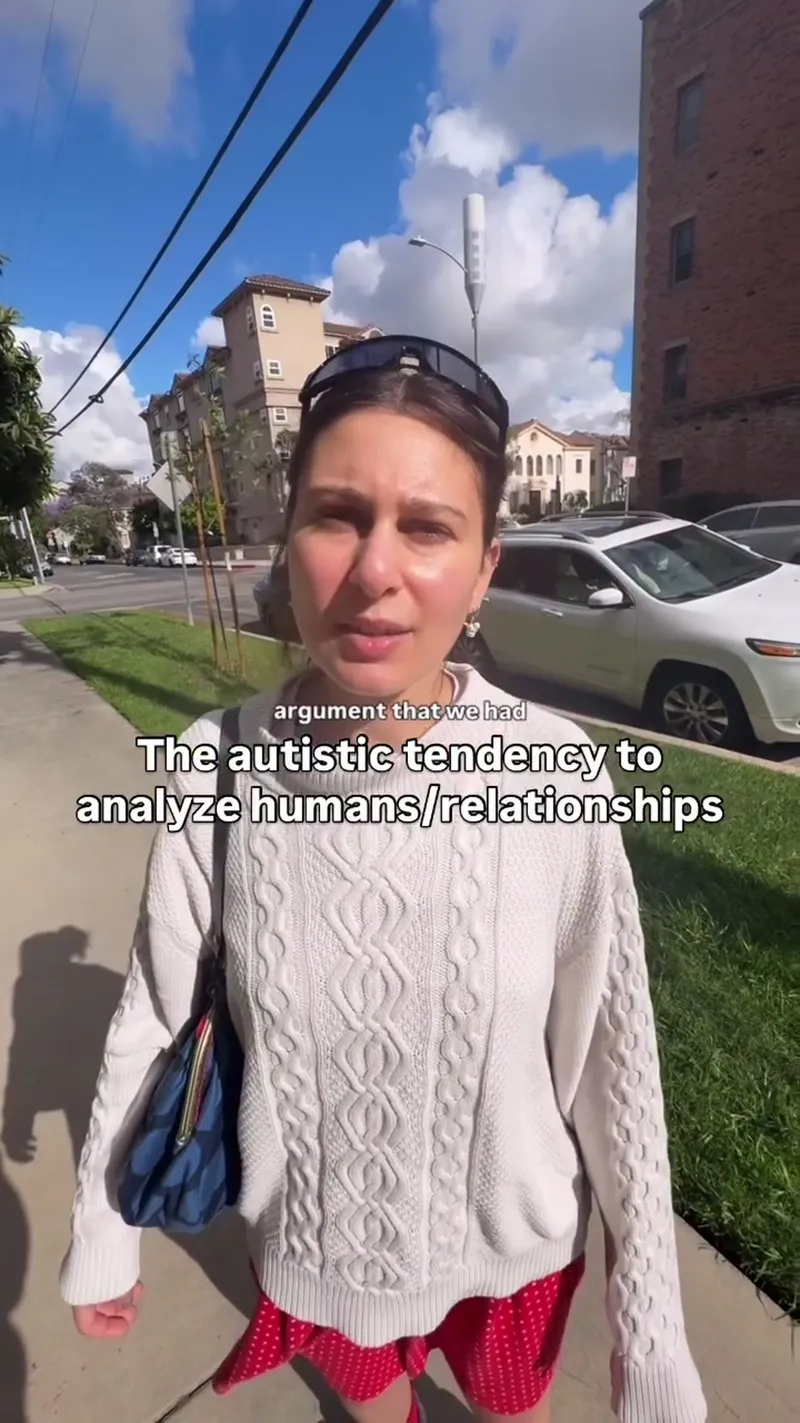
This video explores how some autistic individuals use logical analysis and pattern recognition to navigate social interactions and conflict. Through a series of skits, the creator illustrates the process of treating emotional cues as data points to better understand others.
The Autistic Tendency to Analyze Relationships
This video explores how some autistic individuals use logical analysis and pattern recognition to navigate social interactions and conflict. Through a series of skits, the creator illustrates the process of treating emotional cues as data points to better understand others.
- Views
- 3.9M
- Likes
- 358.1K
- Comments
- 1.7K
- Topics
Analysis
Can we reenact that argument that we had yesterday?
Can we reenact that argument that we had yesterday? I'd really like to understand what went wrong in your point of view and my point of view and analyze it so I can recalibrate some data points. What are you doing? Well, you seem sort of upset right now, and I don't know what to do, but I have this friend that's really good at helping me when I'm upset, so I'm trying to figure out what she does so that I could do that for you. Oh, hey. What's this for? Well, you're acting a very specific way that you only ever act when you're thirsty, so I think you need to drink that. Ash, why are you always analyzing me? How would I know anything about you if I didn't analyze you?
- 01The Clinical Request
Speaker A asks to revisit a past emotional event using overly technical or robotic language.
- 02The Skeptical Response
Speaker B reacts with confusion or concern to the odd request.
- 03The Awkward Justification
Speaker A explains their logic, revealing they are trying to solve an emotional problem with a mechanical process.
- 04The Sudden Gesture
Speaker B questions a physical action or item Speaker A has introduced.
- 05The Diagnostic Conclusion
Speaker A explains a physical solution based on a hyper-specific observation of Speaker B's behavior.
- 06The Final Confrontation
Speaker B voices their frustration with Speaker A's constant need to treat everything like a data set.
- 07The Logic Payoff
Speaker A delivers a line that proves their clinical approach is actually their way of showing love or care.