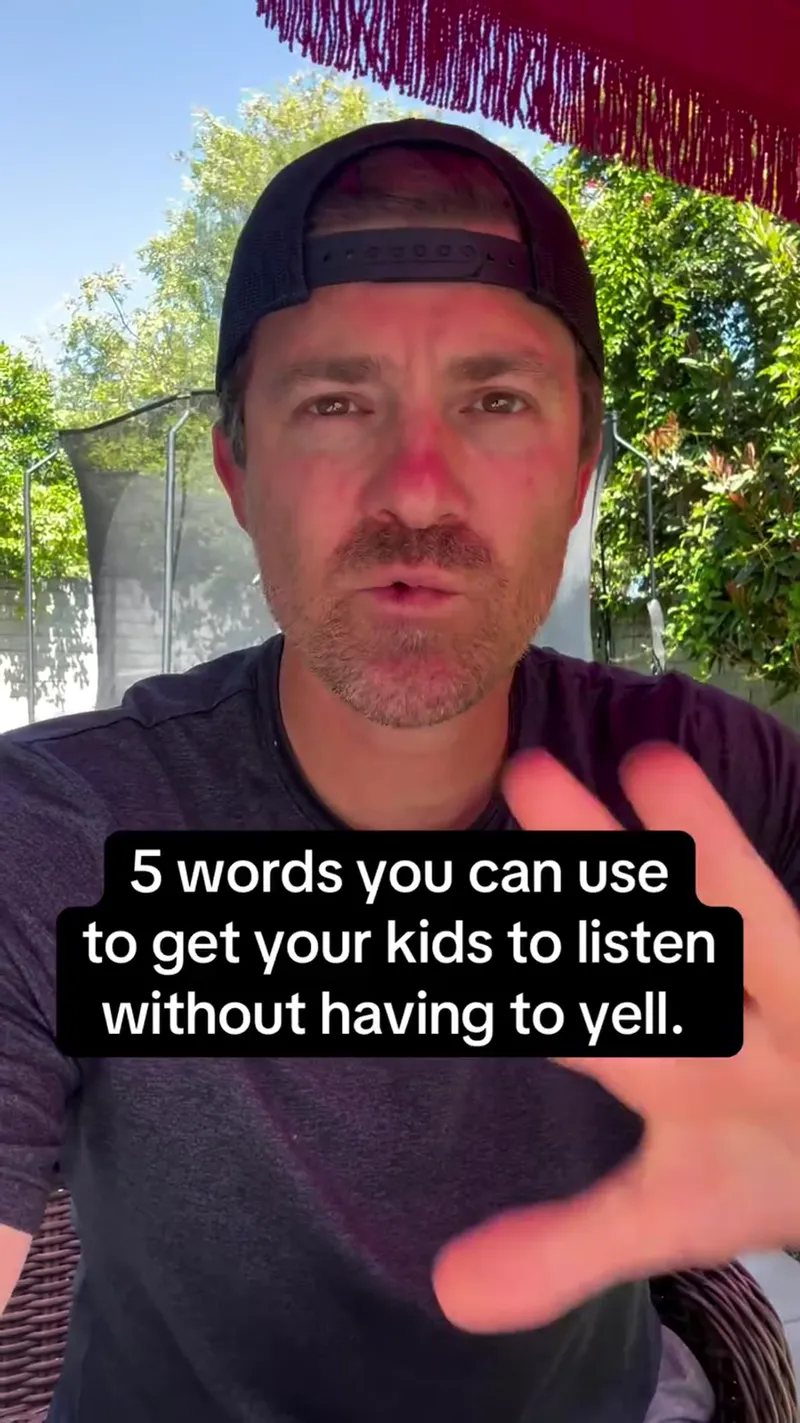
This video shares five specific phrases parents can use to encourage their children to listen the first time without yelling. The creator explains the psychological shift from giving commands to seeking cooperation and understanding the child's perspective.
5 Phrases to Get Your Kids to Listen Without Yelling
This video shares five specific phrases parents can use to encourage their children to listen the first time without yelling. The creator explains the psychological shift from giving commands to seeking cooperation and understanding the child's perspective.
- Views
- 815.2K
- Likes
- 38.6K
- Comments
- 16K
- Topics
Analysis
Alright, parents, here are five words that you can use that increase the chances your kids are going to listen the first time without you having to yell.
Alright, parents, here are five words that you can use that increase the chances your kids are going to listen the first time without you having to yell. I'm going to give you six different phrases that are all right around five different words. Now make sure you hit follow if you want more advice like this. Okay? All right, here we go. Number one is I need your help. Now this one may seem a little like, not like a little obvious, but here's the reason why it works. What most parents do is they ask, hey, can you do this? You do this and what happens is there's a dynamic that forms inside your child's brain and between how you're asking and their response and their behavior. When you frame it as I need your help, it doesn't isn't perceived as they need to go do something. It's perceived as, oh my gosh, I get to help out my parent. It's also a pattern interrupt if your number one behavior is just to go ask them what to do. Okay, the second one, by the way, if you guys like these, any of these, we have free scripts that teach you how to talk and communicate with your kids without you having to yell that you can comment the word dad underneath this video. We'll send it to you or go to the link in our bio and grab it there. The next one is here's how I'm feeling. Now, this one might sound a little crazy, but let me explain what I do with my kids when I'm extremely stressed out. I know I'm about to yell. If they're not going to listen. I say, guys, here's how I'm feeling. And then I go in to explain, I'm really stressed out. I have to do this. I have to do this. I want you guys to be able to have this experience today. And I actually don't want to yell. Can you do this to help me out? So here's how I'm feeling is number two. Number three is what's the reason why you can't. If they're not listening or they say we can't do that, what's the reason why you can't. What this does is it actually gives you a better understanding of why your child came to it, what's going on in their brain and their reality. After teaching communication for as many years as I have, the reason why there's so much conflict in communication is because there's two different realities or experiences colliding and someone's trying to win. When you have a better understanding of what's going on with your child, you can actually have a deeper, better conversation and navigate it better when you understand their world and they understand yours. And the next one is, this is really important because a lot of the times your kids are in the middle of doing things right, and they're then asked to stop this thing that you're enjoying to go do this one thing. But if you can tell them why it's really important, they have a deeper understanding of why this needs to happen. So certain things like, guys, this needs to happen because someone's coming over and I don't want. Or I don't want this person to get hurt, or I stepped on this and it cut me. I don't want to get hurt anymore. Can you guys please do this? That increases the chances because they have a deeper understanding. The next one is, how much time do you need? What I do with my kids is if they're in the middle of doing something, they don't want to do it. I say, well, this is going to get done. It's gonna have to get done. How much time do you need before you can go get it done? And if it's within five minutes, I go, okay, I expect it.
- 01The Solution Hook
State exactly who the video is for and the specific benefit they get from a small set of changes.
- 02Clarification and Follow CTA
Provide a quick detail about the content and ask for a follow/subscribe.
- 03Point 1: The Reframing
Give the first tip and explain why it works better than the standard way of doing things.
- 04Lead Magnet CTA
Interrupt the list to offer a more detailed resource in exchange for a comment or link click.
- 05Point 2: The Vulnerability Shift
Give a tip that involves sharing your current state to avoid a blow-up.
- 06Point 3: The Discovery Question
Provide a question that helps understand the other person's perspective to reduce conflict.
- 07Point 4: The 'Why' Context
Explain that people resist tasks more when they are busy, and how to use context to fix it.
- 08Point 5: The Choice Frame
Give a tip that offers the other person a sense of control over the timeline.