 🦊 GitLab@gitlab
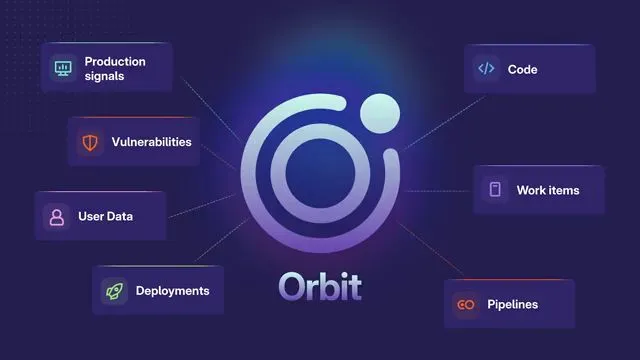
GitLab Orbit, now in public beta, is the context graph for the entire software lifecycle. t.co/n5Gi5BxV6i It continuously maps code, work items, pipelines, deployments, and production signals into a single live graph, so agents reason from first-party context instead of fragmented signals.
- Views
- 18,433
- Likes
- 76
- Replies
- 11
- Reposts
- 9
- Quotes
- 5
- Bookmarks
- 26
GitLab Orbit, now in public beta, is the context graph for the entire software lifecycle.
Meg and Angelo describe how GitLab Orbit builds and updates a unified graph connecting code, work items, pipelines, deployments and other GitLab data. They outline its indexing architecture, permission controls and ways agents can query it, and discuss engineering challenges such as keeping data fresh without slowing GitLab.
- Views
- 18.4K
- Likes
- 76
- Replies
- 11
- Reposts
- 9
- Quotes
- 5
- Bookmarks
- 26
- GitLab OrbitSoftware context graphsAI Agents for EngineeringGraph Indexing and Security
Analysis
Meg and Angelo describe how GitLab Orbit builds and updates a unified graph connecting code, work items, pipelines, deployments and other GitLab data. They outline its indexing architecture, permission controls and ways agents can query it, and discuss engineering challenges such as keeping data fresh without slowing GitLab.
- ExplainerCo hosted conversation
“GitLab Orbit, now in public beta, is the context graph for the entire software lifecycle. https://t.co/n5Gi5BxV6i It continuously maps code, work items, pipelines, deployments, and production signals into a single live graph, so agents reason from first-party context instead of fragmented signals.”
“Hey, I'm Meg. Hey, I'm Angelo. And today we want to talk a little bit about how we built Orbit and why it matters in the age of agents. We took the entirety of GitLab's data stores and built a unified property graph that sits alongside your GitLab instance and stays up to date with every change you ship. The graph connects your code, your work items, pipelines, deployments, vulnerabilities and user data in one structure. When you push a change to a code base or a deploy happens, Orbit picks up the change and the graph updates. Underneath Orbit is a single rust binary with three roles. An orchestrator that decides what to index, an indexer that builds the graph, and a web server that answers your queries on GitLab.com today. Orbit is already running and available natively. Self managed and dedicated deployments are coming next on the same architecture the sized to fit anything from a single VM to a multi tenant enterprise cluster. There were a number of engineering challenges we faced to bring Orbit to life. Angelo, didn't you say we had to touch every part of the GitLab infrastructure? Yeah, and one of the first challenges we ran into was trying to achieve minimal operational load. Context graphs at production scale typically slow down the system if they are built within the same application. We had to make sure Orbit could run indexing at scale and handle heavy queries without bottlenecking your GitLab instance. That's why we decoupled orbit from GitLab rails. Queries stream through workhorse indexing runs as a separate service. No matter how much your agents use Orbit, GitLab itself never slows down. Another unique problem was data freshness. We built an event driven indexing engine that picks up every change as it happens. It's built on Siphon, which streams data from postgres and uses advanced watermarking to keep the graph up to date. As a result, we can index over 40,000 projects, 500 million nodes and 2 billion edges in under 15 minutes for our own GitLab. Org. And finally, we solved for authorization, permissions and compliance context graphs that live outside their source system have to rebuild authorization from scratch. Imagine having to rebuild all of GitLab's permissions from scratch, including nested groups, hierarchies, SAML, auth and IPL listing all and keeping all that manually kept in sync. We built a three tiered authorization architecture that mirrors your GitLab user permissions directly into the graph. What your agents can see is exactly what your users can see in the ui. Orbit is built for Engineering teams scaling with agents. Agents reach orbit through one unified API running the same cipher like JSON query language. No matter how they connect, native agents and duo agent platform connect directly. External agents like Claude code access via MCP teams building custom agents or internal tooling connect through our REST endpoints. Your agents actually write their own queries, thanks to the powerful MCP tools available and effective skills built alongside them. You prompt something in natural human language like show me the most common failed pipelines across my 26,000 projects on GitLab. And the agent does the heavy lifting, writing the actual query under the hood.”
- 01Introduce the product and core function
Establish the subject and its relevance, and give viewers a concrete first account of what Orbit does.
The speakers introduce themselves, state that they will explain how Orbit was built and why it matters in the age of agents, then describe its unified property graph and the data it connects.
“Hey, I'm Meg. Hey, I'm Angelo. And today we want to talk a little bit about how we built Orbit and why it matters in the age of agents. We took the entirety of GitLab's data stores and built a unified property graph that sits alongside your GitLab instance and stays up to date with every change you ship. The graph connects your code, your work items, pipelines, deployments, vulnerabilities and user data in one structure.”
- 02Explain operation, architecture and availability
Move from the system’s purpose to how it operates, while establishing its present availability and planned deployment range.
They explain how changes update the graph, outline the system’s three roles, and state where it is available now and what deployment options are coming next.
“When you push a change to a code base or a deploy happens, Orbit picks up the change and the graph updates. Underneath Orbit is a single rust binary with three roles. An orchestrator that decides what to index, an indexer that builds the graph, and a web server that answers your queries on GitLab.com today. Orbit is already running and available natively. Self managed and dedicated deployments are coming next on the same architecture the sized to fit anything from a single VM to a multi tenant enterprise cluster.”
- 03Introduce engineering challenges and solutions
Show what the engineering work had to solve and support the account with specific approaches and a claimed scale result.
The speakers identify challenges around low operational load, production-scale queries, fresh data and rebuilding authorization context, then describe design choices and a large indexing result.
“There were a number of engineering challenges we faced to bring Orbit to life. Angelo, didn't you say we had to touch every part of the GitLab infrastructure? Yeah, and one of the first challenges we ran into was trying to achieve minimal operational load. Context graphs at production scale typically slow down the system if they are built within the same application. We had to make sure Orbit could run indexing at scale and handle heavy queries without bottlenecking your GitLab instance. That's why we decoupled orbit from GitLab rails. Queries stream through workhorse indexing runs as a separate service. No matter how much your agents use Orbit, GitLab itself never slows down. Another unique problem was data freshness. We built an event driven indexing engine that picks up every change as it happens. It's built on Siphon, which streams data from postgres and uses advanced watermarking to keep the graph up to date. As a result, we can index over 40,000 projects, 500 million nodes and 2 billion edges in under 15 minutes for our own GitLab. Org. And finally, we solved for authorization, permissions and compliance context graphs that live outside their source system have to rebuild authorization from scratch. Imagine having to rebuild all of GitLab's permissions from scratch, including nested groups, hierarchies, SAML, auth and IPL listing all and keeping all that manually kept in sync. We built a three tiered authorization architecture that mirrors your GitLab user permissions directly into the graph. What your agents can see is exactly what your users can see in the ui.”
- 04Describe intended users and agent access
Complete the product overview by showing who it is for and how different agents can access it before the excerpt moves into the query engine’s details.
They identify engineering teams scaling with agents as the intended users, then outline the unified API, supported agent connections and a natural-language query example.
“Orbit is built for Engineering teams scaling with agents. Agents reach orbit through one unified API running the same cipher like JSON query language. No matter how they connect, native agents and duo agent platform connect directly. External agents like Claude code access via MCP teams building custom agents or internal tooling connect through our REST endpoints. Your agents actually write their own queries, thanks to the powerful MCP tools available and effective skills built alongside them. You prompt something in natural human language like show me the most common failed pipelines across my 26,000 projects on GitLab. And the agent does the heavy lifting, writing the actual query under the hood.”