 girish@googrish
“don’t train your own model” is common ai advice. it's wrong. your token bill's the proof. today, we’re excited to launch castform into open preview. castform is the easiest way for you to train your own model, on your own data. open-weights models are performant and much cheaper. when trained on your task & proprietary data, they beat closed models. the thing standing between you and that was weeks of plumbing & years of ml expertise. with castform, model training is as simple as prompt engineering. @castformai bring your agent traces or raw corpora. castform turns it into training data, picks the right algorithmic recipes, manages gpus, and gives you an ide to watch and chat with your model as it learns. see what you can build with castform👇
- Views
- 463,123
- Likes
- 2,561
- Replies
- 231
- Reposts
- 229
- Quotes
- 91
- Bookmarks
- 2,818
“don’t train your own model” is common ai advice.
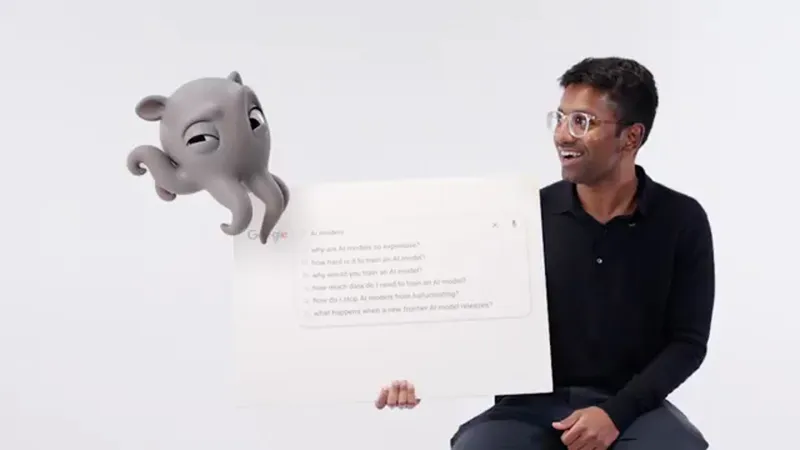
Castform co-founder Girish Kumar answers questions about training AI models, with a talking model character named Kasty joining the exchange. He explains the claimed benefits of fine-tuning open models and how Castform handles data, training, and updates.
- Views
- 463.1K
- Likes
- 2.6K
- Replies
- 231
- Reposts
- 229
- Quotes
- 91
- Bookmarks
- 2.8K
- AI model trainingOpen-weight modelsCastform platformModel hallucinations
Analysis
Castform co-founder Girish Kumar answers questions about training AI models, with a talking model character named Kasty joining the exchange. He explains the claimed benefits of fine-tuning open models and how Castform handles data, training, and updates.
- Talking headSkitInterviewExplainerProduct showcase
- The samples show Girish speaking and the gray character appearing beside him, matching the transcript’s playful exchange between the founder and Kasty.
“don’t train your own model” is common ai advice. it's wrong. your token bill's the proof. today, we’re excited to launch castform into open preview. castform is the easiest way for you to train your own model, on your own data. open-weights models are performant and much cheaper. when trained on your task & proprietary data, they beat closed models. the thing standing between you and that was weeks of plumbing & years of ml expertise. with castform, model training is as simple as prompt engineering. @castformai bring your agent traces or raw corpora. castform turns it into training data, picks the right algorithmic recipes, manages gpus, and gives you an ide to watch and chat with your model as it learns. see what you can build with castform👇
- Text
“Hi, I'm Girish. We are launching Castform to help you train your own AI models better, faster and cheaper than what Anthropic gives you.”
- 01Introduce the offer and character
Establishes the product’s promise and a light comic frame before moving into the explanatory questions.
Introduce the product, its promised advantages, and a character or persona associated with it; follow with a playful exchange that sets up the FAQ.
“Hi, I'm Girish. We are launching Castform to help you train your own AI models better, faster and cheaper than what Anthropic gives you. And I'm Kasty, an open source model trained on Castform. And this is the wired manual. Complete interview. I've been a machine learning engineer for the past 12 years and I've been alive for three months and I already know more than him. That is not true. So first question.”
- 02Answer the cost question
Resolves the first question with an accessible comparison and a concrete cost claim, then advances to the next FAQ item.
Ask why the category is expensive, explain with a familiar analogy, then contrast the costly option with the product’s cheaper alternative.
“Why are AI models so expensive? You can think of it like renting. The bigger the house, the more expensive the rent. And these frontier models are like mansions. But training your own model, like Pasty over here can be 54 times cheaper. It's true. Do the math. I'll wait. So second question.”
- 03Answer the difficulty question
Answers a major adoption concern by contrasting technical complexity with the product’s proposed easier workflow.
Ask how difficult the task is, acknowledge the technical obstacles, and present the product as the simplifying solution.
“How hard is it to train an AI model from scratch? Oh, tough. Yeah. There's GRPO training infra data pipeline. And that's a U problem. That's why we built Castform. The easiest way for you to take an open source model and find fine tune it to do exactly what you need. Exactly. All right, next question.”
- 04Explain why the product is useful
Gives a reason to choose the product’s approach, then returns to the FAQ sequence.
Ask why someone would do the task, contrast broad but imperfect options with a focused alternative, and state the alternative’s advantages.
“Why would you train an AI model? A lot of the bigger models are good at doing a lot of things, but not great at one thing. Couldn't be me. Cassie's small but trained on one task. So Cassie's much faster and cheaper. So question four,”
- 05Explain data requirements
Addresses the effort required from users and makes the workflow tangible before moving to another FAQ topic.
Answer how much input is needed, reassure that it is less than expected, name usable sources, and describe the product handling the remaining work; add a playful character beat.
“how much data do I need to train an AI model? Way less than you think. Yep. Kick Cassidy over here learned from existing data. You can train a model on your docs wiki, your agent traces and Castform does the rest. He fed me the wiki. I ate the whole wiki. All right, next question.”
- 06Explain how the issue is addressed
Provides a concise mechanism-based answer to a reliability concern, then opens the final FAQ question.
Ask about a common failure, define its cause, explain the corrective training or process, and state the improvement over time.
“How do I stop AI models from hallucinating? That's a good one. Hallucination happens when a model isn't confident and doesn't know it isn't confident. With reinforcement learning, you reward the model every time it gives a correct answer and penalize it when it makes things up. Over time, the model learns the difference between knowing and guessing. All right, final question.”
- 07Answer the future-change question and close
Resolves the final question with an ongoing-improvement claim, reinforces the product’s benefits, and closes on a light punchline after the call to action.
Ask how the product or character responds to a new competitor or development, use a playful exchange, explain the ongoing update, then give a call to action and finish with a joke.
“What happens when a new frontier AI model releases Kasty? Are you scared? Please. Scared? Never. I actually look forward to it. Yep. Better new open source models drop all the time. When they do, Castform just retrains Kasty. So Kasty gets better automatically. Pretty iconic if you ask me. Yes, it is. Train your own AI model today@castfrom.com. it's better, faster, cheaper. And you get one of these. You wish. I'm one of one. Train your own model.”