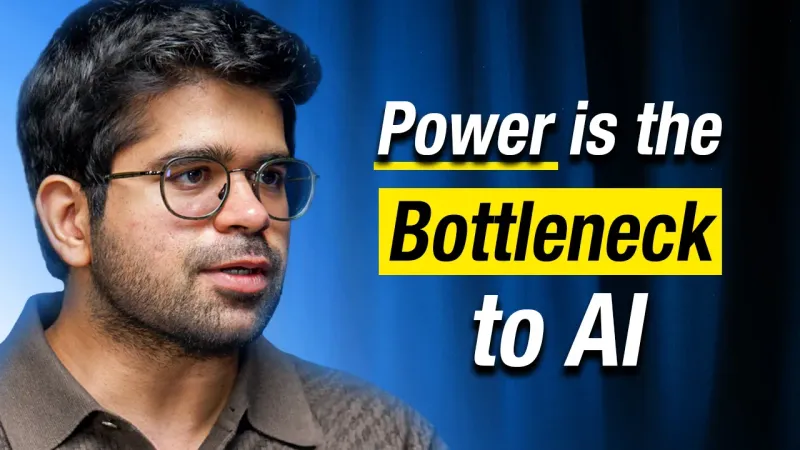
Perplexity CEO: Micron Will Be More Valuable Than Meta & How Export Controls Helped Not Hurt China
20VC with Harry Stebbings@20VCPerplexity CEO: Micron Will Be More Valuable Than Meta & How Export Controls Helped Not Hurt China
Perplexity CEO Aravind Srinivas discusses the company’s growth, its competition with Google, and the founder mindset behind its aggressive strategy. The listed topics also include AI agents, power and other infrastructure constraints, U.S. export controls and China, jobs, and the economic effects of AI.

- Views
- 222.4K
- Likes
- 3.9K
- Comments
- 269
- Perplexity's Growth StrategyAI search competitionAI infrastructure bottlenecksExport Controls and ChinaAI's Economic Impact
Analysis
Perplexity CEO Aravind Srinivas discusses the company’s growth, its competition with Google, and the founder mindset behind its aggressive strategy. The listed topics also include AI agents, power and other infrastructure constraints, U.S. export controls and China, jobs, and the economic effects of AI.
- Interview
- Title
- Perplexity CEO: Micron Will Be More Valuable Than Meta & How Export Controls Helped Not Hurt China
“I have nothing to lose. I came from nothing. I never even imagined myself to be doing all this. >> A $20 billion company. >> 45 million users. >> Over a billion searches a month. >> Built in 3 years by 400 people. >> These numbers like doesn't motivate me. It's hard to get motivated by wealth. You want to get motivated by impact. >> This is Perplexity with co-founder and CEO Aravind Srinivas. >> No one's ever in a comfortable position. Like no one can relax. >> They forced Google to redesign their homepage. >> Then bid $34 billion to buy Chrome. >> More than their own valuation. >> Perplexity changed google.com more than any product manager of Google has ever done. Now you look at AI mode, it looks exactly like Perplexity. >> He doesn't do defense. He doesn't do comfortable. His words >> Attack, attack, attack. That's my motto. Go all in and try your best. Be on the offense all the time. >> You know what I hate with podcasts? When people sit on the fence. Aravind has really strong opinions in the hot seat. He says that MyCrome will be more valuable than Meta. He says that the resistance to data centers will continue and get worse. He says the biggest problem today is the lack of power. He claims that Perplexity has changed Google more than any Google PM. You want opinions? This is the show for you. >> Ready to go? Aravind, dude, I am so excited that we got to see this. We've done one remote and then we did one at Founders Forum last year. So thank you so much for joining me in person. >> Thanks a lot, Harry. >> Dude, I It's a weird start, but just roll with me on it. I [snorts] ask this of the best founders that I meet. Are you motivated more by the fear of failing or by the thrill of winning? >> Thrill of winning. >> Why? >> Because I have nothing to lose. I came from nothing. Like I I I never even imagined myself to be doing all this. So my life has already been extraordinary uh beyond any level of imagination. Um I was just in India like, you know, doing my undergrad and you know, just just training neural nets with graphics cards that people in the labs were using for playing video games. It was all for fun and um you know, my path led me all the way here. It was never like a my for my mom just getting a job was success because we [clears throat] were not we were financially lower middle class in India, which is not even like lower middle class in UK or the US. And so, from there, all we wanted to do was get a job in Google. Being an engineer at Google was considered a win. And so, I'm I'm already doing remarkably well compared to that ambition we had as a family. So, there's really nothing for me to lose. That's why anytime I try to act like I'm trying to avoid failure and being on the defense, I remind myself that like that's the stupidest thing to do. Like, you know, you you it's better go all in and try your best. Be on the offense all the time. Attack, attack, attack. >> When you review then, what are you not being aggressive enough on today? >> Maybe in the early days, we'd be very, very loud on social media talking about Perplexity versus Google and I used to do that myself a lot.”
- 01Personal motto and counterpoint
The personal motto establishes the guest's outlook; the scale claims and motivation contrast quickly set up a larger conversation about ambition and impact.
A first-person statement about having nothing to lose is followed by a brief montage of company scale, then a contrast between wealth and impact as motivators.
“I have nothing to lose. I came from nothing. I never even imagined myself to be doing all this. >> A $20 billion company. >> 45 million users. >> Over a billion searches a month. >> Built in 3 years by 400 people. >> These numbers like doesn't motivate me. It's hard to get motivated by wealth. You want to get motivated by impact.”
- 02Guest and stakes montage
The identification establishes who is speaking, while the sequence of consequential claims previews the episode's subject matter before the conversation begins.
The show identifies Perplexity and its co-founder and CEO, then previews claims about competition with Google, a bid for Chrome, the guest's aggressive outlook, and AI's need for power.
“>> This is Perplexity with co-founder and CEO Aravind Srinivas. >> No one's ever in a comfortable position. Like no one can relax. >> They forced Google to redesign their homepage. >> Then bid $34 billion to buy Chrome. >> More than their own valuation. >> Perplexity changed google.com more than any product manager of Google has ever done. Now you look at AI mode, it looks exactly like Perplexity. >> He doesn't do defense. He doesn't do comfortable. His words >> Attack, attack, attack. That's my motto. Go all in and try your best. Be on the offense all the time. >> You know what I hate with podcasts? When people sit on the fence. Aravind has really strong opinions in the hot seat. He says that MyCrome will be more valuable than Meta. He says that the resistance to data centers will continue and get worse. He says the biggest problem today is the lack of power. He claims that Perplexity has changed Google more than any Google PM. You want opinions? This is the show for you.”
- 03Welcome and motivation question
After the claim-heavy preview, the host begins the interview with a direct question that shifts attention to the personal motive behind the guest's outlook.
The host checks that the guest is ready, welcomes him, and asks whether fear of failure or the thrill of winning is the stronger motivation.
“>> Ready to go? Aravind, dude, I am so excited that we got to see this. We've done one remote and then we did one at Founders Forum last year. So thank you so much for joining me in person. >> Thanks a lot, Harry. >> Dude, I It's a weird start, but just roll with me on it. I [snorts] ask this of the best founders that I meet. Are you motivated more by the fear of failing or by the thrill of winning? >> Thrill of winning. >> Why? >>”
- 04Personal account and principle
The account answers the host's question with personal context, then connects that history to the guest's stated principle of acting boldly. The supplied excerpt ends as the host begins a follow-up, so the introduction's transition into the continuing interview is not available.
The guest explains that he feels he has little to lose, recounts his family background and early technical work, and describes why he reminds himself to take risks and stay on the offensive.
“Because I have nothing to lose. I came from nothing. Like I I I never even imagined myself to be doing all this. So my life has already been extraordinary uh beyond any level of imagination. Um I was just in India like, you know, doing my undergrad and you know, just just training neural nets with graphics cards that people in the labs were using for playing video games. It was all for fun and um you know, my path led me all the way here. It was never like a my for my mom just getting a job was success because we [clears throat] were not we were financially lower middle class in India, which is not even like lower middle class in UK or the US. And so, from there, all we wanted to do was get a job in Google. Being an engineer at Google was considered a win. And so, I'm I'm already doing remarkably well compared to that ambition we had as a family. So, there's really nothing for me to lose. That's why anytime I try to act like I'm trying to avoid failure and being on the defense, I remind myself that like that's the stupidest thing to do. Like, you know, you you it's better go all in and try your best. Be on the offense all the time. Attack, attack, attack. >> When you review then, what are you not being aggressive enough on today? >> Maybe in the early days, we'd be very, very loud on social media talking about Perplexity versus Google and I used to do that myself a lot.”