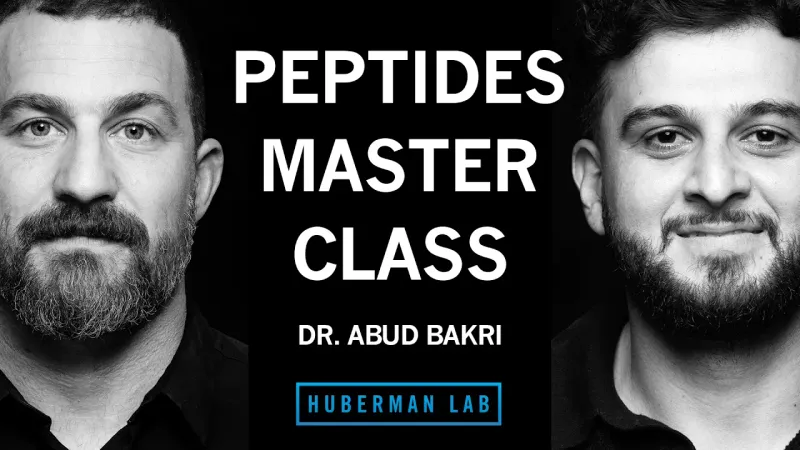
Peptides: The Science, Uses & Safety | Dr. Abud Bakri
Andrew Huberman@hubermanlabPeptides: The Science, Uses & Safety | Dr. Abud Bakri
Andrew Huberman speaks with physician Abud Bakri about peptide science, clinical uses, sourcing, and safety. The discussion covers compounds including BPC-157, GLP-1 drugs, GHK-Cu, and growth hormone-promoting peptides, while distinguishing animal findings from limited human evidence and addressing risks and uncertainty.

- Views
- 853.7K
- Likes
- 15.9K
- Comments
- 1.4K
- Peptide Science and UsesPeptide safety risksClinical Evidence and SourcingGLP-1 and Growth HormoneBPC-157 and Other Peptides
Analysis
Andrew Huberman speaks with physician Abud Bakri about peptide science, clinical uses, sourcing, and safety. The discussion covers compounds including BPC-157, GLP-1 drugs, GHK-Cu, and growth hormone-promoting peptides, while distinguishing animal findings from limited human evidence and addressing risks and uncertainty.
- InterviewPodcast episodeExplainer

- Title
- Peptides: The Science, Uses & Safety | Dr. Abud Bakri
“People are now stacking their GLP-1 as their insulin sensitivity tool, their growth hormone or their GHR >> and their androin modulation therapies as this trinity stack >> trinity stuff >> to get very fit, very healthy quickly. So a lot of these transformations you see in CEOs and celebrities and stuff is using a combination of those three things. You know your TRT plus teptide or retride whatever it may be and then using a growth hormone modulation whether if you can afford growth hormone or testimon. And you're seeing people lose a lot of fat gain a lot of muscle in short amounts of time. Is that healthy? We'll find out. But [snorts] that is like the celebrity protocol. Welcome to the Huberman Lab podcast where we discuss science and science-based tools for everyday life. >> [music] >> I'm Andrew Huberman and I'm a professor of neurobiology and opthalmology at Stanford School of Medicine. My guest today is Dr. Abu Bakri, an internal medicine physician who is also extremely knowledgeable on the science and use of peptides. When I say peptides, I mean both FDA approved peptides such as the GLP agonist. You probably know these as things like Ompic, Monaro, and Retatrutide, as well as peptides such as body protection compound 157 or BPC57, which as you'll learn today has a very long history of being used in humans for gut health and tissue repair, and many interesting studies in animals supporting its potential use in humans, but a minimum of formal studies in humans, meaning one. We discuss BPC-157, what it does and how, as well as things like growth hormone secrets like tessamarellin, MK677 and others. And we talk about things like GHK copper, which nowadays many people are using to promote collagen synthesis and repair for aesthetic reasons like improving skin, hair, and so on. We also talk about peptides that have been studied for the purpose of DNA repair and longevity like epithelen and pinealin which also have been touted to improve REM sleep and for improving cognitive function. You'll also learn what is known and what is not known about these peptides both in terms of function and safety. During today's episode, you will come to appreciate that Dr. Bachri has truly encyclopedic knowledge about these peptides. He is also formerly trained as a physician and as a consequence you will learn how to think about peptides based on whether or not they have known receptors or not. That turns out to be very important and what their real safety profiles are as well as what particular concerns you ought to have if you are considering using peptides of any kind. As a formerly trained board-certified physician, he comes at this topic through the lens of a physician, but also somebody who is very interested in the current status and future of peptide medicine. Today's discussion, thanks to Dr. Bacher, is a true masterclass on peptides. By the end of today's discussion, I promise you, again, thanks to him, that you will be among the most informed, doctor or otherwise, about peptides from the GLPS to BPC57 and all the others that I mentioned, including some that I didn't mention here in the introduction. So, it is a real gift and honor to have this knowledge presented to all of us. So, buckle up. You're about to learn a lot about peptides. Before we begin, I'd like to emphasize that this podcast is separate from my teaching and research roles at Stanford. It is however part of my desire and effort to bring zero cost to consumer information about science and science related tools to the general public.”
- 01Claim and open health question
The asserted transformation gives the subject immediacy, while the unanswered health question establishes why the discussion matters. The brief qualification that this is a celebrity protocol starts to bound the claim.
The opening describes people combining several therapies, associates the combination with rapid physical changes, and asks whether the result is healthy.
“People are now stacking their GLP-1 as their insulin sensitivity tool, their growth hormone or their GHR >> and their androin modulation therapies as this trinity stack >> trinity stuff >> to get very fit, very healthy quickly. So a lot of these transformations you see in CEOs and celebrities and stuff is using a combination of those three things. You know your TRT plus teptide or retride whatever it may be and then using a growth hormone modulation whether if you can afford growth hormone or testimon. And you're seeing people lose a lot of fat gain a lot of muscle in short amounts of time. Is that healthy? We'll find out. But [snorts] that is like the celebrity protocol.”
- 02Show identification and credentials
This moves from the cold open into the recurring show format and identifies who will guide the discussion. The stated roles provide relevant context for the coming overview without independently verifying any claim.
The host names the podcast and its general focus, identifies himself and his academic roles, then introduces the physician guest and his peptide expertise.
“Welcome to the Huberman Lab podcast where we discuss science and science-based tools for everyday life. >> [music] >> I'm Andrew Huberman and I'm a professor of neurobiology and opthalmology at Stanford School of Medicine. My guest today is Dr. Abu Bakri, an internal medicine physician who is also extremely knowledgeable on the science and use of peptides.”
- 03Define scope and preview topics
The examples make the scope concrete and distinguish approved examples from less-established ones. The breadth of named topics signals a substantial overview, while the claims about use and potential remain attributed to the host’s framing.
The host clarifies which broad classes of peptides he means, gives examples, and previews discussion of specific compounds and proposed or studied applications.
“When I say peptides, I mean both FDA approved peptides such as the GLP agonist. You probably know these as things like Ompic, Monaro, and Retatrutide, as well as peptides such as body protection compound 157 or BPC57, which as you'll learn today has a very long history of being used in humans for gut health and tissue repair, and many interesting studies in animals supporting its potential use in humans, but a minimum of formal studies in humans, meaning one. We discuss BPC-157, what it does and how, as well as things like growth hormone secrets like tessamarellin, MK677 and others. And we talk about things like GHK copper, which nowadays many people are using to promote collagen synthesis and repair for aesthetic reasons like improving skin, hair, and so on. We also talk about peptides that have been studied for the purpose of DNA repair and longevity like epithelen and pinealin which also have been touted to improve REM sleep and for improving cognitive function.”
- 04Knowledge, safety, and promised guide
This turns the topic list into a clear learning promise: viewers are offered both an account of uncertainty and a way to think about safety. The credentials and described perspective support the promised guide role; they do not settle the scientific questions in advance.
The host promises to distinguish known from unknown information about function and safety, then describes the guest’s expertise and the physician’s lens on receptors, safety profiles, and concerns for people considering use.
“You'll also learn what is known and what is not known about these peptides both in terms of function and safety. During today's episode, you will come to appreciate that Dr. Bachri has truly encyclopedic knowledge about these peptides. He is also formerly trained as a physician and as a consequence you will learn how to think about peptides based on whether or not they have known receptors or not. That turns out to be very important and what their real safety profiles are as well as what particular concerns you ought to have if you are considering using peptides of any kind. As a formerly trained board-certified physician, he comes at this topic through the lens of a physician, but also somebody who is very interested in the current status and future of peptide medicine.”
- 05Masterclass promise and closing setup
This closes the introduction by restating the breadth and expected learning payoff. The episode has not yet begun its sustained explanation; the following disclaimer still belongs to the opening framing.
The host calls the discussion a masterclass, promises a high level of understanding across the named and additional peptides, thanks the guest, and encourages listeners to prepare for a lot of information.
“Today's discussion, thanks to Dr. Bacher, is a true masterclass on peptides. By the end of today's discussion, I promise you, again, thanks to him, that you will be among the most informed, doctor or otherwise, about peptides from the GLPS to BPC57 and all the others that I mentioned, including some that I didn't mention here in the introduction. So, it is a real gift and honor to have this knowledge presented to all of us. So, buckle up. You're about to learn a lot about peptides.”
- 06Role-separation disclaimer
This final qualification clarifies the relationship between the podcast and the host’s institutional roles, and states an access purpose for the information. The supplied ledger ends here, before any sustained main explanation, so the introduction boundary is limited to the available excerpt.
Before beginning, the host distinguishes the podcast from his Stanford teaching and research roles, while describing the podcast as part of an effort to provide the public free information about science and related tools.
“Before we begin, I'd like to emphasize that this podcast is separate from my teaching and research roles at Stanford. It is however part of my desire and effort to bring zero cost to consumer information about science and science related tools to the general public.”