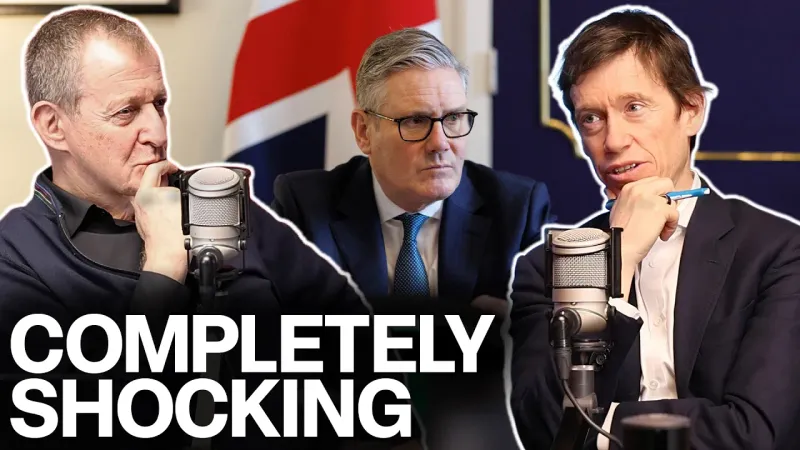
Is Tony Blair Sabotaging Starmer Over Iran?
The Rest Is Politics@restispoliticsIs Tony Blair Sabotaging Starmer Over Iran?
Alastair Campbell and Rory Stewart discuss Tony Blair’s comments on Keir Starmer’s approach to the US and Israel’s actions in Iran. The episode’s questions also cover European responses to Trump, events inside Iran, and possible effects on Netanyahu’s re-election prospects.
- Views
- 438.1K
- Likes
- 6.3K
- Comments
- 1.6K
- Tony Blair and StarmerIran war debateUS and European PolicyNetanyahu Re-election
Analysis
Alastair Campbell and Rory Stewart discuss Tony Blair’s comments on Keir Starmer’s approach to the US and Israel’s actions in Iran. The episode’s questions also cover European responses to Trump, events inside Iran, and possible effects on Netanyahu’s re-election prospects.
- Co hosted conversationCommentary

- Title
- Is Tony Blair Sabotaging Starmer Over Iran?
Blair has strongly, strongly given the impression that he would have been much more strongly behind what Trump and Israel are doing in Iran and Kier Starmer. >> If you are any former Prime Minister, but I would argue particularly Tony Blair in this context where a Labour Prime Minister has got a particular difficulty with the American President, then there is no such thing as off the record. >> We need some way of saying to the US, "We're distancing ourselves. We're not going to be your lackeys anymore. You've just strengthened Russia's hand by pushing up the oil price. You've weakened Ukraine by taking petrol and missiles out. You've weakened our own economies. With respect, you tell us to look after ourselves, stand on our own two feet, be proud national Europeans. Our priority is this, we're not having anything to do with this." >> Welcome to the Rest Is Politics Question Time with me, Alistair Campbell. >> And with me, Rory Stewart. >> And as with the main episode that we did live yesterday, we are going to be focusing entirely on Iran. We have had thousands of questions from you. >> I want to start though with Jennifer, who's a Trump plus member. Thank you, Jennifer, very much. Thank you. Thank you for subscribing. From New Malden. "What do you make of Alistair's former boss commenting on Starmer's reluctance to join the orange man and his seemingly impulsive war on Iran." It's a lot of adjectives going on here, Jennifer. "I know that post-Brexit the unspoken policy of ex-Prime Ministers not commenting on their successors seems to have gone out of the window, but to me it seems particularly vicious to kick Starmer when he's already down, especially when on this occasion most British people believe he's right. Has being on the orange man's board of peace gone to Blair's head or is he now bored of peace?" >> Okay, well, I'll put the case for the defense then I'll put the case for the prosecution. >> Very good. >> In a good sort of, you know, >> If fancy, if fancy, balanced way. >> I think I'll have that. So, the case for the defense is that Tony is adamant he didn't say the things that the headline said he said. In other words, the headlines were "Blair rebukes Starmer", "Blair admonishes Starmer", "Blair says Starmer weak", and he says he said none of that. What he did say was that in an ideal world Britain would be alongside the Americans in these foreign policy adventures. >> And that he suggested that he personally, had he been Prime Minister, would have been squarely behind the US in this particular operation. >> Well, I don't even know that he said that. Now, what he what he hasn't done is denied saying some of the things that he's reported to saying because he's assuming and this is where I make the case for the prosecution. If you are any former Prime Minister, but I would argue particularly Tony Blair in this context where a Labour Prime Minister has got a particular difficulty ongoing with the American president, then you are a very, very skilled, very, very experienced politician. There is no such thing as off the record. There is no such thing as Chatham House rule. It said in the papers it was a Chatham House event. There's no such thing. >> Sure. >> So, my sense is that as much through body language and tone, he gave enough to the Mail, the Telegraph, etc. Whoever was taping the thing to run the headlines that they did.
- 01Claim before the welcome
This cold open introduces the political issue before the show's identification and establishes the interpretation that the later exchange will examine.
A speaker says Blair gave the impression that he would have supported the US and Israel's actions in Iran more strongly.
“Blair has strongly, strongly given the impression that he would have been much more strongly behind what Trump and Israel are doing in Iran and Kier Starmer.”
- 02A proposed message and show welcome
The proposed message spells out the political contrast and stakes behind the opening interpretation; the show welcome then establishes the recurring program and its hosts.
A speaker argues that a former prime minister, particularly Blair in this political context, cannot speak off the record, then supplies a proposed statement to the US about distancing Britain and the consequences of the conflict. The hosts identify their show and themselves.
>> If you are any former Prime Minister, but I would argue particularly Tony Blair in this context where a Labour Prime Minister has got a particular difficulty with the American President, then there is no such thing as off the record. >> We need some way of saying to the US, "We're distancing ourselves. We're not going to be your lackeys anymore. You've just strengthened Russia's hand by pushing up the oil price. You've weakened Ukraine by taking petrol and missiles out. You've weakened our own economies. With respect, you tell us to look after ourselves, stand on our own two feet, be proud national Europeans. Our priority is this, we're not having anything to do with this." >> Welcome to the Rest Is Politics Question Time with me, Alistair Campbell. >> And with me, Rory Stewart.
- 03Focus and audience question
The explicit focus and listener question narrow the broad political opening to the title's central allegation and leave the meaning of Blair's actions open for discussion.
The hosts say the episode will focus entirely on Iran, note that they have received thousands of questions, and select a subscriber's question about Blair's comments on Starmer and the Iran war. The question calls the criticism vicious, offers a possible explanation tied to Blair's peace board role, and asks whether he is bored of peace.
>> And as with the main episode that we did live yesterday, we are going to be focusing entirely on Iran. We have had thousands of questions from you. >> I want to start though with Jennifer, who's a Trump plus member. Thank you, Jennifer, very much. Thank you. Thank you for subscribing. From New Malden. "What do you make of Alistair's former boss commenting on Starmer's reluctance to join the orange man and his seemingly impulsive war on Iran." It's a lot of adjectives going on here, Jennifer. "I know that post-Brexit the unspoken policy of ex-Prime Ministers not commenting on their successors seems to have gone out of the window, but to me it seems particularly vicious to kick Starmer when he's already down, especially when on this occasion most British people believe he's right. Has being on the orange man's board of peace gone to Blair's head or is he now bored of peace?" >>
- 04Set up the competing cases
The exchange promises a structured assessment rather than a single settled verdict, creating a route through the competing interpretations.
A host says he will make the defense case and then the prosecution case. The other host approves; the first describes the approach as balanced and says he will begin with the defense.
“Okay, well, I'll put the case for the defense then I'll put the case for the prosecution. >> Very good. >> In a good sort of, you know, >> If fancy, if fancy, balanced way. >> I think I'll have that. So, the case for the defense is that Tony is adamant he didn't say the things that the headline said he said.”
- 05Defense and the start of prosecution
This provides the initial defense, qualifies what is and is not being attributed to Blair, and then starts the opposing interpretation. The excerpt ends before that prosecution case is fully developed, so the opening's ultimate assessment remains unresolved.
The speaker lists reported headlines, says Blair denies saying those things, and summarizes what Blair did say about Britain's position in an ideal world. The other host questions whether he said that. The speaker begins the prosecution case, arguing that Blair's experience makes it implausible to treat the comments as off the record, and cites reports of a Chatham House event. The exchange then turns to the speaker's impression that Blair gave enough through body language and tone for newspapers to run the headlines.
In other words, the headlines were "Blair rebukes Starmer", "Blair admonishes Starmer", "Blair says Starmer weak", and he says he said none of that. What he did say was that in an ideal world Britain would be alongside the Americans in these foreign policy adventures. >> And that he suggested that he personally, had he been Prime Minister, would have been squarely behind the US in this particular operation. >> Well, I don't even know that he said that. Now, what he what he hasn't done is denied saying some of the things that he's reported to saying because he's assuming and this is where I make the case for the prosecution. If you are any former Prime Minister, but I would argue particularly Tony Blair in this context where a Labour Prime Minister has got a particular difficulty ongoing with the American president, then you are a very, very skilled, very, very experienced politician. There is no such thing as off the record. There is no such thing as Chatham House rule. It said in the papers it was a Chatham House event. There's no such thing. >> Sure. >> So, my sense is that as much through body language and tone, he gave enough to the Mail, the Telegraph, etc. Whoever was taping the thing to run the headlines that they did.