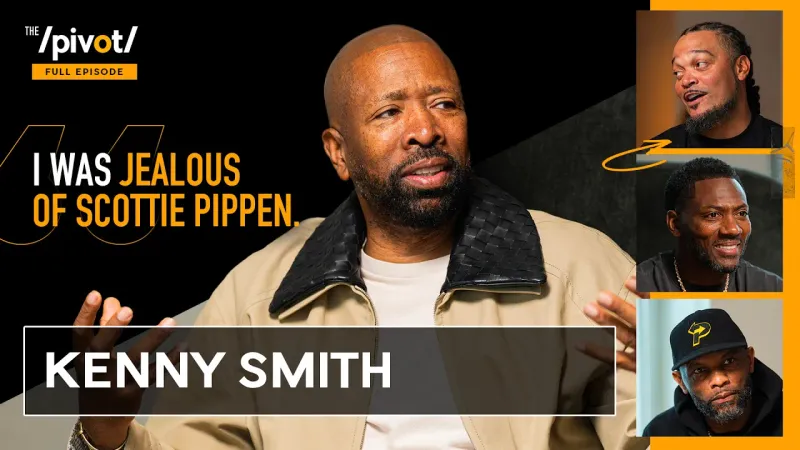
Kenny Smith, NBA Champ tells untold MJ stories, Inside the NBA secrets and life lessons| The Pivot
The Pivot Podcast@thepivotpodcastKenny Smith, NBA Champ tells untold MJ stories, Inside the NBA secrets and life lessons| The Pivot
Kenny Smith talks about his NBA career, his experiences around Michael Jordan and Scottie Pippen, and the work and chemistry behind Inside the NBA. The conversation also touches on family, personal growth, basketball’s changing eras, and lessons from his life in sports.

- Views
- 610K
- Likes
- 10.6K
- Comments
- 881
- Kenny Smith's NBA careerMichael Jordan and Scottie PippenInside the NBABasketball and family life
Analysis
Kenny Smith talks about his NBA career, his experiences around Michael Jordan and Scottie Pippen, and the work and chemistry behind Inside the NBA. The conversation also touches on family, personal growth, basketball’s changing eras, and lessons from his life in sports.
- InterviewPodcast episode
- Title
- Kenny Smith, NBA Champ tells untold MJ stories, Inside the NBA secrets and life lessons| The Pivot
I couldn't go anywhere without people talking about the threes. Cuz I broke the NBA record at that time for threes in a final. In regular season you make your name, the playoffs are when you make your fame. >> Greatness really to me is not moments, it's also the extent of how long you do it. >> Our motto, I used to game right before game five or game seven, I'm like, "We might lose, but it ain't going to be tonight." >> If you look at him from his day one to his day last, he's the only player who came into the league where his weaknesses, when he left the league, were his strengths. >> It's all day, I'm in his ear and he's talking and all day we just going back and forth. I love that part. I don't think I've ever said this, for my first six years I was always jealous of Scottie Pippen. >> I love the legacy of Michael. I love the fact that he went to the finals six times and never lost. But do you really believe, honestly, he would have won eight championships in a row? My lane of what I do on the show is very obvious. >> It stands out. My last one-year contract was more than my first whole NBA contract. I get paid more to talk about the game than >> play the game? >> He was the first white person that ever asked me, "What am I doing for the black race?" >> Like, what? >> All of those voices were in my head. Everything felt normal. >> I'm like, [ __ ] everything ain't normal. This is not normal. >> Sometimes not speaking is bigger than speaking. They forget what you say, but they always ask you when you don't say nothing. >> Hey. >> We got somebody that walk like you. >> Man, listen. >> Yes, sir. >> Hey, listen, man. >> They've been calling me Kenny Smith's niece for years. >> But you but see, when it when it when when it happens when they when they warm up, then they straighten up. >> [laughter] >> You just got to warm up. >> We got a real reason to cut the room this time. >> [laughter] >> We usually cut the room championship, but Channing he he you know met his twin finally. >> It's all It's all It's all tight hips all of them. >> It's all It's all up here. >> It's all UP THERE. THAT'S ALL it is, man. >> Welcome to the show, Kenny Smith. >> be here, man. Good to be here. >> Great to have a two-time NBA champion with us and I mean just part of honestly the gold standard in TV. I mean you've been there basically three decades. >> Damn. >> 28 years. >> I'm doing I'm doing the Kevin Hart now. >> [laughter] >> That is. >> Yeah, that's true. >> And like it's funny cuz most people they know me from broadcasting and not from playing. Like they most people have not seen me play. Like so when when I hear like guys talk about eras of basketball and I'll always laugh because I'm like I know for a fact Steve's never seen me play, ever. Like never in his never in their life, you know. So they're talking about things that they're really just watching clips of and not watching the totality or the moments. You know, when they evaluate players, evaluate things, evaluate anything. I know that if they don't didn't see me play, they their evaluation sometimes >>
- 01Achievement and perspective montage
These excerpts establish the guest’s perspective and résumé while suggesting the conversation will move beyond a single highlight to performance, longevity, and the difference between regular-season recognition and playoff fame.
The guest recalls public attention to a defining achievement, then offers a view of what makes greatness last. A further excerpt previews a confident pre-event motto, and another speaker reflects on a player’s development over time.
I couldn't go anywhere without people talking about the threes. Cuz I broke the NBA record at that time for threes in a final. In regular season you make your name, the playoffs are when you make your fame. >> Greatness really to me is not moments, it's also the extent of how long you do it. >> Our motto, I used to game right before game five or game seven, I'm like, "We might lose, but it ain't going to be tonight." >> If you look at him from his day one to his day last, he's the only player who came into the league where his weaknesses, when he left the league, were his strengths. >>
- 02Personal admission and Jordan discussion
The admission supplies the personal story specifically highlighted by the thumbnail; the Jordan question adds a distinct, debatable point of view that invites viewers to hear the guest’s reasoning.
The guest describes an ongoing back-and-forth with a prominent colleague and makes a personal admission about being jealous of Scottie Pippen. Another excerpt praises Michael Jordan’s finals record while questioning whether he would have won eight championships in a row.
“It's all day, I'm in his ear and he's talking and all day we just going back and forth. I love that part. I don't think I've ever said this, for my first six years I was always jealous of Scottie Pippen. >> I love the legacy of Michael. I love the fact that he went to the finals six times and never lost. But do you really believe, honestly, he would have won eight championships in a row?”
- 03Broadcasting, career, and personal-story excerpts
The varied excerpts signal that the conversation will cover more than basketball highlights: it includes broadcasting, career perspective, and personal experiences. The contract comparison and the anecdote leave specific points for the full discussion to explain.
The montage previews the guest’s role on a show, a striking comparison between his TV and NBA contracts, and a question about whether he is paid more to discuss or play the game. It then shifts to an anecdote about a question concerning race, followed by reflections on recognizing that an experience was not normal and on the impact of silence.
My lane of what I do on the show is very obvious. >> It stands out. My last one-year contract was more than my first whole NBA contract. I get paid more to talk about the game than >> play the game? >> He was the first white person that ever asked me, "What am I doing for the black race?" >> Like, what? >> All of those voices were in my head. Everything felt normal. >> I'm like, [ __ ] everything ain't normal. This is not normal. >> Sometimes not speaking is bigger than speaking. They forget what you say, but they always ask you when you don't say nothing. >>
- 04Comic exchange and guest welcome
The exchange provides a light transition from the excerpt montage into the sit-down conversation. The welcome and credentials establish who is speaking and why his basketball and broadcasting perspectives are relevant.
A playful exchange about someone walking like the guest leads into a welcome. The host introduces Smith as a two-time NBA champion and praises his television career; Smith and the host briefly joke about how long it has lasted.
“Hey. >> We got somebody that walk like you. >> Man, listen. >> Yes, sir. >> Hey, listen, man. >> They've been calling me Kenny Smith's niece for years. >> But you but see, when it when it when when it happens when they when they warm up, then they straighten up. >> [laughter] >> You just got to warm up. >> We got a real reason to cut the room this time. >> [laughter] >> We usually cut the room championship, but Channing he he you know met his twin finally. >> It's all It's all It's all tight hips all of them. >> It's all It's all up here. >> It's all UP THERE. THAT'S ALL it is, man. >> Welcome to the show, Kenny Smith. >> be here, man. Good to be here. >> Great to have a two-time NBA champion with us and I mean just part of honestly the gold standard in TV. I mean you've been there basically three decades. >> Damn. >> 28 years. >> I'm doing I'm doing the Kevin Hart now. >> [laughter] >> That is. >> Yeah, that's true. >>”
- 05Public recognition versus playing career
This develops the contrast previewed in the montage and begins the substantive discussion of how the guest’s playing career informs his perspective on basketball commentary. The transcript cuts off as Smith starts to describe the limits of those evaluations.
Smith observes that many people know him from broadcasting rather than playing, and says some commentators evaluate basketball eras from clips without having seen the full games or moments.
“And like it's funny cuz most people they know me from broadcasting and not from playing. Like they most people have not seen me play. Like so when when I hear like guys talk about eras of basketball and I'll always laugh because I'm like I know for a fact Steve's never seen me play, ever. Like never in his never in their life, you know. So they're talking about things that they're really just watching clips of and not watching the totality or the moments. You know, when they evaluate players, evaluate things, evaluate anything. I know that if they don't didn't see me play, they their evaluation sometimes >>”