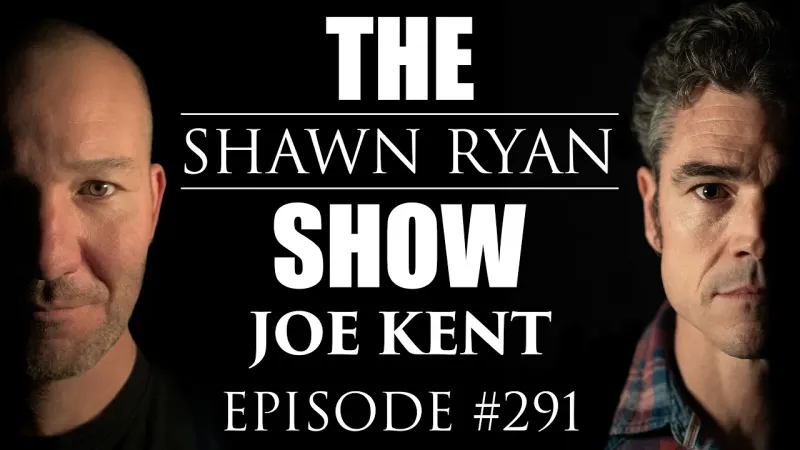
Joe Kent - The Real Reason He's Sounding the Alarm on Israel and Iran | SRS #291
Shawn Ryan Show@ShawnRyanShowJoe Kent - The Real Reason He's Sounding the Alarm on Israel and Iran | SRS #291
In this Shawn Ryan Show interview, Joe Kent discusses his resignation from the National Counterterrorism Center and his concerns about U.S. policy toward Iran and Israel. The episode is framed around his account of how the war decision was made, the risks of escalation and blowback, and possible ways to end the conflict.

- Views
- 2.5M
- Likes
- 79K
- Comments
- 16K
- U.S. Iran War PolicyIsrael and U.S. RelationsJoe kent resignationCounterterrorism and Blowback
Analysis
In this Shawn Ryan Show interview, Joe Kent discusses his resignation from the National Counterterrorism Center and his concerns about U.S. policy toward Iran and Israel. The episode is framed around his account of how the war decision was made, the risks of escalation and blowback, and possible ways to end the conflict.
- InterviewPodcast episode

- Title
- Joe Kent - The Real Reason He's Sounding the Alarm on Israel and Iran | SRS #291
“Welcome back, man. >> Thanks for having me. Great to be here. >> It's an honor to have you. So, you you resigned last week. >> I did. I [sighs] did. >> How's that going? >> About as good as resigning to the president can go. I think >> it's definitely created a lot of buzz. I just I just want to commend you, man. I mean, I know that took a lot of courage. That took some serious balls um to do that, especially with the statement you made. Wow. And um you know, internally, but just me myself, I I haven't been happy about really much of anything that's been going on. I feel like it's been a 180 bait and switch from what we were told in just about every aspect. And I've been wondering cuz I know there's people frustrated up there and I've been wondering what what are you still doing in the position if you're not doing the job that you were supposed to do? Why are you still there? Is it power? Is it is it cuz it's not power. They might think it's power, but if you are not able to do the job that you're there to do, then you're powerless, right? >> That's the conclusion that I came to. I mean, a after a year of really, you know, trying as hard as we could to advance what we believed the agenda was in particular, keeping us out of of endless [snorts] wars, um, and preventing, you know, more bloodshed overseas and then potentially more blowback terrorism here, um, you know, I just felt like we weren't being effective. I wasn't being effective anymore. And so, for me, it's like I don't want to stay just because I have a title, some degree of, I don't know, prestige, whatever. Um, I don't want to stay for that. I want to stay for the mission. But then also just seeing, and I'm sure we'll get into it, the things I mentioned in the in the resignation letter. Seeing the way we're being slowwalked and then rapidly entering this war, I had to say something about it. I I had to I couldn't number one, I couldn't be a part of it. Once the coffin started coming back um from from do uh from overseas to do I just couldn't be a part of it just based on all the experiences I had had previously um because I you know had said to myself years ago if I was ever in a position to prevent us from getting involved in a in a quagmire I I wouldn't be quiet about it. I would say something about it and and so that that weighed heavily on me. Um, but then I truly believe, like I said in the letter that the way that the president was influenced by uh the media, but then also by Israeli government officials and the way that that decision-m was uh took place in a compartmentalized environment. Compartmentalized in the sense that the president didn't have a bunch of didn't have much in terms of people giving him alternative viewpoints. um that our country was in a bad spot and the most effective thing that I could do was resign and resign publicly. >> You you're getting a ton of hate and and you're being attacked. The FBI is coming after you. You've been accused of leaking. You've been accused of all kinds of all kinds of stuff. It's ridiculous in my mind. But, you know, I think the one thing that you've been accused of the most is is I mean, people are pissed that you called Israel out.”
- 01Departure and host's framing
Establishes the recent consequential event and frames it as a decision worth explaining.
The host welcomes the guest, raises his recent resignation, and asks how it is going before acknowledging the attention and courage involved.
“Welcome back, man. >> Thanks for having me. Great to be here. >> It's an honor to have you. So, you you resigned last week. >> I did. I [sighs] did. >> How's that going? >> About as good as resigning to the president can go. I think >> it's definitely created a lot of buzz. I just I just want to commend you, man. I mean, I know that took a lot of courage. That took some serious balls um to do that, especially with the statement you made.”
- 02Host's reaction and central question
Turns the resignation into a focused question about purpose and power, setting up Kent's answer.
The host expresses dissatisfaction with events, describes a perceived bait-and-switch, and asks why Kent stayed in a position if he was not doing the job it was meant for.
“Wow. And um you know, internally, but just me myself, I I haven't been happy about really much of anything that's been going on. I feel like it's been a 180 bait and switch from what we were told in just about every aspect. And I've been wondering cuz I know there's people frustrated up there and I've been wondering what what are you still doing in the position if you're not doing the job that you were supposed to do? Why are you still there? Is it power? Is it is it cuz it's not power. They might think it's power, but if you are not able to do the job that you're there to do, then you're powerless, right?”
- 03Kent's rationale for leaving
Answers the host's question with Kent's stated reasons while developing the personal and consequential context behind his resignation.
Kent says he concluded his role was ineffective after a year of trying to advance the mission, explains why he did not want to stay for prestige, and recounts why events and his past experience made him speak out.
“>> That's the conclusion that I came to. I mean, a after a year of really, you know, trying as hard as we could to advance what we believed the agenda was in particular, keeping us out of of endless [snorts] wars, um, and preventing, you know, more bloodshed overseas and then potentially more blowback terrorism here, um, you know, I just felt like we weren't being effective. I wasn't being effective anymore. And so, for me, it's like I don't want to stay just because I have a title, some degree of, I don't know, prestige, whatever. Um, I don't want to stay for that. I want to stay for the mission. But then also just seeing, and I'm sure we'll get into it, the things I mentioned in the in the resignation letter. Seeing the way we're being slowwalked and then rapidly entering this war, I had to say something about it. I I had to I couldn't number one, I couldn't be a part of it. Once the coffin started coming back um from from do uh from overseas to do I just couldn't be a part of it just based on all the experiences I had had previously um because I you know had said to myself years ago if I was ever in a position to prevent us from getting involved in a in a quagmire I I wouldn't be quiet about it. I would say something about it and and so that that weighed heavily on me. Um, but then I truly believe, like I said in the letter that the way that the president was influenced by uh the media, but then also by Israeli government officials and the way that that decision-m was uh took place in a compartmentalized environment. Compartmentalized in the sense that the president didn't have a bunch of didn't have much in terms of people giving him alternative viewpoints. um that our country was in a bad spot and the most effective thing that I could do was resign and resign publicly.”
- 04Backlash and Israel
Adds the immediate response to Kent's public position and names the Israel issue that connects to the title. The supplied opening ends here, before the discussion develops further.
The host notes the attacks and accusations Kent has faced, then says people are particularly angry that Kent called Israel out.
“>> You you're getting a ton of hate and and you're being attacked. The FBI is coming after you. You've been accused of leaking. You've been accused of all kinds of all kinds of stuff. It's ridiculous in my mind. But, you know, I think the one thing that you've been accused of the most is is I mean, people are pissed that you called Israel out.”