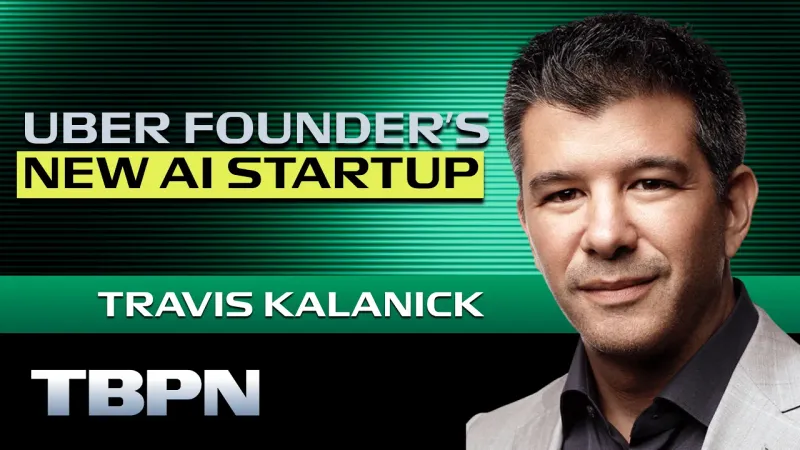
FULL INTERVIEW: Uber Founder Travis Kalanick is Back with a New AI Startup
TBPN@TBPNLiveFULL INTERVIEW: Uber Founder Travis Kalanick is Back with a New AI Startup
In this live interview, Travis Kalanick discusses City Storage Systems, its emergence from stealth as Atoms, and the goal of making prepared food delivery approach grocery-store prices. The episode description says the conversation also covers real estate, robotics, autonomous delivery, industrial infrastructure, and the future role of human labor as physical AI advances.

- Views
- 56.6K
- Likes
- 1.2K
- Comments
- 81
- Travis Kalanick's New VentureFood delivery economicsPhysical AI and RoboticsIndustrial infrastructure
Analysis
In this live interview, Travis Kalanick discusses City Storage Systems, its emergence from stealth as Atoms, and the goal of making prepared food delivery approach grocery-store prices. The episode description says the conversation also covers real estate, robotics, autonomous delivery, industrial infrastructure, and the future role of human labor as physical AI advances.
- Interview

- Title
- FULL INTERVIEW: Uber Founder Travis Kalanick is Back with a New AI Startup
“We have our next guest ready to join us live in the TV panel room. We have Travis Kalanick. He is the CEO of Cloud Kitchens. Welcome to the show, Travis. Great to meet you. Appreciate you coming on down to our studio, our humble abode. Great to meet you. >> We are truly an honor. >> I'm just down the street. >> Yeah. >> That's right. That's right. Yeah. Um we we were actually we started this show in downtown LA at the Jonathan Club on uh Figueroa. And so I think we were even closer then. >> Um there you go. >> [ __ ] Uh how are things going? >> Uh >> How's life? Whoa. Can we turn that down? We're getting some feedback. >> crazy. Um man, it's crazy. >> Yeah. What's crazy? >> The building doesn't stop, guys. >> Okay. >> Um I mean, I don't know how much you guys I mean, I've just I've been in hiding. >> Mhm. >> So, I've been um I've been doing uh I've been doing this we I I run a company called City's up until today, let's just say. I was running a company called City Storage Systems. >> Mhm. >> Okay? Which was basically about the future of food, a conglomerate operating in about 30 countries. That the whole idea was can you get a meal uh that's prepared and delivered to you so efficient that it starts to approach the cost of going to the grocery store. >> Yep. >> Cuz if you do, you do to the kitchen what Uber did to the car. So, I've been doing that since 2018. >> Yeah. >> And after just the intensity of Uber from in terms of like being in the public sphere, dealing with 100 headlines every day, deciding what you do or the actions you take based on what the New York Times is going to write, >> Yep. >> I was like, I would like to just I would like to just I would like to just >> It is very tough. So, uh I was just like, I got to wake up every day and sort of just get to work and build. >> So, did you think >> So, I went under the radar. >> Did you think of this as like stealth mode? Is that the right term? >> We've been in stealth mode for 8 years. >> Okay. And that's like till today, employees were not allowed to put the name of the company on their LinkedIn. We have thousands of employees. >> Yeah, that's crazy. >> Okay, so today what happened was it's like for my company, and I just got out of an all hands and then came right here, is we went out of stealth. >> Yep. >> Now, City [clears throat] Storage Systems Systems is like a hilarious name. It was like >> It's like the most like let me choose the most generic >> like the most >> generic name that no one will ever notice your eyes. >> of America. >> It was on purpose. >> Yeah. >> Okay. >> And it worked. >> It was like we had two choices when we when we launched. >> Yeah. >> Um we had what my sort of normal instinct was. Remember it was only 7 8 months after I left Uber when I started this. >> Yeah. >> Yeah. >> And it's let's just say the mission is infrastructure for better food. Okay, we have hardcore real estate assets. We buy the assets. We do construction.”
- 01Identify the guest
This establishes the interview setting and identifies the person whose account will shape the opening.
The host announces the incoming guest, gives his name and role, and welcomes him. The guests exchange greetings and brief studio pleasantries.
“We have our next guest ready to join us live in the TV panel room. We have Travis Kalanick. He is the CEO of Cloud Kitchens. Welcome to the show, Travis. Great to meet you. Appreciate you coming on down to our studio, our humble abode. Great to meet you. >> We are truly an honor. >> I'm just down the street. >> Yeah. >> That's right. That's right. Yeah. Um we we were actually we started this show in downtown LA at the Jonathan Club on uh Figueroa. And so I think we were even closer then. >> Um there you go. >> [ __ ] Uh how are things going? >> Uh >> How's life? Whoa. Can we turn that down? We're getting some feedback. >> crazy. Um man, it's crazy. >> Yeah. What's crazy? >> The building doesn't stop, guys. >> Okay. >> Um I mean, I don't know how much you guys I mean, I've just I've been in hiding. >> Mhm. >> So, I've been um I've been doing uh I've been doing this we I I run a company called City's up until today, let's just say. I was running a company called City Storage Systems. >> Mhm. >> Okay?”
- 02Explain the venture’s premise
This gives context for what the company does and why the guest considers it related to his earlier work.
The guest characterizes the company as food-focused, describes its prepared-meal efficiency goal, and relates the idea to Uber’s impact on cars.
“Which was basically about the future of food, a conglomerate operating in about 30 countries. That the whole idea was can you get a meal uh that's prepared and delivered to you so efficient that it starts to approach the cost of going to the grocery store. >> Yep. >> Cuz if you do, you do to the kitchen what Uber did to the car. So, I've been doing that since 2018. >> Yeah. >> And after just the intensity of Uber from in terms of like being in the public sphere, dealing with 100 headlines every day, deciding what you do or the actions you take based on what the New York Times is going to write, >> Yep. >> I was like, I would like to just I would like to just I would like to just >> It is very tough. So, uh I was just like, I got to wake up every day and sort of just get to work and build. >> So, did you think >> So, I went under the radar. >> Did you think of this as like stealth mode? Is that the right term? >> We've been in stealth mode for 8 years. >> Okay. And that's like till today, employees were not allowed to put the name of the company on their LinkedIn. We have thousands of employees. >> Yeah, that's crazy. >> Okay, so today what happened was it's like for my company, and I just got out of an all hands and then came right here, is we went out of stealth. >> Yep. >>”
- 03Name the mission and start the explanation
The joke eases into the newly public company’s description. The mission and assets begin a concrete explanation, so the introduction ends here rather than including the ensuing operational details.
The guest stumbles over the company name, jokes about its generic quality, says the name was intentional, and introduces the company’s mission and assets.
“Now, City [clears throat] Storage Systems Systems is like a hilarious name. It was like >> It's like the most like let me choose the most generic >> like the most >> generic name that no one will ever notice your eyes. >> of America. >> It was on purpose. >> Yeah. >> Okay. >> And it worked. >> It was like we had two choices when we when we launched. >> Yeah. >> Um we had what my sort of normal instinct was. Remember it was only 7 8 months after I left Uber when I started this. >> Yeah. >> Yeah. >> And it's let's just say the mission is infrastructure for better food. Okay, we have hardcore real estate assets. We buy the assets. We do construction.”