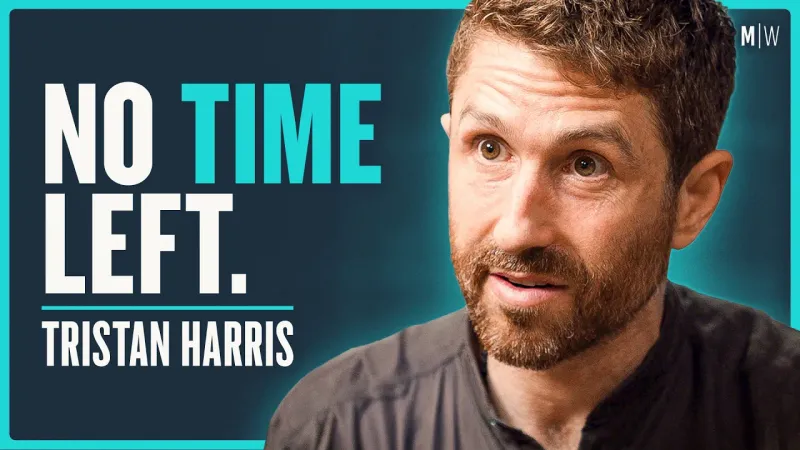
Why AI CEOs Are Building Bunkers - Tristan Harris
Chris Williamson@ChrisWillxWhy AI CEOs Are Building Bunkers - Tristan Harris
Tristan Harris discusses how his work in technology ethics led him from concerns about social media design to worries about advanced AI. The episode explores AI’s potential risks, safety and oversight, misinformation, and whether technology can be designed to support human wellbeing. The supplied opening focuses on his experience at Google and the human choices behind technology.

- Views
- 987.9K
- Likes
- 19.3K
- Comments
- 4.5K
- Artificial intelligence risksAI Safety and OversightTechnology and Human WellbeingSocial media design ethics
Analysis
Tristan Harris discusses how his work in technology ethics led him from concerns about social media design to worries about advanced AI. The episode explores AI’s potential risks, safety and oversight, misinformation, and whether technology can be designed to support human wellbeing. The supplied opening focuses on his experience at Google and the human choices behind technology.
- InterviewPodcast episode

- Title
- Why AI CEOs Are Building Bunkers - Tristan Harris
“What is the journey of how you arrived thinking about the problems of AI? >> [gasps] >> Um well, most people know me or our work through the film The Social Dilemma and I used to be a design ethicist at Google in 2012, 2013. So that basically meant how do you ethically design technology that is going to reshape, especially the attention and information environment of humanity. So it's like there it was at Google, it was 2012, 2013. This is in the heat of the kind of social media boom. I think Instagram had just been bought by Facebook. My friends in college started Instagram. So like I was part of this cohort and milieu of people who really built this technology that the rest of the world just thought was natural. Like this is just drinking water. Like I just drank Instagram. I just live in this environment. And so while like I saw billions of people enter into this psychological habitat that I knew the handful of like five or six people that were designing and tweaking it and making it work a certain way. >> Yeah, exactly. And I think that that's just like a fundamental thing I want people to get is you know, you think of technology like it just lands and it's just inevitable and then there's just nothing we can do and it just comes from above and it's like there are human beings making choices. And you know, as someone who grew up in the era of, you know, the Macintosh, like my co-founder So I have a nonprofit called the Center for Humane Technology. My co-founder Aza Raskin had his father invented the Macintosh project before Steve Jobs took it over. So this is the original Macintosh, you know, the thing that we now the MacBook, the iMac, the MacBook Pro, all of that started with his father Jeff Raskin and the idea of creating humane technology where technology could be choicefully designed to be really easy to use, to be accessible, to be an empowering extension of our humanity. Like a cello, like a piano, like a creative tool. Like if you're a video person, you can make films and videos. And just so people understand because we're going to probably be talking about some darker things on this podcast, the premise of all this is not to be a speaker of doom or something like that. It's to say I want to live in a world where technology is in service of people and connection and all of the things that matter to us as humans and then have technology wrap around ergonomically us to create that. So that was kind of a side journey. There I was at Google in 2012, 2013 and I saw how essentially there was this arms race for human attention and whichever company was willing to go lower on the brainstem to manipulate human psychology. This is exploiting like a back door in the human mind. So think of it just like software has back doors and zero-day vulnerabilities, you can hack software. The human mind has vulnerabilities. Um and as a magician as a kid, I understood some of those. Studying at a lab at Stanford called the Persuasive Technology Lab where a lot of the Instagram co-founders had studied I understood these psychological influences dynamics. And so it wasn't just that we were making technology in this beautiful and empowering kind of Macintosh way. It's that basically more and more of my friends were sucked into developing technology to hack human psychology.”
- 01Ask how the viewpoint formed
This question establishes the subject through the guest’s path to their current view, inviting an account rather than asserting a conclusion upfront.
The host asks how the guest came to think about AI’s problems; a brief reaction and hesitation follow.
“What is the journey of how you arrived thinking about the problems of AI? >> [gasps] >> Um well,”
- 02Establish relevant experience
Relevant experience grounds the coming perspective, while the explanation links the guest’s past work to technology’s effects on people.
The guest names a film through which people know his work, then recalls being a design ethicist at a major technology company and explains the ethical question behind that role.
“most people know me or our work through the film The Social Dilemma and I used to be a design ethicist at Google in 2012, 2013. So that basically meant how do you ethically design technology that is going to reshape, especially the attention and information environment of humanity.”
- 03Place the story in its formative setting
The firsthand setting explains how the guest encountered the technology and establishes a consequential contrast between its broad reach and the small number of people shaping it.
The guest locates his experience in the social-media boom, describes friends entering the field, and characterizes their technology as something people came to treat as ordinary. He then contrasts the vast number of users with the small group designing and adjusting the system.
“So it's like there it was at Google, it was 2012, 2013. This is in the heat of the kind of social media boom. I think Instagram had just been bought by Facebook. My friends in college started Instagram. So like I was part of this cohort and milieu of people who really built this technology that the rest of the world just thought was natural. Like this is just drinking water. Like I just drank Instagram. I just live in this environment. And so while like I saw billions of people enter into this psychological habitat that I knew the handful of like five or six people that were designing and tweaking it and making it work a certain way. >> Yeah, exactly.”
- 04Set up the central contrast
This extended answer supplies the opening’s central tension: technology can serve human creativity and connection, yet its design can also exploit psychological vulnerabilities. It develops the guest’s explanation of how his concerns arose, but the excerpt cuts off before the larger discussion or an explicit transition to the main content.
The guest argues that technology is not simply inevitable: people make choices about it. He traces an ideal of humane, empowering technology through a personal and organizational background, describes the kind of world he wants technology to serve, and then recounts seeing competition for human attention and psychological manipulation. The supplied excerpt ends as he connects that concern to friends developing technology to hack human psychology.
“And I think that that's just like a fundamental thing I want people to get is you know, you think of technology like it just lands and it's just inevitable and then there's just nothing we can do and it just comes from above and it's like there are human beings making choices. And you know, as someone who grew up in the era of, you know, the Macintosh, like my co-founder So I have a nonprofit called the Center for Humane Technology. My co-founder Aza Raskin had his father invented the Macintosh project before Steve Jobs took it over. So this is the original Macintosh, you know, the thing that we now the MacBook, the iMac, the MacBook Pro, all of that started with his father Jeff Raskin and the idea of creating humane technology where technology could be choicefully designed to be really easy to use, to be accessible, to be an empowering extension of our humanity. Like a cello, like a piano, like a creative tool. Like if you're a video person, you can make films and videos. And just so people understand because we're going to probably be talking about some darker things on this podcast, the premise of all this is not to be a speaker of doom or something like that. It's to say I want to live in a world where technology is in service of people and connection and all of the things that matter to us as humans and then have technology wrap around ergonomically us to create that. So that was kind of a side journey. There I was at Google in 2012, 2013 and I saw how essentially there was this arms race for human attention and whichever company was willing to go lower on the brainstem to manipulate human psychology. This is exploiting like a back door in the human mind. So think of it just like software has back doors and zero-day vulnerabilities, you can hack software. The human mind has vulnerabilities. Um and as a magician as a kid, I understood some of those. Studying at a lab at Stanford called the Persuasive Technology Lab where a lot of the Instagram co-founders had studied I understood these psychological influences dynamics. And so it wasn't just that we were making technology in this beautiful and empowering kind of Macintosh way. It's that basically more and more of my friends were sucked into developing technology to hack human psychology.”